
Do you ever ask yourself, why do I feel anxious for no reason?
Maybe you feel anxiety rise in your chest with no warning. Maybe your thoughts seem calm, yet your body reacts like you are under attack. Or maybe you have an idea why you feel anxious, but you do not understand why your body reacts this strong.
Maybe it is not you. Maybe it is your child, your friend, or someone you care about who freezes, panics, or shuts down without a clear reason. Or out of nowhere they go from calm to freaking out.
You watch them struggle. You want to help. Yet nothing adds up. Their fear feels bigger than the moment. You want to understand what keeps sending alarms no one else can see.
If this sounds familiar, we are going to walk through what is happening inside the brain, why it feels so intense, and what you can do next.
Why Do I Feel Anxious for No Reason?
When you ask, why do I feel anxious for no reason, you are not ridiculous. You are not weak. Your brain is not broken.
Your body is trying to protect you, but it fires the wrong alarm at the wrong time. Anxiety feels random only when you cannot see what your nervous system sees.
Dr. Emily explained that anxiety starts in the autonomic nervous system, the system that controls your heart rate, breath, pupils, and body temperature without your permission. When this system senses a threat, your body reacts fast. It speeds your heart. It tightens your chest. It pulls you into fight or flight before your thoughts catch up.
You might not notice the trigger, but your body does. You might feel calm on the surface, yet your brainstem sends a signal that says get ready. This is why you feel fear with no story.
Your body moves first. Your brain explains later.
You are not imagining this. You are not overreacting.
You are experiencing a system that got stuck in “on” when it should have returned to neutral.
And once you learn what drives it, you can take back control.
Why Does Excitement Feel Like Anxiety?
Here is something important that surprises most people. The sensations of excitement and the sensations of anxiety look almost the same inside the body.
Your pupils change. Your breath shifts. Your heart speeds up. Your stomach flips. Your system prepares for action either way.
Excitement uses the same physical pathways as anxiety.
The biggest difference is not the sensation. The biggest difference is the meaning you attach to it.
Have you ever got stomach knots before a big event, even when you were looking forward to it? Maybe it was a presentation, a trip, a game, or a moment you wanted to go well.
Your body sped up. Your breath changed. Your chest felt tight. Your brain felt alert. The feeling was strong, yet there was no danger.
Many people mistake that surge of energy for anxiety. Over time, the brain learns this label and repeats it. The body sends a signal meant for excitement, but the mind turns it into fear.
Thoughts can be trained though. You can teach your brain to interpret these moments in a healthier way. You can practice telling yourself that a racing heart does not always mean threat. It might mean energy. It might mean anticipation. It might mean your brain is preparing you for something exciting.
This simple shift changes how you experience your own body. It reduces fear. It restores control. It gives you a new way to understand the signals that once felt scary.
Your body does not always point to danger. Sometimes it points to possibility. And when the signal still feels confusing, it helps to understand what the brain is doing behind the scenes.
Which brings us to the next part…what your brain does when anxiety feels random.
What Your Brain Does When Anxiety Feels Random
Anxiety never comes from nowhere. Your brain always starts the signal. You feel lost only because you cannot see the network that fires beneath your thoughts.
Dr. Emily explained that one key player is the anterior cingulate gyrus, the part of your limbic system that helps you switch tasks, manage emotions, and stay flexible.
When this area becomes too active, your brain locks onto worry, tension, or fear faster than you can stop it.
Another player is the midbrain, the area that helps control your fight or flight system. When this region fires too strong, your body reacts like danger is near even when you feel safe. Your heart speeds up. Your breath shifts. Your muscles tighten. Your brain moves you into survival mode.
On a qEEG brain map, this often shows up as high beta activity in the front of the brain, especially around the Fz point. These are the fast brain waves linked to fear, stress, and overthinking.
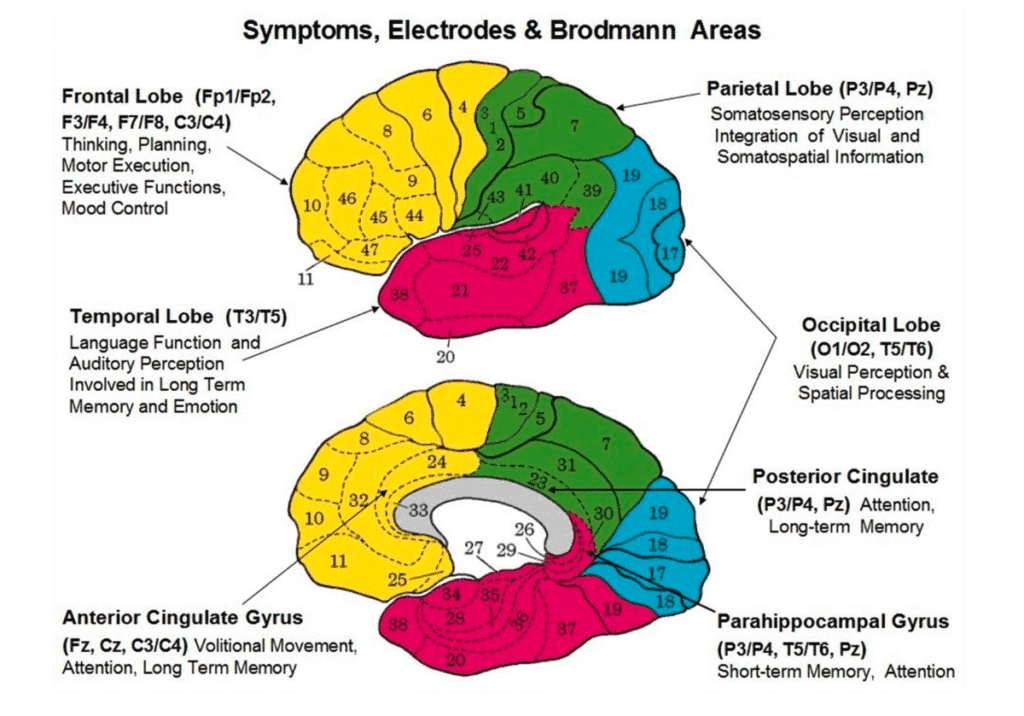
This is why anxiety feels random. Your brain is working behind the scenes, firing signals your conscious mind cannot see. This is not weakness. It is wiring.
And once you measure the wiring, you can change the pattern.
Why Your Body Feels Anxious Even When Your Mind Feels Calm
One of the most confusing parts of anxiety is when your body panics but your mind feels fine. You sit still. You think normal thoughts. Yet your heart races, your breath shifts, your stomach drops, or your hands shake.
Dr. Emily explained that this happens when the autonomic nervous system fires without the emotional part of anxiety attached to it. Your body enters fight or flight even though your thoughts did not start the response. This is not classic anxiety. This is often a form of dysautonomia, which is a disruption in how the nervous system controls automatic functions like heart rate, breath, and temperature.
You might feel calm, yet your heart spikes. You might feel grounded, yet your breath becomes shallow. You might think you are safe, yet your pupils dilate like danger is close.
Your body sends the alarm first. Your brain tries to make sense of it after. Most people assume, “My heart is racing, so I must be anxious.” But the body may have fired the signal for reasons that have nothing to do with fear.
Sometimes it is caffeine. Sometimes it is blood sugar. Sometimes it is chronic stress that trained your system to stay on. Sometimes it is a nervous system stuck in survival mode from past pressure.
And when the body flares over and over, the mind starts to believe the body. This is where anxiety grows.
But once you understand why the physiology fires, you can learn how to calm it and reset the pattern.
Hidden Triggers That Make Anxiety Feel Like It Has No Cause
Anxiety often feels random because the real trigger hides underneath the moment. Your thoughts tell you one story. Your body tells you another. The body usually wins, because the body reacts fast and without your permission.

Dr. Emily explained that many people feel sudden anxiety because the nervous system was pushed past its limit long before the panic hit. The system becomes overloaded and fires alarms in moments that look harmless. The trigger was real, but it happened earlier in the day or earlier in your life, not in the moment you feel the panic.
These hidden triggers are common.
Caffeine that pushes your heart rate too high. Blood sugar drops that make your body think something is wrong. Chronic stress that never resets. Lack of sleep that forces your brainstem into survival mode. Old trauma that trained your system to stay tense. Concussions or injuries that changed how your brain processes signals.
For children, the list grows even longer. Relentless testing. Pressure to perform in school or sports. Social stress. Screen overload. Information they are not ready to process. A fast world their nervous system cannot keep up with.
Dr. Emily called today’s kids an anxious generation for a reason. Their brains are still wiring, and the pressure is constant.
When your body carries too much for too long, the smallest thing can set off a huge wave. You think the anxiety came out of nowhere. It did not. Your nervous system was already near the edge.
Once you understand the hidden trigger, the response starts to make sense. And once it makes sense, you can heal it.
What a qEEG Brain Map Reveals About Anxiety That Makes No Sense
When anxiety feels random, a qEEG brain map helps you see patterns that your thoughts cannot explain. A qEEG measures the electrical activity in your brain and shows where certain networks are firing too strong, too weak, or out of rhythm. It removes guesswork. It gives you data.
Dr. Emily explained that many people who feel anxiety for no clear reason show high beta activity in the front of the brain. High beta waves are fast waves that appear when the brain leans toward fear or tension. She often sees this around the Fz region, which lines up with the anterior cingulate gyrus. This area helps with emotional regulation. When it runs too fast, people feel on edge even during calm moments.
To understand the full story of anxiety, Dr. Emily pairs the qEEG with other tests that measure the autonomic nervous system. These include pupil testing, heart rate changes, blood pressure shifts, and simple checks for how your body moves from rest to activity. These tests reveal how your stress system responds to life and whether it is stuck in high alert.
A qEEG measures the electrical activity coming from your brain. Dr. Emily explained that the raw data is waveforms. The computer then runs those waves through a fast Fourier transformation. This creates the color maps you see in the report. Red shows elevated activity. Blue shows reduced activity. Green shows patterns that match healthy brains in your age and gender group.
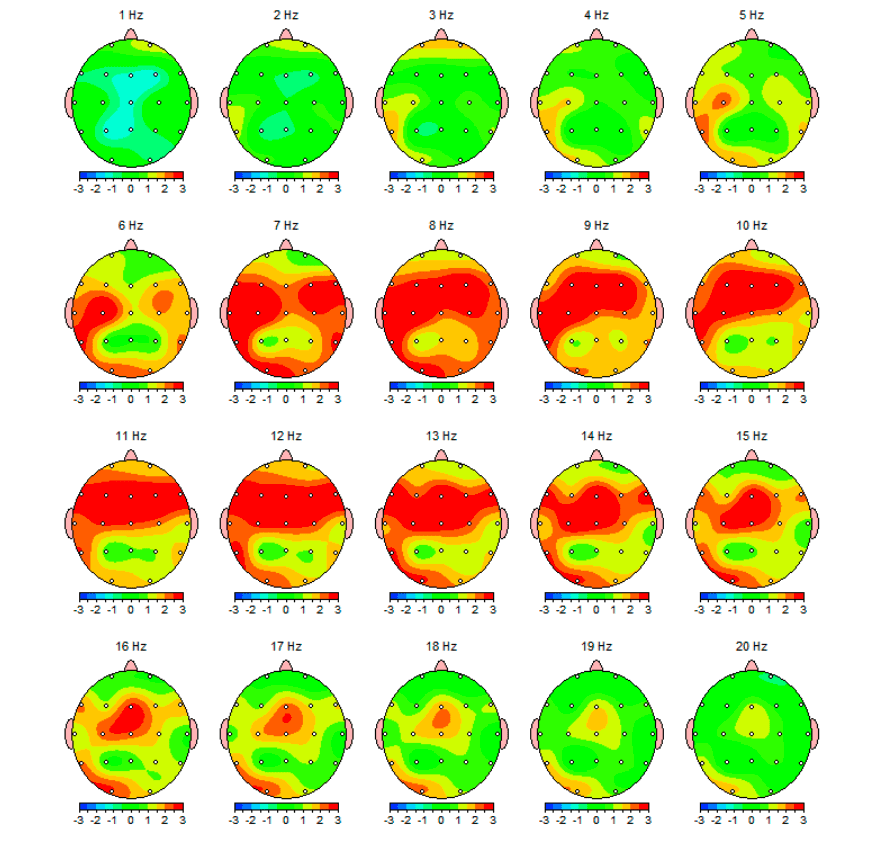
A qEEG is a diagnostic tool, but it is one part of a full evaluation. Dr. Emily compares the electrical patterns to your symptoms and your history to understand how your brain is functioning and which networks may need slowing down or possibly speeding up.
Once the electrical activity is clear, you have a real picture of how your brain is working. And that picture guides where treatment should focus.
Why Traditional Anxiety Approaches Miss the Real Cause
Most people who feel anxious for no reason get one of two responses. They get told to calm down, or they get a prescription. Neither explains what is happening inside their brain. Neither measures the system that creates the anxiety signal.
Traditional care often looks only at symptoms. You feel nervous, so it is labeled anxiety. You feel your heart race, so it is labeled panic. You feel overwhelmed, so it is labeled stress. The label becomes the answer. The label becomes the treatment plan.
The problem is simple. A label does not tell you why the signal started. It does not tell you if the issue sits in the cortex, the limbic system, the autonomic system, or the pattern your nervous system learned from years of pressure. It does not tell you if your body fired first or if your thoughts fired first. It does not tell you whether you need medication, training, or rewiring.
Dr. Emily explained that anxiety can come from many places inside the brain. It can come from high beta activity. It can come from an anterior cingulate that is working too hard. It can come from a midbrain that never returned to neutral. It can come from dysautonomia that spikes the body before the mind ever feels fear.
A symptom checklist does not catch this. A short appointment does not catch this. A quick prescription does not heal this.
When you do not measure the brain, you guess. When you guess, you miss the cause. And when you miss the cause, you chase the symptoms instead of changing the pattern.
This is why so many people stay stuck even when they try to get help. Their brain never got measured. Their nervous system never got evaluated. Their care never reached the origin of the signal.
Real change begins with understanding what your brain is doing, not just what you feel.
How to Take Control When Anxiety Spikes for No Reason
When anxiety feels random, you need tools that calm the system that fires the signal. Dr. Emily explained that your autonomic nervous system can learn to stay in a healthier range when you train it with the right techniques. The goal is not to suppress the body. The goal is to teach the body how to return to calm.
One tool she uses is biofeedback. Biofeedback helps you see your heart rate, breath rhythm, and other functions in real time. It teaches you how to slow your heart and shift your breath. It strengthens heart rate variability, which is the measure of how adaptable your nervous system is. Many people feel anxious when their heart rate rises even when their thoughts are calm. Biofeedback helps break that loop by showing you how to control the signal instead of reacting to it.
Another tool to help anxiety is neurofeedback. Once the qEEG shows where high beta activity sits, neurofeedback trains those regions to settle. Your brain learns how to produce calmer patterns. Over time, the anxious networks lose intensity and the healthier networks become stronger.

Dr. Emily also uses vagus nerve stimulation. The vagus nerve connects the brainstem to the throat, heart, and gut. It is a major part of the rest and digest system. When you activate this nerve, you strengthen the part of the nervous system that brings your body back down from fight or flight. This helps your heart rate, breath, and stress response shift toward calm.
She often pairs this with photobiomodulation. This is an infrared light used inside the mouth to support blood flow to the brainstem. The brainstem sits just behind the back of the throat. When blood flow improves, the brainstem has more fuel for recovery and more support for the therapies that follow. Additional fuel may even be added with Hyperbaric Oxygen Therapy.
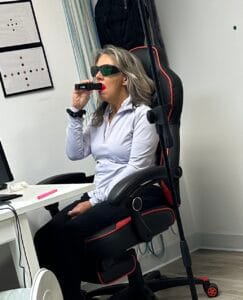
These tools work together. They calm the body. They retrain the brain. They give you control.
Each tool used is different because every brain is unique.
You are not stuck with the pattern that is firing. Your brain can learn a better one.
Why Kids Feel Anxious for No Reason and What Helps
Children often feel anxiety with no clear cause, and it shows up fast. A child freezes before a test. A teen panics during sports. A student shuts down in class. Their fear feels bigger than the moment, and adults sometimes assume it is behavior or attitude.
Dr. Emily explained that most of the time, it is their nervous system trying to keep up in a world that moves too fast for a developing brain.
Today’s children face pressure that previous generations did not. Schools test more than ever before. Sports run all year. Social stress follows them through their phones. Their brains are still wiring, yet the demands never pause. This constant load keeps their sympathetic system active when it should be resting. The result is an anxious generation with bodies stuck in go mode and little space to reset.
Some children feel this pressure so much that their bodies react before their thoughts do. Dr. Emily described kids who throw up before tests, sweat through their papers, or panic before sports. Their nervous system learned to fear the moment, and each new moment reinforces the pattern. Without support, the cycle grows stronger with time.
A qEEG can help identify the brain networks involved. Some children need neurofeedback to calm high beta activity. Some need biofeedback to regulate heart rate and breath. Some with high anxiety may need TMS treatment. Some need help processing pressure at home or school.
Many may benefit by simply reducing screen overload and learning simple ways to settle their nervous system.
This is why GBI and Not One Left Alone (NOLA) are working to bring Mental Fitness Labs into schools. Children need a place where they can regulate their nervous system before they melt down or shut down. A quiet room. A structured set of tools. A simple path to calm. When students learn how to settle their bodies, they learn better. They behave better. They feel safer inside themselves.
Children are not broken. Their nervous system is overwhelmed. And with the right support, they can learn how to regain control.
Conclusion: The Truth About Feeling Anxious for No Reason
Feeling anxious for no reason is a real problem, but it does not mean something is wrong with you. It means your brain and nervous system are firing a signal you were never taught to understand. You are not broken. Your body is trying to protect you, but it is using the wrong pattern at the wrong time.
A qEEG Brain Map helps reveal the truth and we do a lot of them here in Tampa Florida to help people see the why. It shows the electrical activity in your brain. It shows where high beta is running too fast. It shows where emotion networks work too hard. It shows how your stress system reacts. Most important, it helps you identify the source of the signal instead of guessing.
Once you identify the pattern, you can begin to improve it. You can calm the networks that fire too strong. You can train the nervous system to return to safety. You can support the brainstem. You can strengthen regulation. You can teach your body how to shift out of high alert.
You can feel less anxious. You can feel more steady. You can feel like yourself again.
The truth is simple.
Anxiety that feels random is not random. There is a reason for the signal. There is a way to measure it. There is a path to change it.
You are not stuck with the pattern you have. Your brain can change. Your body can calm. Your life can move forward.
You just need the right map and the right plan.
Disclaimer: This content is for informational purposes only and does not constitute medical advice. Please consult with a licensed healthcare provider. Genesis Brain Institute is a Brain Treatment Center in Tampa offering non-pharmaceutical solutions that bring clarity, restore function, and offer real hope for those who feel lost, stuck, or simply want more from life.
