Cognitive Treatments in Tampa
Advanced Care for Dizziness, Vertigo, and Balance Problems
You might walk into a room and forget why you are there. You might read the same email three times and still miss what it says. You might feel slower in meetings, slower in class, or slower when you are trying to make simple decisions.
For many people, the hardest part is this. You cannot always see cognitive changes from the outside. You just feel off on the inside. At Genesis Brain Institute in Tampa, our approach to cognitive treatment starts with one simple principle. Measure first with the GBI Quant360 Functional Analysis, proven across 20,000+ brains, then train what is actually weak. That one shift takes you out of guessing and into a plan.
What Are Cognitive Treatments
When your brain is not working the way it used to, life can feel confusing fast. You might walk into a room and forget why you are there. You might read the same email three times and still miss what it says. You might feel slower in meetings, slower in class, or slower when you are trying to make simple decisions. For many people, the hardest part is this. You cannot always see cognitive changes from the outside. You just feel off on the inside.
At Genesis Brain Institute in Tampa, our approach to cognitive treatment starts with one simple principle. Measure first with the GBI Quant360 Functional Analysis, proven across 20,000+ brains, then train what is actually weak.
That one shift takes you out of guessing and into a plan.
Who Cognitive Treatments Are For
Cognitive treatment can be helpful for many types of people, including:
- Students who struggle with focus in the classroom
- Adults who feel brain fog, mental fatigue, or slower thinking
- People recovering from concussion, head impacts, or car accidents
- High performers who want sharper processing speed and better decision making
- Older adults who want to support cognitive health and stay independent longer
- Anyone who feels mentally off and wants objective answers, not guesses
If you are in Tampa and searching for cognitive treatment because something feels different, this page will help you understand what we do, why it matters and why people travel from around the country for this treatment.
Common Signs You May Need Cognitive Treatment
Most people do not show up saying I need cognitive training. They say things like:
I forget words mid sentence
My brain feels foggy
I cannot focus like I used to
I feel overwhelmed in busy places
I start tasks but do not finish them
My child can focus on games but not in class
I feel slower after a recent concussion
I am worried about aging and memory changes
These symptoms can come from many causes. That is why we test first with the GBI Quant360 Functional Analysis, proven across 20,000+ brains.
Why Cognitive Symptoms Are Often Misunderstood
Many people assume cognitive problems mean one thing.They assume it must be memory. Yet memory complaints are often not pure memory problems. A common driver is filtering. If your brain cannot filter distractions, you cannot take in information cleanly. If the information does not go in clearly, it will not come back out clearly later.
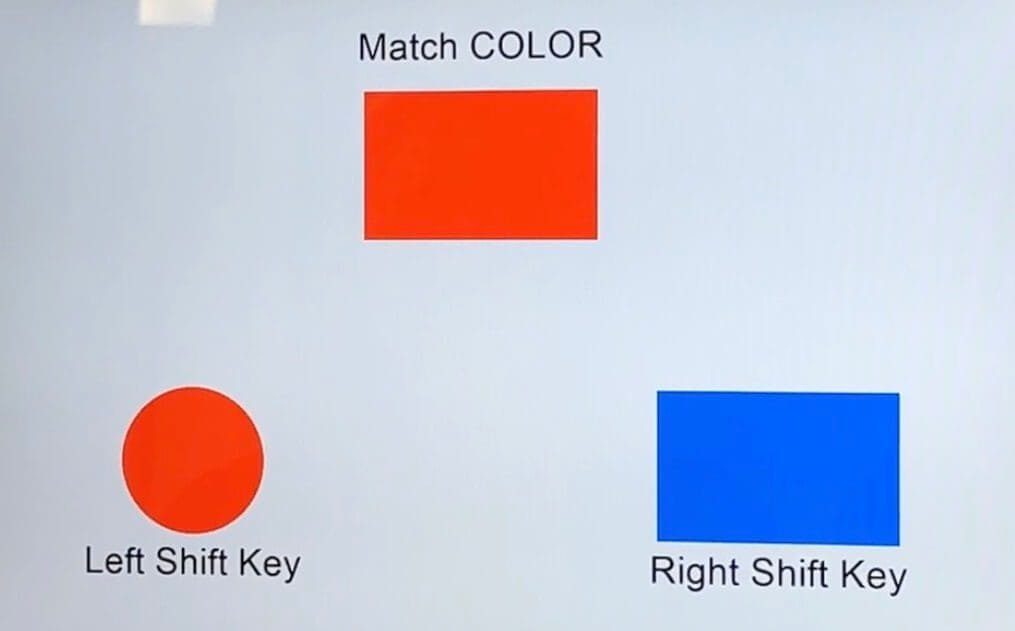
That is why someone can do fine in a quiet room, then struggle in real life where there is noise, stress, movement, screens, and constant interruption.This filtering skill is called response inhibition.
It is one of the cognitive domains we measure, and it is one of the domains we can train.
The 12 Cognitive Domains We Measure
Cognition is not one skill. It is a set of skills. That is why two people can both say, my memory is bad, yet have completely different problems underneath. We evaluate 12 cognitive domains so we can see where your brain is strong, where it is struggling, and what should be trained.
Visuospatial Working Memory
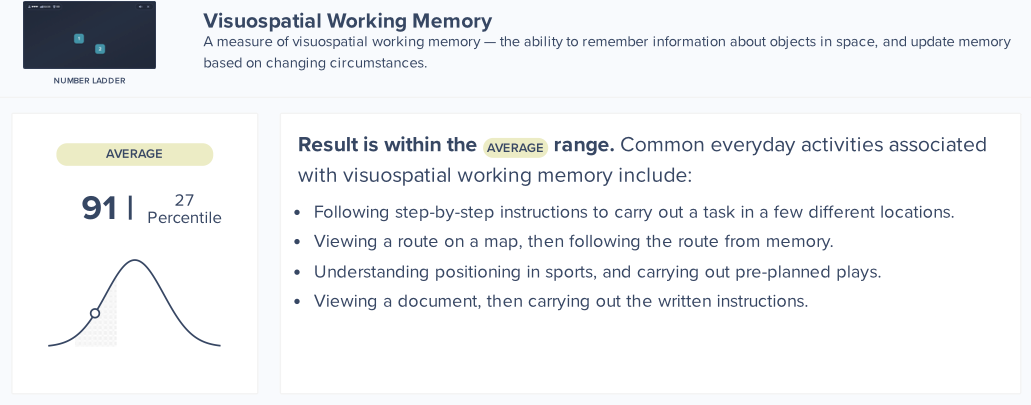
This is your ability to remember and update information about space and position.
Real life examples people relate to:
- You forget where you parked even when it was not that long ago
- You lose track of players, balls, or spacing in sports
- You struggle to follow directions when someone says, go left, then right, then it will be on your left
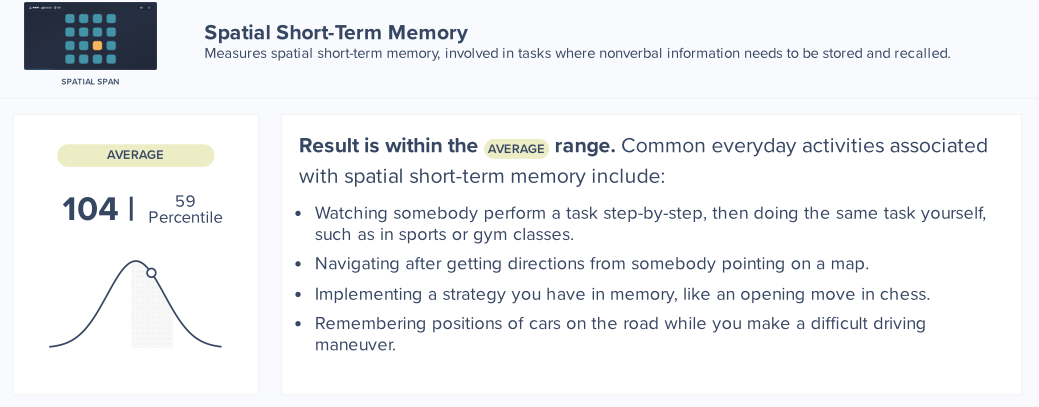
Spatial Short Term Memory
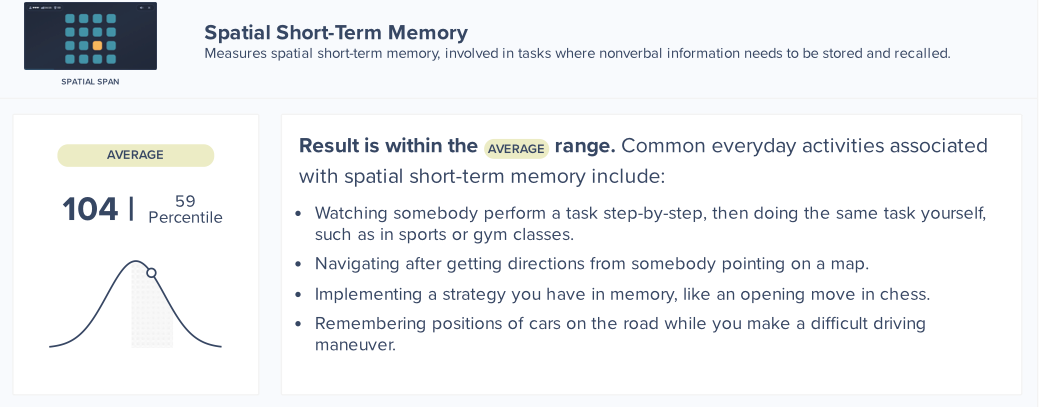
This is short term memory for nonverbal information.
Real life examples people relate to:
- You walk into a room and forget what you were going to grab
- You cannot remember where you placed your phone, keys, or wallet
- You feel like you are always retracing your steps
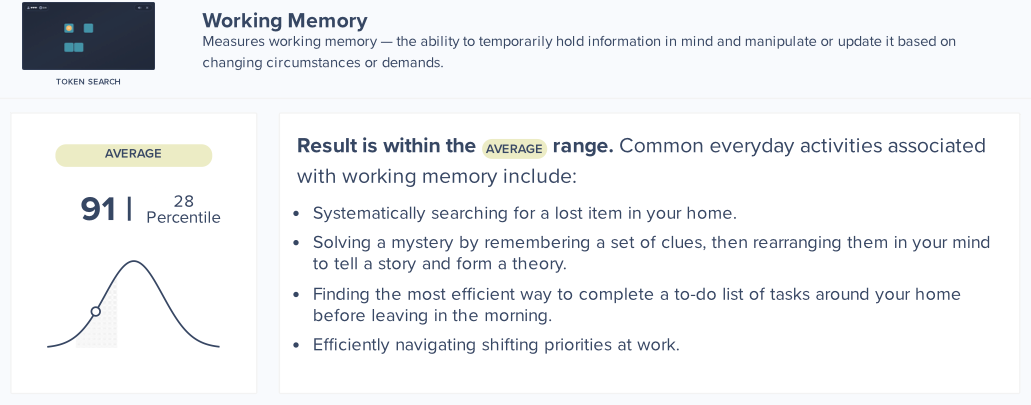
Working Memory
Working memory is the mental scratchpad your brain uses to hold information while doing something else.
Real life examples people relate to:
- You start a task, then get distracted and forget what you were doing
- You cannot hold onto instructions with more than one step
- You read something, then immediately forget the first part
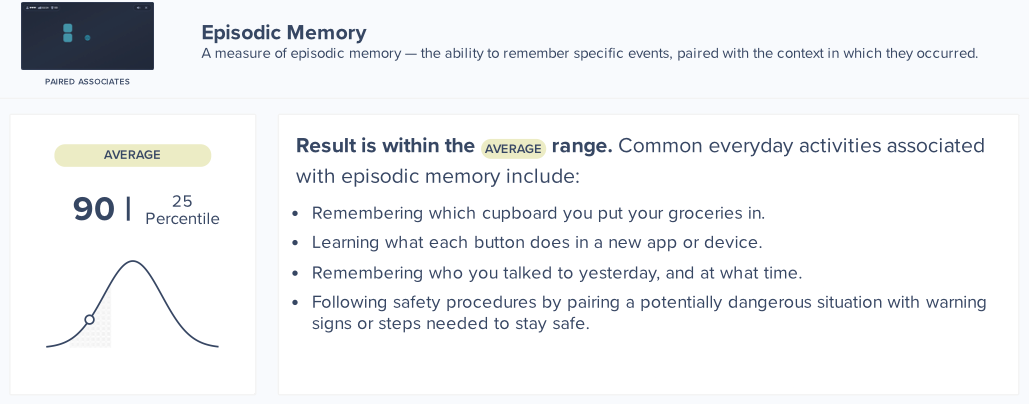
Episodic Memory
This is memory with context, time, place, and details.
Real life examples people relate to:
- You remember a person’s face but not where you know them from
- You forget parts of conversations that happened recently
- You struggle to recall details of events, even important ones
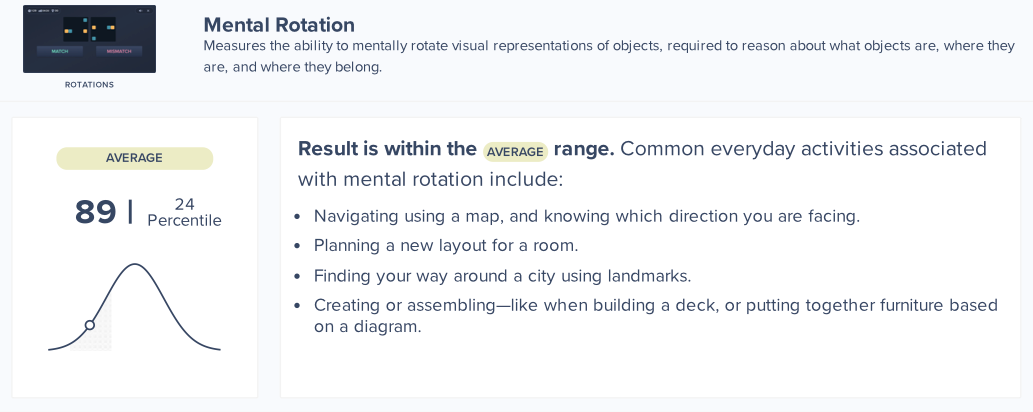
Mental Rotation
This is the ability to rotate objects in your mind.
Real life examples people relate to:
- You struggle to load a trunk or pack a suitcase efficiently
- You have a hard time assembling furniture even with instructions
- You get turned around easily in new places
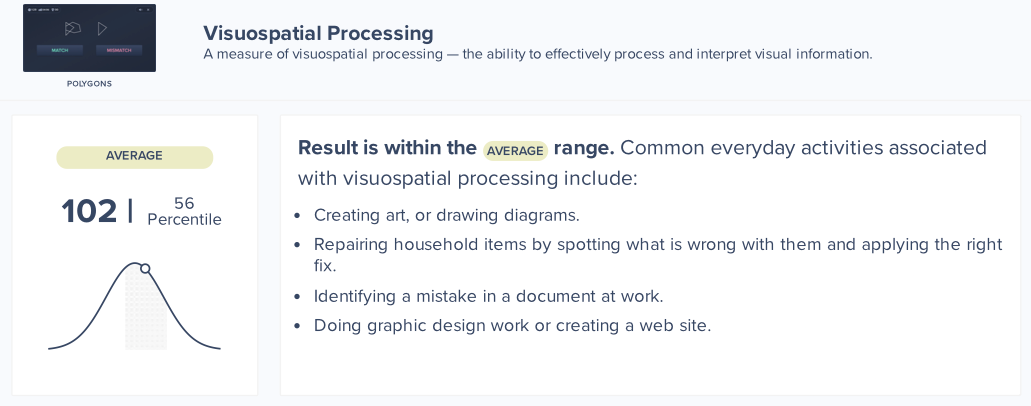
Visuospatial Processing
This is how your brain understands and processes visual information and space.
Real life examples people relate to:
- You lose your place when reading
- You feel mentally tired in grocery stores or big box stores
- You struggle to process diagrams, charts, or spatial layouts
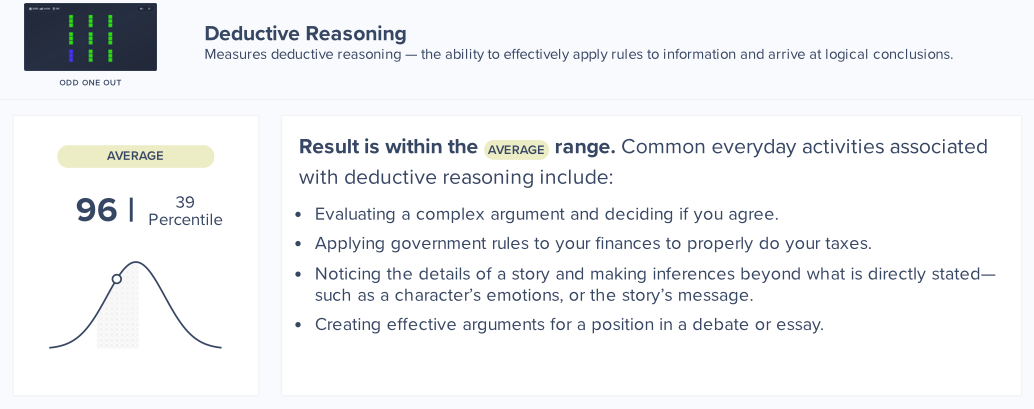
Deductive Reasoning
Deductive reasoning helps you apply rules and logic to reach conclusions.
Real life examples people relate to:
- You feel slower solving problems that used to be easy
- You struggle to make decisions quickly
- You second guess yourself more than you used to
Spatial Planning
This helps you plan steps and sequence actions, especially when movement or space is involved.
Real life examples people relate to:
- You struggle to plan your day in the right order
- You underestimate how long tasks will take
- You feel disorganized even when you are trying hard
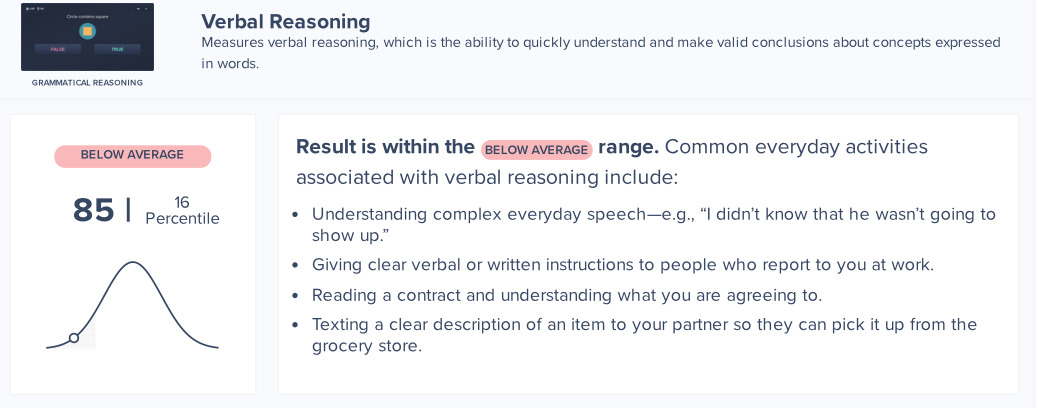
Verbal Reasoning
Verbal reasoning is understanding language and drawing accurate meaning.
Real life examples people relate to:
- You hear words but you do not process them as fast
- You struggle to follow complex explanations
- You feel mentally tired during long conversations
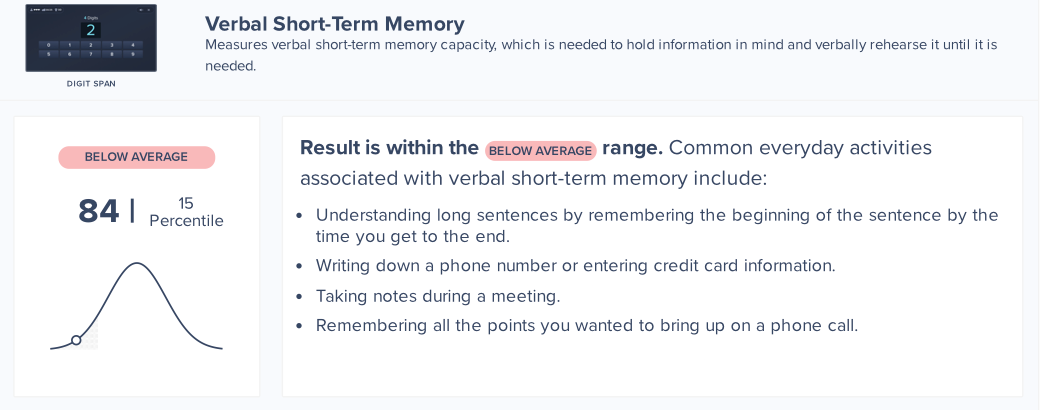
Verbal Short Term Memory
This is the ability to hold and recall words and verbal information.
Real life examples people relate to:
- You forget what someone just told you
- You walk away from a conversation and cannot recall details
- You need people to repeat instructions often
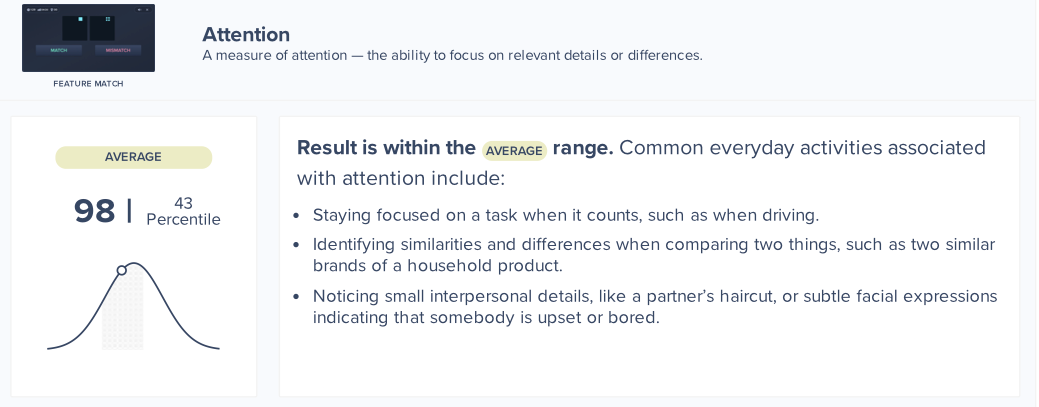
Attention
Attention is your ability to sustain focus and notice details.
Real life examples people relate to:
- You start strong, then drift off quickly
- You miss details even when you try to focus
- You need complete quiet to concentrate
Important Nuance:
Attention is real, but it is not always the root problem. Sometimes the real issue is filtering, which is why we also measure and train response inhibition.
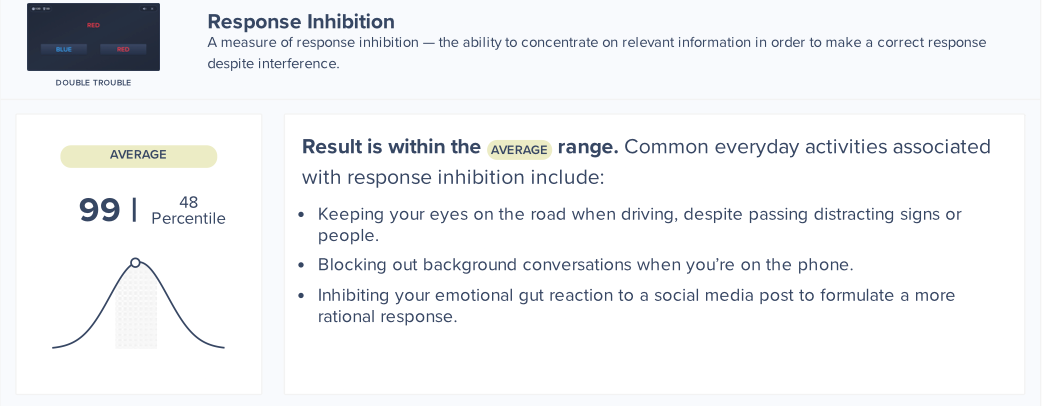
Response Inhibition
Response inhibition is your ability to filter distractions and pause before reacting.
This is one of the most misunderstood cognitive skills.
Many people think they have an attention problem when they actually have a filtering problem.
Real life examples people relate to:
- You cannot tune out noise in a classroom or office
- You feel overstimulated in busy places
- You react fast, then regret it later
- You make careless mistakes when you are rushed
Why this matters for real world success:vIf your brain cannot filter, it cannot store information well. That can look like memory problems, even when memory is not the true issue.vWhen we see which domains are weak, we can stop guessing and start training the right skills, in the right way, with a plan that adapts as you improve.
What Makes Our Approach Different
Most places treat cognitive symptoms with one tool. We treat cognitive symptoms by first understanding the system. That means our cognitive treatment plans are often connected to diagnostics and other supportive therapies that help the brain regulate and recover. This is also why interlinking matters on your journey, because cognitive symptoms often connect to other systems that deserve a full explanation.
Diagnostics that guide cognitive care
qEEG Brain Mapping is part of our diagnostic process, and it can help identify functional brain patterns that may relate to cognition.
If you want to go deeper, explore our qEEG Brain Mapping page and our broader diagnostic approach.
Treatments that can support Cognitive Improvement
Depending on your needs, cognitive treatment may connect with:
Neurofeedback
Hyperbaric Oxygen Therapy (oxygen to your brain)
Biofeedback
Vestibular and balance systems
This is not about doing everything for everyone.
This is about building a coordinated plan when cognition is being affected by more than one driver.
Who Benefits from Vestibular Therapy?
Cognitive testing shows what you can do.
qEEG Brain Mapping can show patterns of how the brain is functioning.
For example, in more advanced cognitive decline patterns, qEEG can show increased slow activity across broader regions. In earlier memory changes, slow activity may be more regional, such as temporal or frontal patterns.
If a pattern looks more global and severe, the right next step may include co-management with medical neurology. Good care often requires a team approach and it’s why we have many different medical professionals working in our Tampa office together with one another.
What Our Cognitive Training Looks Like
We use two primary training approaches in the clinic. Both are selected based on testing. One approach focuses on targeted cognitive exercises that build core thinking skills.vThe other approach focuses on speed, accuracy, and inhibition, which is often the missing link for people who struggle in the real world but test fine in quiet conditions.
A guided cognitive training program
This training is built to strengthen the exact skills that are weak on your assessment.
Instead of doing random activities, we choose targeted exercises designed to improve areas like working memory, attention, processing speed, visual and spatial skills, verbal reasoning and short term recall, planning, and problem solving.
This training is progressive. As performance improves, the exercises adapt. The tasks become more demanding, the timing becomes tighter, and the brain has to perform at a higher level.
The goal is not to stay busy. The goal is to build capacity.
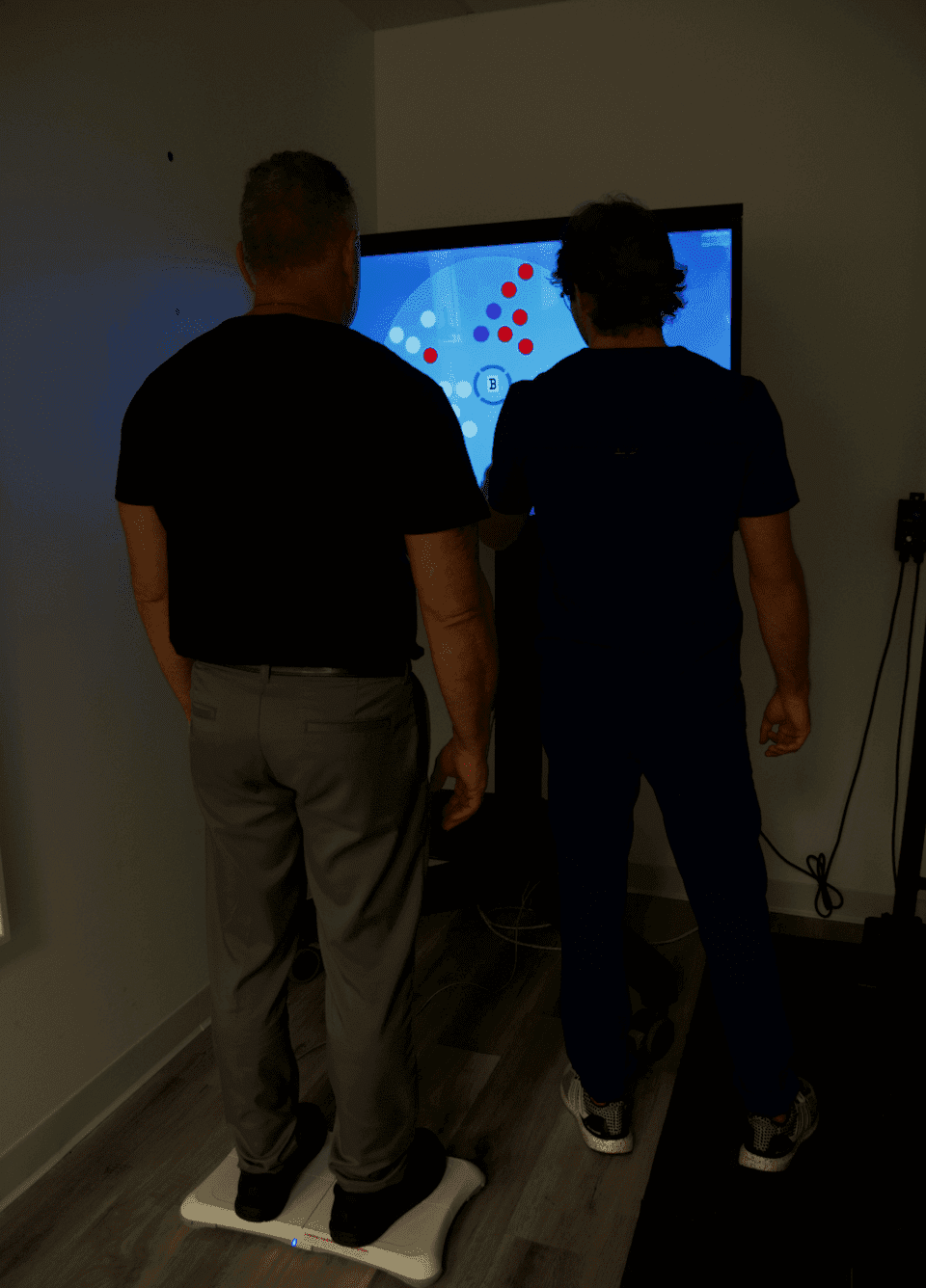
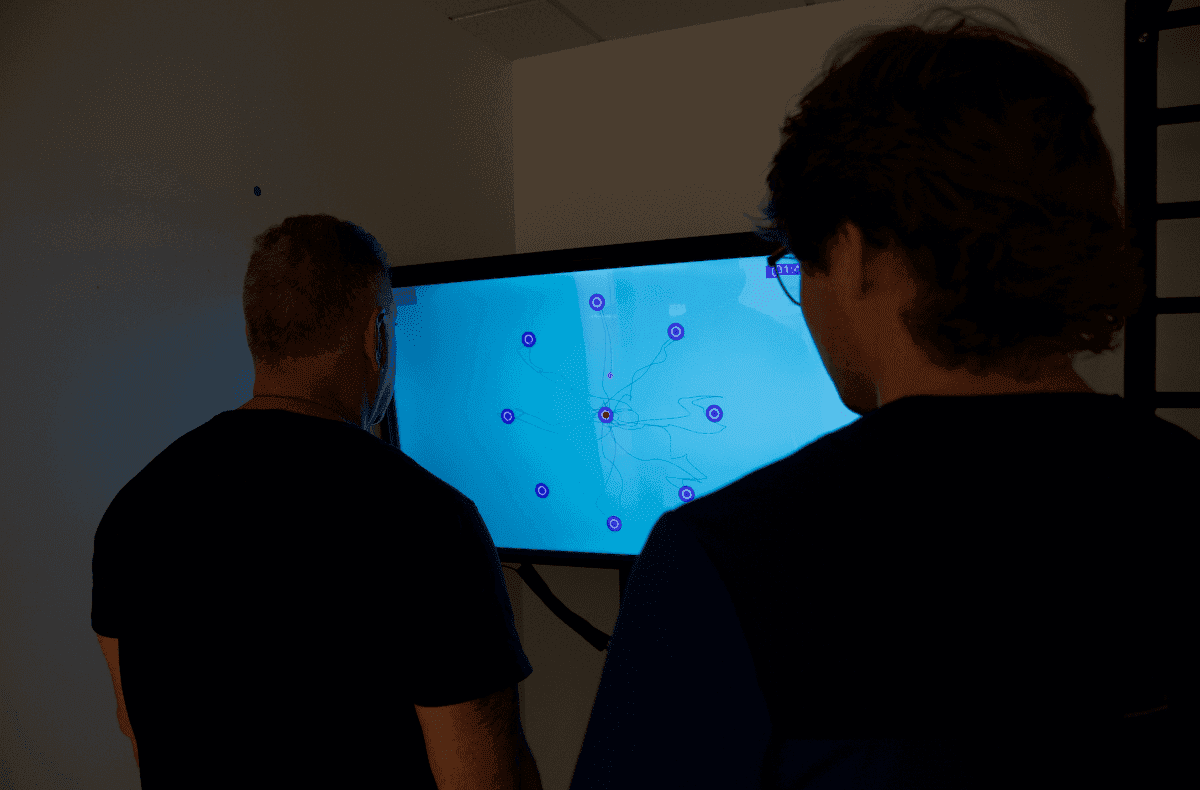
A reaction, accuracy, and inhibition training system
Some brains do fine in calm environments and struggle in real life. That is often a filtering problem. Filtering is a brain skill. It can be measured, and it can be trained.
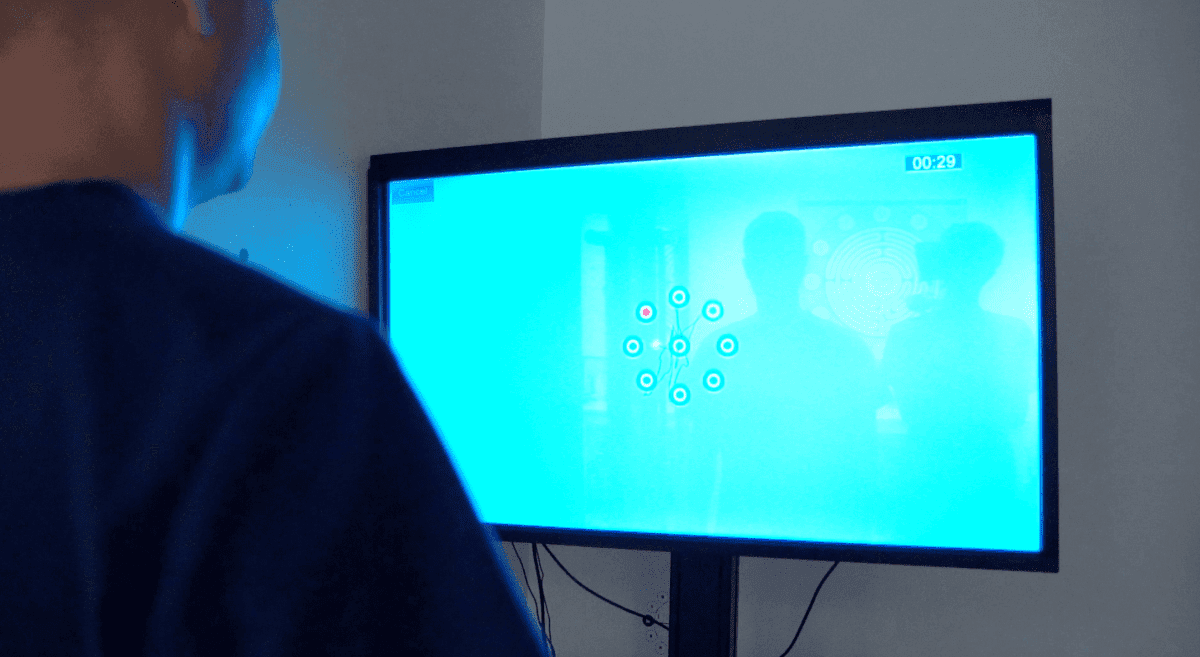
We use a large touchscreen based system that trains fast brain decisions, especially the ability to respond quickly when the brain should act, stop quickly when the brain should not act, improve accuracy under time pressure, reduce impulsive errors, and strengthen focus when distractions are present.
This matters for students in classrooms, adults in busy workplaces, and people recovering from head impacts who notice mental fatigue and overwhelm.
These symptoms are common signs of vestibular dysfunction. They are also frequently seen after concussion, with aging related balance decline, or when the vestibular system is not coordinating properly with vision and proprioception. If these patterns sound familiar, a comprehensive evaluation can help determine whether vestibular therapy should be part of your treatment plan.
Why This Can Help You Feel More Like Yourself
Cognitive symptoms are personal. They change how you work, how you parent, how you learn, and how you communicate. They also change confidence. When your thinking feels unreliable, you start second guessing everything.That is why a structured plan matters. A real plan gives you a way forward. It gives you measurable targets, and it gives your brain repetition with purpose. We cannot promise results. Still, when you measure first and train what is actually weak, you finally have clarity on what needs to improve.
Therapies That May Be Combined With Cognitive Training in Tampa
Cognitive training can be powerful on its own.
Yet sometimes cognition is being affected by other drivers, like stress physiology, brain regulation patterns, post concussion changes, or neuroinflammation. Depending on your case, we may recommend supportive therapies that align with your neurological diagnostic findings.
Neurofeedback
Neurofeedback has been shown to support cognition, and it can be used to help the brain regulate patterns that affect focus, speed, and mental clarity. If you want the full overview, explore our Neurofeedback page.
Hyperbaric Oxygen Therapy
Hyperbaric oxygen can support cognition in cases where neuroinflammation is involved, including concussions and certain cognitive decline patterns, because oxygen is fuel for the brain. If you want details, explore our Hyperbaric Oxygen Therapy page.
Biofeedback
Biofeedback can support nervous system regulation, which matters because cognition often worsens when the body is stuck in stress. If you want to learn more, explore our Biofeedback page.
Vestibular and balance systems
Balance and visual tracking systems can also affect cognitive load. When the brain is working too hard just to stabilize and orient, mental clarity can suffer. If symptoms include dizziness, visual discomfort, unsteadiness, or motion sensitivity, explore our Vestibular Therapy page.
At Home Cognitive Support Options
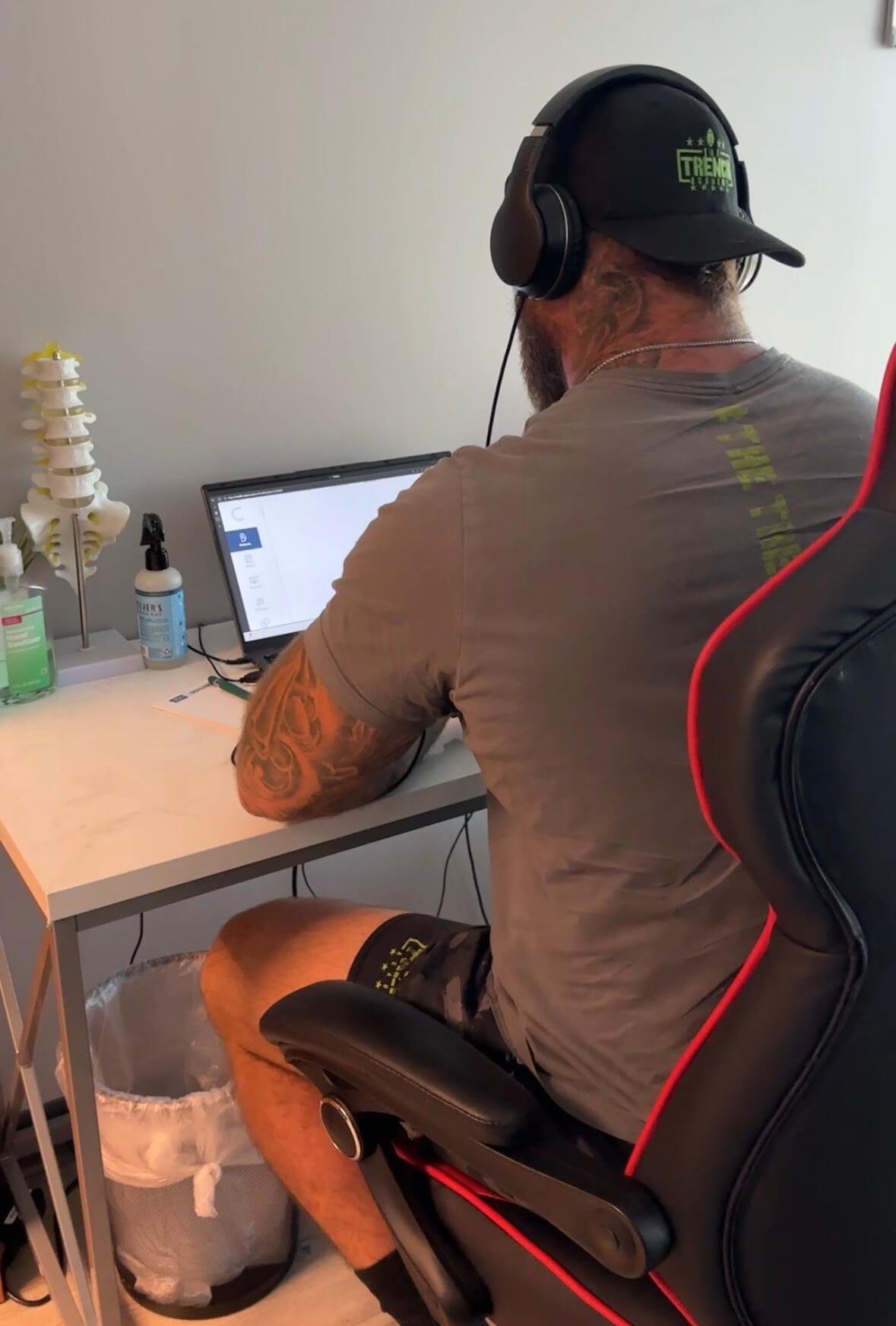
Some patients want support between visits. We often recommend at home cognitive training options that include paid plans and free training options. At home work can be a helpful supplement, especially when it is guided by what your neurological testing shows.
What a Cognitive Treatment Plan Looks Like
Step 1:
Start with cognitive testing
We measure strengths and weaknesses across the 12 domains. This helps us avoid a one size fits all plan.
Step 2:
Match training to your actual deficits
We select targeted training based on what is weak, not based on what sounds good.
Step 3:
Integrate supportive care
If cognitive symptoms appear connected to regulation, injury, inflammation, we may recommend additional therapies that align with your diagnostics.
Step 4:
Retest and adjust cognitive treatment
The goal is not just effort. The goal is progress. As cognitive performance improves, the plan should evolve.
Frequently Asked Questions About Cognitive Treatments
Are cognitive treatments the same as brain games
No. Random games are not a plan. Cognitive treatment should be guided by testing, matched to specific deficits, and progressed over time.
How long does cognitive treatment take
It depends on what is impaired and how your brain responds. Some people need a shorter focused block. Others need a longer plan with re testing and adjustment.
What if only one area is weak with my cognitive test
That is common. One weak domain can create compensation and fatigue across the whole system. It can also look like motivation problems when the real issue is cognitive load.
What if my child can focus on games but not in class
That can be a clue that attention is not the true root problem. Classrooms include noise, distractions, movement, and social stress. If filtering and inhibition are weak, a child may struggle in real life environments even if they can focus well in a quiet room.
Can cognitive treatments replace medical care
No. Cognitive treatment is supportive and rehabilitative. If we see signs that medical neurology involvement is appropriate, we will recommend that as part of your care plan.
Traveling for Cognitive Therapy in Tampa
Genesis Brain Institute is conveniently located in the Rocky Point business district, just minutes from Tampa International Airport.
For patients traveling for vestibular therapy in Tampa, nearby accommodations include:
The Westin Tampa Bay
DoubleTree by Hilton Tampa Rocky Point Waterfront
Our proximity to Tampa International Airport makes it convenient for out of town patients seeking advanced diagnostics and integrated neurological care.
When to Seek Cognitive Treatment in Tampa
Consider getting evaluated if:
- You feel foggy, slower, or overwhelmed more often
- You have memory concerns, even if you are not sure why
- You notice focus problems in busy environments
- You have had a concussion, sports injury, or car accident
- You worry about cognitive decline, dementia, or long term brain health
- Your child is struggling in class even though they test fine in quiet settings
These are not things you have to ignore until they become a crisis.
Take the First Step Toward Clarity
Cognitive decline and cognitive stress rarely feel dramatic at first. They feel like small losses that stack up. The right next step is not guessing. The right next step is measuring what is going on, then training what is actually weak. If you want to go deeper, explore our qEEG Brain Mapping page and our diagnostic process, because cognition is often connected to brain regulation, balance systems, stress physiology, and recovery capacity. When you are ready, reach out to schedule a cognitive evaluation and learn whether cognitive treatments are the right next step for you.
Improved vestibular function can help reduce dizziness and balance challenges, as well as encourage better perception of the environment possibly leading to decreased anxiety and improved awareness.