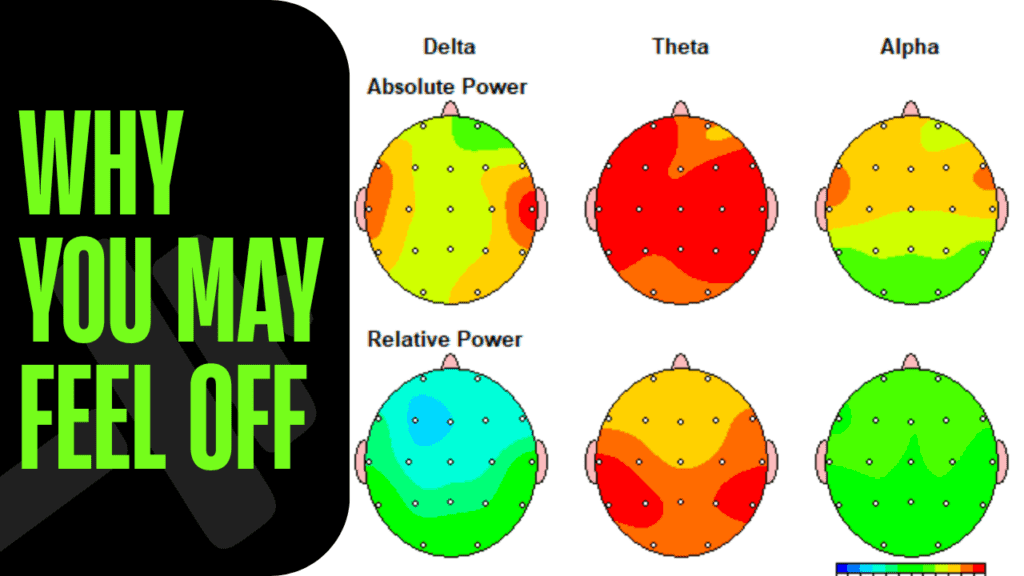
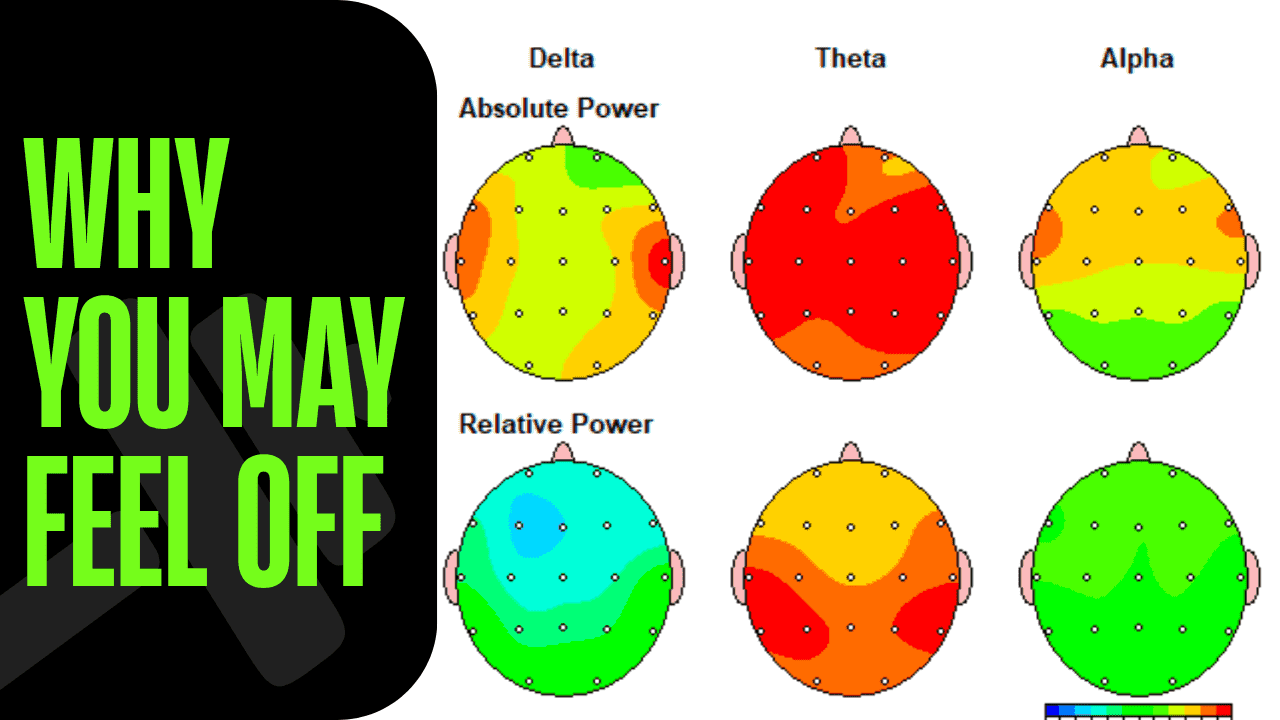
What is brain mapping, and why are so many people still living without real answers?
Every day, children, teens, parents, veterans, and adults are told they have ADHD, anxiety, PTSD, or depression.
They leave with a label.
Sometimes they leave with medication.
But many still go home asking the same painful question, why do I still feel this way?
That is the part too many people never get help with. They know the name of the struggle, but they still do not understand what may be happening inside the brain.
When that happens, people can start to lose hope.
Parents feel helpless. Adults feel stuck. Families begin to wonder if this is just how life will always be.
Brain mapping matters because it gives us a chance to look deeper.
Instead of stopping at the label, it helps ask a better question, what may really be going on beneath the surface?
What Is Brain Mapping?
Brain mapping is a way to look at how the brain is functioning, not just how it looks on a scan.
At Genesis Brain Institute in Tampa, this often means qEEG brain mapping.
qEEG stands for quantitative electroencephalogram. In simple terms, it measures the brain’s electrical activity and turns that information into visual maps.
During the test, a cap with sensors is placed on the head to record brainwave activity from different parts of the brain.
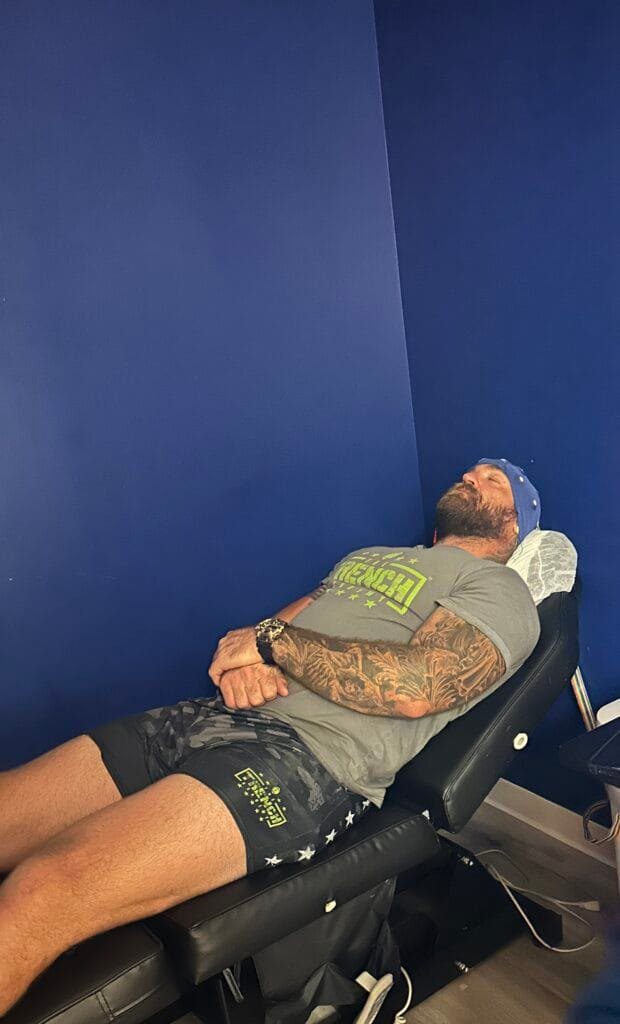
That information is then processed into maps that can help show where certain brainwave patterns may be too high, too low, too fast, too slow, or not working together the way they should.
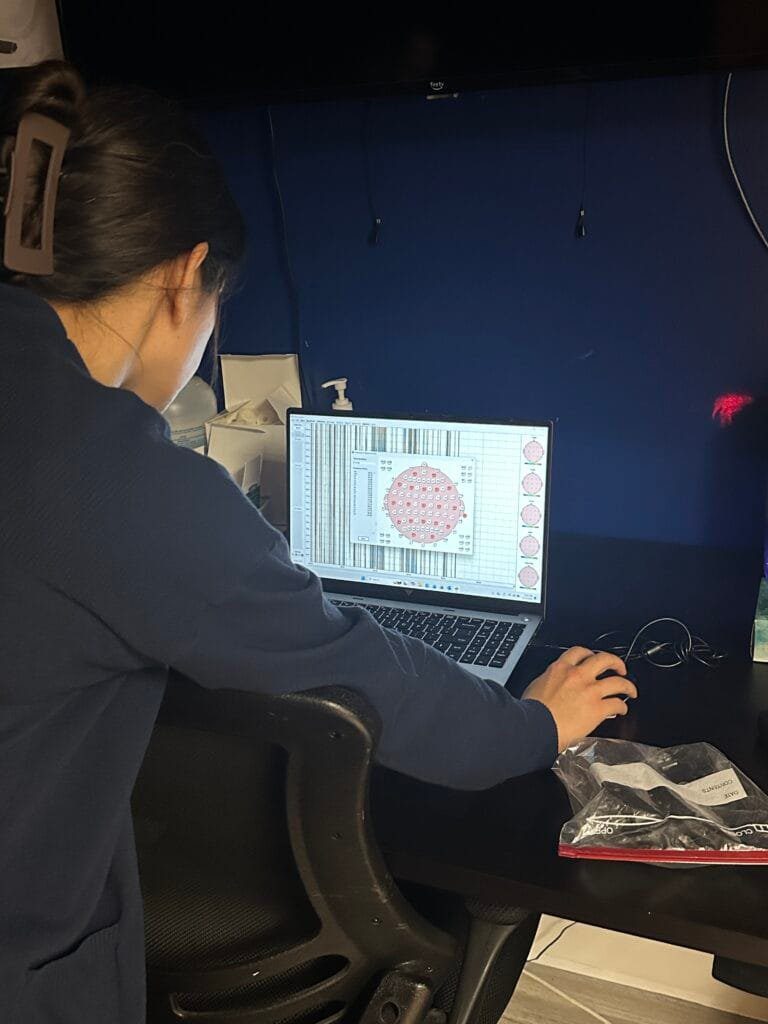
That matters because many people have already had tests that look at structure. An MRI or CT scan can be very important for seeing things like a bleed, cyst, tumor, or other visible damage. But those scans do not show how the brain is functioning moment to moment. Brain mapping helps fill in that gap by looking at function.
This is one reason qEEG brain mapping can be such a crucial test.
It can help show whether the brain is overactive in certain areas, underactive in others, or struggling with timing and communication between regions.
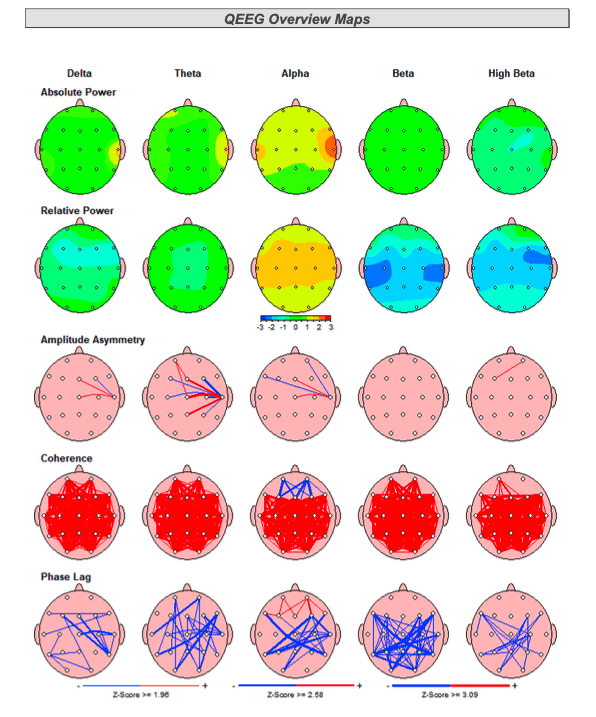
In the maps, red can reflect too much activity in a certain pattern, while blue can reflect too little. Green is closer to the healthy average.
The goal is not just to look at colors. The goal is to understand what those patterns may mean for the person sitting in front of you.
That is where brain mapping becomes so helpful for treatment planning.
If one area of the brain is working too hard, the plan may need to help calm that area down. If another area is not active enough, the plan may need to support or stimulate it. If the brain is stuck in a fast, stressed pattern, the approach may look different than it would for someone whose brain is slowing down. Without that kind of information, it is much easier to guess wrong.
Too many people are told what they have before anyone slows down long enough to understand why.
A child may be labeled ADHD. An adult may be labeled anxious or depressed. A veteran may be labeled PTSD. But those labels do not explain which brain regions may be struggling or whether two people with the same diagnosis actually need the same treatment.
Brain mapping helps move the conversation beyond the label and toward what may really be happening beneath it.
That is especially important because the same diagnosis can show up in very different ways.
Dr. Emily Kalambaheti explains that ADHD is a great example.
Two people can both be told they have ADHD and still have very different patterns in the brain. Their symptoms may overlap, but what is driving those symptoms may not be the same. That means they may not need the same treatment plan. One person may need help calming an overactive pattern. Another may need support for a different area that is not functioning well. The label may sound the same, but the brain underneath it may tell a different story.
This is why brain mapping is not about putting someone in a box.
It is not there to say a person is only their diagnosis. It is there to help uncover what may be driving the symptoms. In some people, the brain may be running too fast. In others, it may be slowing down. In some, the issue may be attention. In others, stress, trauma, poor sensory processing, or another pattern may be getting in the way. Brain mapping helps make those differences easier to see so treatment can be more personalized.
It is also important to say what brain mapping is not.
Brain mapping is not meant to replace a full clinical evaluation. It is not a stand alone diagnosis. It is one important piece of a bigger picture. Medical history still matters. Symptoms still matter. The person still matters. But when qEEG is added to that fuller picture, it can give patients and families something many of them have been missing for a long time, more clarity.
And for many people, that clarity brings hope.
Because when you can finally see that something real may be happening in the brain, it changes the conversation. It is no longer just, here is your label. It becomes, here is what may be going on, and here is how a more targeted plan can be built around you.
Can Brain Mapping Diagnose ADHD, Anxiety, PTSD, or Depression?
This is one of the biggest questions people ask, and the answer matters.
Brain mapping is not meant to be a stand alone diagnosis.
At Genesis Brain Institute, qEEG brain mapping is used as a diagnostic tool, but it is only one piece of the bigger picture. Dr. Emily explains that you cannot look at one brain map by itself and simply say, this person has ADHD, or this person has PTSD. That is not how it works.
Instead, brain mapping helps show how the brain may be functioning.
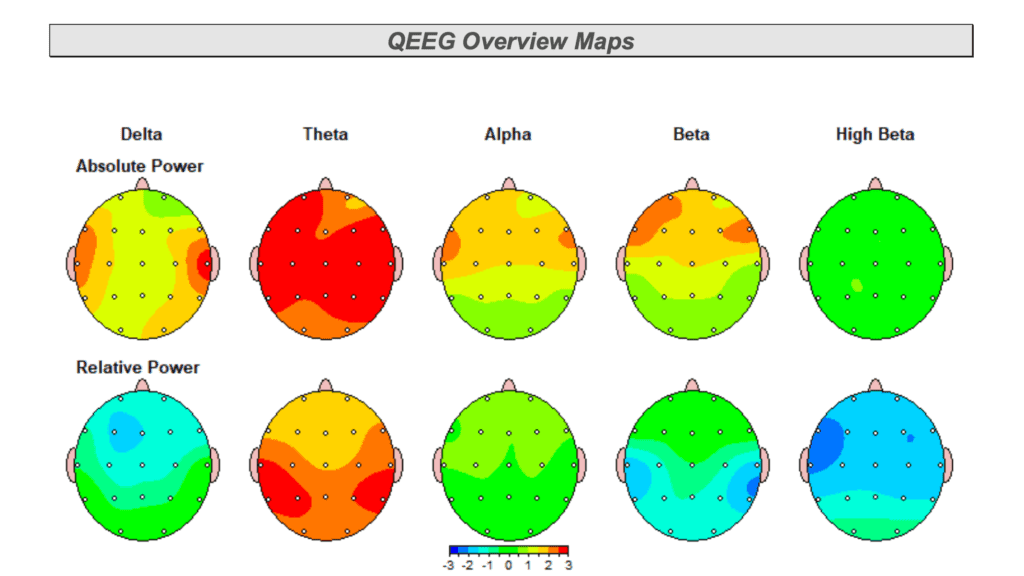
It can help reveal whether certain areas are overactive, underactive, or not communicating well. It can show patterns that may line up with symptoms like poor focus, racing thoughts, emotional overwhelm, trauma related stress, or mental slowing. Then that information can be compared with the person’s history, symptoms, and full evaluation to help guide a more personalized plan.
That is important because many diagnoses are based on clusters of symptoms, not on actually looking at how the brain is functioning.
Two people may both be told they have ADHD, yet one may be dealing with a brain that is running too fast while the other may be dealing with a brain that is slowing down. One person may seem forgetful because they are inattentive. Another may be dealing with true cognitive slowing. On paper, the labels may sound similar. Under the surface, the patterns may be very different.
That is why brain mapping can be so helpful.
It does not reduce someone to a label. It helps ask a better question. What may be happening in this person’s brain that is creating these symptoms?
For many patients and parents, that shift is powerful. Instead of being told only what the problem is called, they begin to understand what may be driving it. And when you understand more clearly what may be going on, treatment can be designed more carefully instead of being built on guesswork.
Why Mental Health Labels Alone Do Not Give Patients Real Answers
For many patients, getting a diagnosis feels like it should bring relief.
At first, it can. A parent may finally hear a reason why their child is struggling. An adult may feel seen for the first time. A veteran may feel like someone finally understands what they have been carrying. But after that first moment of relief, many people still find themselves asking the same question.
Now what?
That is the problem with labels by themselves.
A label can describe a group of symptoms. It can give a name to what someone is experiencing. But it does not always explain what is driving those symptoms in that person’s brain. It does not show whether the brain is running too fast, slowing down, stuck in a stress pattern, or struggling in a specific region. It does not tell you why two people with the same diagnosis may feel completely different or why one treatment helps one person and does very little for another.
That is why labels alone often leave patients frustrated.
A child may be told they have ADHD, but the family still does not understand what is really happening beneath the surface. An adult may be told they have anxiety or depression, but they still do not know why they feel overwhelmed, foggy, restless, shut down, or unlike themselves. A veteran may be told they have PTSD, but they still want to understand what may be happening inside the brain and what can actually help.
People do not just want a name for the struggle.
They want clarity. They want to know why they feel this way. They want to know what may be getting in the way of healing, focus, memory, mood, or peace. Most of all, they want a plan that makes sense.
That is where a deeper approach matters.
Instead of stopping at the label, a deeper approach asks better questions. What may be happening in the brain? Which areas may be overactive or underactive? Is this pattern the same as someone else with the same diagnosis, or is it different? What kind of care may fit this person best?
That shift matters more than most people realize.
Because when a patient understands that the label is not the whole story, hope starts to come back. The conversation changes from This is what you have to This is what may be going on, and here is how a more personalized treatment plan can be built around you.
That is what so many patients have been missing.
Not just a label. Not just a prescription. A better answer.
Why Do Two People With ADHD Need Different Treatment Plans?
This is where so many families get stuck.
A child gets labeled ADHD, and the next step often feels automatic. The assumption is that the label tells the whole story and that the treatment should be simple.
But that is not how the brain works.
Dr. Emily Kalambaheti explains that ADHD is not just one pattern. In fact, research has shown different ADHD patterns, and those patterns should not all be treated the same way. That matters because two children can both struggle with focus, school, impulsivity, or restlessness and still have very different things happening in the brain.
One child may have a brain that is running too fast.
Another may have a brain that is slowing down.
One may look distracted because stress and anxiety are pulling attention in too many directions.
Another may seem forgetful because the brain is not processing information efficiently.
Another may have trouble with sensory processing, eye tracking, or filtering out what matters and what does not.
On paper, all of them may get called ADHD.
But under the surface, they may not need the same help.
That is why labels by themselves often leave patients and parents frustrated.
The label may describe the behavior. It may explain why school is hard. It may explain why home feels stressful. But it still does not answer the question most families are really asking.
Why is this happening?
And if the why is not clear, the solution is not clear either.
That is where brain mapping can be so helpful.
Instead of assuming every person with ADHD needs the same next step, qEEG brain mapping can help show what may be happening in that person’s brain. It can help reveal whether certain areas are overactive, underactive, or out of balance. It can help show whether the brain looks more overstimulated, more slowed down, or stuck in a pattern that needs a different kind of support.
That does not mean brain mapping replaces the full evaluation.
It means it can add something many families have never been given before, more clarity.
And clarity matters.
Because when you understand more about what may be driving the symptoms, treatment planning becomes more personal. Instead of chasing the label, the goal becomes helping the brain in the way that person may actually need.
That is the part many patients never get.
They get the diagnosis.
They get the label.
Sometimes they get medication.
But they still do not get a real explanation.
And when people do not understand why they feel this way, it is hard to feel hopeful about the solution.
That is why this conversation matters so much.
Two people can share the same ADHD label and still need very different treatment plans. The label may sound the same. The brain underneath it may not.
That is one more reason labels alone do not tell the whole story.
Why a Full Diagnostic Workup Matters More Than One Test Alone
A qEEG can be incredibly helpful, but it is still only one piece of the picture.
That is why Dr. Emily Kalambaheti makes it clear that the goal is not to rely on one test by itself. The goal is to understand the brain and nervous system more fully. At Genesis Brain Institute, that may include more than qEEG brain mapping. It may also include balance testing, eye movement testing, pupillometry, cognitive testing, and other ways of looking at how the brain and body are functioning together.
Why does that matter?
Because symptoms do not always come from one place.
A child who looks inattentive may also have trouble with eye tracking. A person who feels anxious may also be stuck in an overactive stress response. Someone who feels foggy may be dealing with slowing, poor regulation, sensory overload, or another pattern that a label alone does not explain.
Pain can also be part of that picture.
When someone is in significant pain, sleep often suffers. When sleep suffers, the brain can suffer too. Focus can drop. Mood can change. Stress can rise. Recovery can feel harder. That is one more reason a deeper diagnostic workup matters. Sometimes the issue is not just brain based. Sometimes pain is helping drive the problem, and if that piece is missed, the full picture is missed too.
That is why Genesis Brain Institute may also bring in Dr. Christopher Gleis, Pain Management Specialist, along with other medical providers when needed.
If pain is affecting sleep, daily function, stress, and brain health, the goal is to look at that too. Instead of acting like every problem belongs in one box, the team works together to better understand what may be contributing to the symptoms. In some cases, that means looking at the brain more deeply. In others, it means also addressing pain, sleep disruption, or other medical factors that may be getting in the way of healing.
That is why one test alone does not always tell the whole story.
A fuller diagnostic process, like our Quant360 Functional Analysis, helps create a more complete picture. It helps clinicians look at how different parts of the brain, body, and nervous system may be working together, or not working together, so the treatment plan is based on more than one snapshot.
For patients, that can be a major shift.
Instead of feeling like they are being guessed at, they start to feel like someone is finally slowing down long enough to understand what may really be going on.
How Brain Mapping Can Help Guide a More Personalized Treatment Plan
Once a fuller diagnostic picture is in place, treatment can become much more personal.
That is one of the biggest reasons brain mapping matters. If the findings show one pattern, the plan may need to help calm an overactive area. If the findings show another pattern, the plan may need to support a weaker area, improve regulation, or help the brain process information more efficiently.
That is why treatment should not be built around a label alone.
It should be built around the person and what the data shows.
At Genesis Brain Institute, the goal is not to throw one therapy at every patient and hope it works. The goal is to use the findings from a fuller diagnostic workup, including the qEEG brain map, to help guide what may make the most sense for that individual.
Depending on what the testing shows, that may include therapies such as hyperbaric oxygen therapy, neurofeedback, biofeedback, TMS, and many other treatment exercises and interventions designed to support brain function, regulation, recovery, and performance. In fact, there are more than 60 different treatment exercises and options that may be considered depending on what the diagnostics reveal.
That matters because the qEEG brain map is not meant to be interesting and then ignored.
It is meant to help guide action, guide treatment and help the patient.
If the brain map shows an overactive pattern, the treatment plan may focus on calming that pattern down. If it shows an underactive area, the plan may focus on supporting or activating that area. If the findings suggest problems with regulation, stress response, trauma related patterns, or slowing, the care plan can be shaped around that instead of relying only on the label.
This is also why retesting matters.
The goal is not just to start treatment. The goal is to track progress. After a person goes through care, the brain can be looked at again to see what has changed. That helps show whether the plan is moving in the right direction, whether improvements are happening, and whether the next step should stay the same or be adjusted.
That is a very different experience for patients.
Too many people spend years trying things without ever really knowing why they are trying them or whether anything is actually changing. A better plan starts with better clarity. Then it uses that clarity to build a more personalized path. Then it retests to see if progress is being made.
That is where people begin to feel real hope.
Because they are not just being told what they have.
They are being shown what may be going on, what can be done about it, and whether the plan is actually helping.
Labels Can Name the Struggle, but They Do Not Explain the Brain
Too many people are living with symptoms that affect school, work, relationships, sleep, peace, and joy, yet they still do not feel like they have real answers.
They have been given labels. They have been given opinions. Some have been given medication. But many still lie awake at night asking the same question, why do I still feel this way?
That is why this matters.
What is brain mapping if not a chance to look deeper when the usual answers have fallen short?
Not to reduce a person to a test. Not to pretend one map explains everything. But to help uncover what may be happening beneath the surface, so patients and families are not left carrying labels with no real clarity behind them.
Because labels may describe a struggle, but they do not always explain the brain.
They do not show where the brain may be overactive or underactive. They do not show whether stress, trauma, slowing, poor regulation, pain, sleep disruption, or something else may be helping drive the symptoms. They do not tell a parent why their child is struggling. They do not tell an adult why they no longer feel like themselves. And they do not give people the peace that comes from finally feeling understood.
That is what makes deeper testing so powerful.
When you begin to understand what may really be going on, the next step can become more personal, more thoughtful, and more grounded in something real. That is where hope starts to return, not the kind of hope built on hype or empty promises, but the kind that comes when a person finally feels like there may be a real reason for what they have been experiencing. When the story becomes deeper than the label, and when the next step begins to feel more personal, more thoughtful, and more grounded in something real, people often begin to believe again that things can get better.
For many patients, that is what they have been searching for all along. They were never just looking for a name for the struggle. They were looking for an answer that made sense, a plan that felt personal, and a reason to believe they were not stuck this way forever.
Take the Next Step With Genesis Brain Institute in Tampa
If you want to understand how your brain is functioning through the Quant360 Functional Analysis schedule a consultation or request more information at GenesisBrainInstitute.com. Every brain deserves to feel calm, confident, and connected again.
Disclaimer: This content is for informational purposes only and does not constitute medical advice. Please consult with a licensed healthcare provider. Genesis Brain Institute is a Brain Treatment Center in Tampa offering non-pharmaceutical solutions that bring clarity, restore function, and offer real hope for those who feel lost, stuck, or simply want more from life.