ADHD non medication treatment is something most parents only discover after years of tutoring, frustration, and the quiet fear that something is off in their child that no one is actually measuring.
Are you tired of hiring tutor after tutor with no real progress.
Are you worn out from being told your child cannot sit still or is not doing their work.
Are you wondering why nothing changes even though your child is trying with everything they have.
Mom or Dad, it is not their fault. It is not your fault either.
And most importantly: They are not broken.
Something real is happening inside the brain. Something that a tutor cannot see and something a standard pediatric visit is not designed to measure.
Pediatricians care deeply but they are under heavy schedules. They have only minutes with each child. They check growth, safety, labs, and behavior. They do not have the tools to evaluate the attention networks, the timing circuits, the balance system, or the electrical patterns that shape how a child learns.
So the answer becomes “Let’s wait and see.” Or “This may be ADHD and medication can help.”
But nothing inside the brain is being measured. And the very thing your child needs is being missed.
The encouraging news is this. One group of tests can show you more about your child’s brain in one visit than months of tutoring ever could help.
In fact these tests often cost less than tutoring and can finally reveal if everything is ok and show you targeted exercises to bring the brain back into balance.
This is where real hope begins.
A Soccer Field Discovery That Explained a Child’s ADHD Struggle
This truth became real during a simple conversation at a soccer field. The sun was setting, kids were laughing, and parents were talking on the sidelines. It looked like a normal evening. But the story I heard was anything but normal.
The mother standing next to me looked tired. Not the kind of tired that comes from a long day. The kind that comes from months or even years of worry.
She told me they had spent more than $6,000 on tutoring. Every week was another session. Every month was another bill. She hoped each new tutor would finally make things click. But nothing changed.
Homework took hours. Some nights ended in silent frustration. Other nights ended in tears. She feared her child would not be ready for sixth grade because they were so far behind.
She went to her pediatrician for help. The doctor cared deeply but did not have the time or the tools to dig deeper. The visit was short. The recommendation was familiar. “This sounds like ADHD and medication may help.”
She did not want that path. She wanted answers. She wanted to know why her child was struggling when they were trying so hard. She wanted to understand what was happening inside the brain before making any big decisions.
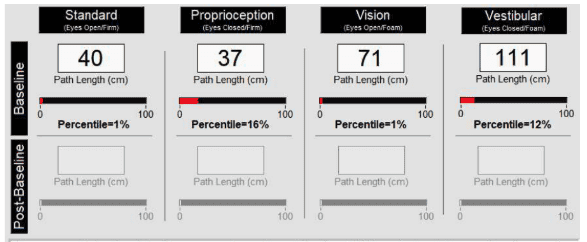
They only had a few minutes that day at the field, so we started with one simple test. A quick balance assessment. It takes only 10 minutes, but it reveals how well the brain connects movement, stability, and eye tracking.
I wished we could have done a qEEG Brain Map right there on the sidelines, but that would come later. Right now they just needed to know if more testing was necessary.
The balance test told the whole story.
It showed that the system responsible for coordinating eye movements was working far too hard. This system is directly tied to reading.
If the eyes cannot track smoothly across a page, the brain cannot keep up with the information. Words blur. Lines jump. Focus breaks. The child becomes exhausted long before the assignment is finished.
They were not behind because of a lack of intelligence or even poor vision (the vision was perfect). They were not behind because they were not trying.
They were behind because their brain was fighting to stay balanced while trying to read.
This moment changed everything. The mother finally had an explanation that made sense. For the first time she saw the truth. Her child was not broken. Her child was overwhelmed.
So they came in for the full series of evaluations, The Genesis Quant360 Functional Analysis. These are the tests that show the entire story of how the brain is working. The ones that uncover what tutoring cannot see. The ones that finally point a family toward real solutions.
And now we can walk through those same tests together so you can understand what each one reveals and why hope is much closer than it seems for you or your child.
The Complete Brain And Body Testing Series Every Parent Should Know
Most families are only told about two paths! More tutoring or medication.

But neither one actually measures how your child’s brain is working.
Inside the Quant360 Functional Analysis at Genesis Brain Institute, we use a group of tests that look at the brain and body together.
These innovative tests include qEEG Brain Mapping, VNG eye and vestibular testing, balance and coordination testing, pupillometry, and cognitive performance testing.
Each test shows something different. Together they explain why your child struggles at school, melts down at home, or feels “off” in sports and daily life.
Let’s walk through each one in simple language.
qEEG Brain Mapping in Tampa
The attention blueprint inside the brain
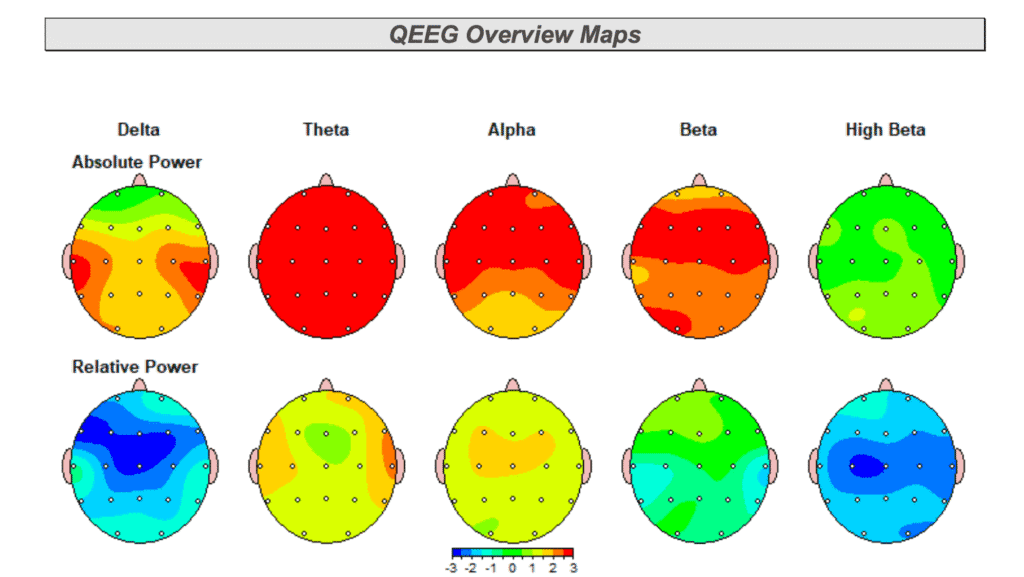
A qEEG Brain Map is a painless test that records your child’s brain waves and compares them to a database of other brains.
It shows where the brain is firing too fast, too slow, or out of balance.
In school
Fast, overactive brain waves can feel like racing thoughts, anxiety, talking out of turn, or trouble sitting still.
Slow, underactive brain waves can feel like daydreaming, zoning out, or taking a long time to start work.
At home
You may see a child who wants to listen but cannot stay with you through a whole set of instructions.
You may see big emotions over small things because the brain areas that calm and organize are not keeping up.
In sports
This can look like poor focus during plays, trouble following a coach’s directions, or “freezing” during pressure moments.
The map does not label your child. It simply shows which networks need support so focus, mood, and learning can improve.
VNG Testing
How the eyes and inner ear affect reading and focus
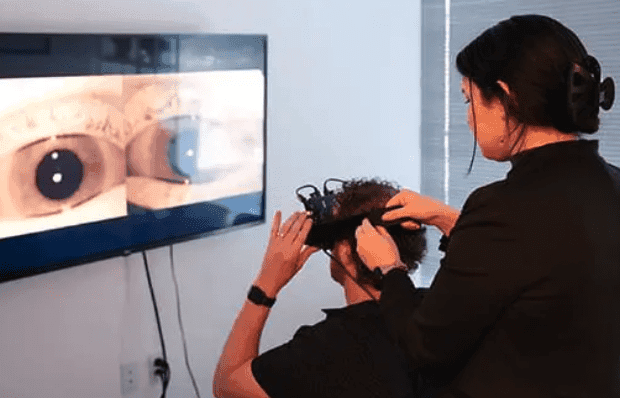
VNG testing tracks tiny eye movements while your child follows simple targets on a screen. It also measures how the inner ear and balance system respond.
In school
If the eyes cannot move smoothly across a line, reading becomes hard.
Kids may skip words, lose their place, or avoid long passages.
Copying from the board can feel impossible because the eyes and brain are working too hard to lock in.
At home
Homework turns into battles because their brain is tired long before the assignment is done.
You may notice that they hate reading out loud or complain that the words “move” on the page.
In sports
This shows up as trouble tracking a ball, misjudging distance, or feeling dizzy with quick head turns.
VNG helps us see if the “camera system” of the brain is stable and clear or if your child is fighting hidden eye and vestibular stress every day.
Balance And Coordination Testing
The base that supports learning and movement
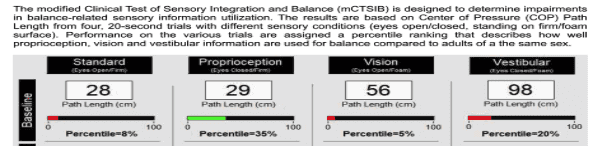
Balance testing looks at how your child’s body holds itself still and how it responds when the ground changes under their feet. It is one of the core metrics inside the Quant360 Functional Analysis.
In school
Poor balance often connects with poor posture, fidgeting in the chair, and difficulty sitting still on the carpet.
Kids may seem “wiggly” not because they choose to move but because their brain is working hard to not tip over.
At home
You might see stubbed toes, tripping, bumping into things, or trouble with activities like riding a bike.
They may avoid certain playground equipment or complain that they feel “weird” or off.
In sports
This shows up as clumsiness, slow footwork, trouble changing direction, or fear of contact.
When we improve balance, the whole brain has to work less just to keep the body upright.
That frees up energy for reading, listening, and learning.
Pupillometry
What the pupil test says about stress and brain health.
Pupillometry measures how your child’s pupils respond to light and dark. It gives insight into how the brainstem, autonomic nervous system, and recovery systems are working.

In school
Kids with poor pupil responses may get headaches under bright lights, struggle in noisy classrooms, or feel wiped out by the end of the day.
They may look “checked out” because their brain is fighting light and sensory overload.
At home
You may notice that they hide in dark rooms, avoid going outside without sunglasses, or complain about screens and bright spaces.
In sports
These patterns can affect recovery after a hit or fall.
They also show up as fatigue, light sensitivity, or feeling “off” after practice or games.
Pupillometry helps us see if the body is stuck in stress mode or if it can shift in and out of calm the way it should.
Cognitive Performance Testing
How the brain handles real world thinking
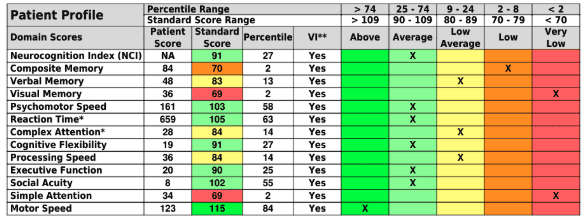
Cognitive performance testing is a computer based set of tasks that measure attention, memory, processing speed, and flexibility. It is another of the core tests inside the Quant360 panel.
In school
It explains why your child may understand material when you review it at home but still bomb tests.
It reveals whether slow processing speed, weak working memory, or attention drops are getting in the way.
At home
You might see them forget multi step directions, lose track in the middle of chores, or quit tasks halfway through.
In sports and life
It ties to how quickly they read the field or court, how fast they react, and how well they remember plays or sequences.
This is not an IQ test.
It does not measure how smart your child is.
Cognitive performance testing measures how their brain handles the load of everyday thinking so we can train what is weak and protect what is strong.
How These Brain Tests Work Together
This is the complete 360 degree view of your child’s brain and body.
It is the perspective most parents never get to see because doctors are not running these tests. Tutors keep tutoring without understanding the root cause. And moms and dads are left banging their heads wondering why nothing is changing.
Each test shows a different piece of the puzzle and when you put those pieces together, you finally see the truth.
The qEEG shows how the brain is firing and which networks are overloaded or underperforming.
VNG and balance testing reveal whether the eyes and inner ear are working together or fighting each other.
Pupillometry shows whether the nervous system is stuck in stress or able to shift into calm.
Cognitive performance testing shows how well your child can think, process, remember, and respond under real life demands.
Alone, each test is helpful. Together, they are powerful. Together, they explain everything no one has been able to explain.
This is why homework feels impossible even when your child tries.
This is why focus breaks down.
This is why reading is slow.
This is why emotions feel big.
This is why sports feel confusing.
This is why they end the day drained and overloaded.
These tests do something neither medication nor tutoring can do. They show the cause. They show the pattern behind the struggle. They show the brain systems that need support.
Most important…these brain tests show the way back to normality and a brighter future.
For the first time you stop guessing. You stop blaming yourself. You stop wondering if your child just needs to try harder.
You finally understand what is happening inside their brain and exactly how to help it heal.
If you are ready, the next section will walk through the brain therapies that rebuild the systems you just measured and how this creates a true ADHD non medication treatment path that gives your child hope again.
Every Brain Treatment Is Different Because Every Brain Is Different
Once we complete the full three hundred sixty degree evaluation, we know exactly which systems in your child’s brain need support. The goal is simple. Strengthen what is weak. Support what is strong. And give the brain the right environment to heal and perform the way it was designed to.
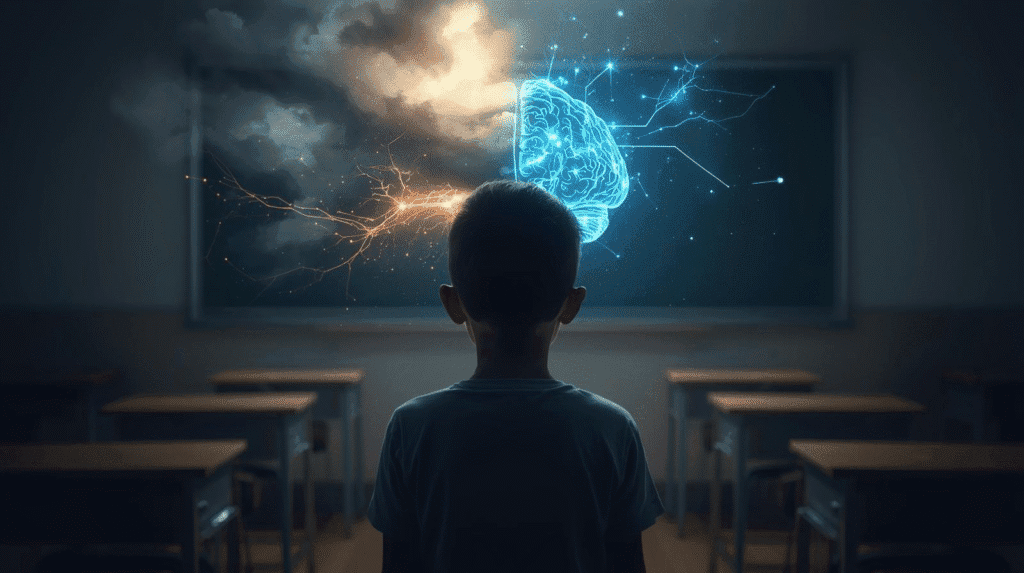
Every treatment we use is non invasive, research supported, and focused on helping the brain function better, not just masking symptoms. These therapies teach the brain how to work in a healthier, more organized way.
Below are just a few of the many exercises we use to help children focus better, learn easier, regulate emotions, and feel more like themselves at home, in school, and in sports.
Hyperbaric Oxygen Therapy in Tampa
Fueling the Brain With What It Needs Most
Oxygen is life. Every cell in the body runs on it. Every brain network depends on it.
Inside a hyperbaric oxygen chamber, your child breathes concentrated oxygen under increased pressure. This allows oxygen to saturate the brain and body at levels that are impossible to achieve in daily life.
More oxygen helps the brain repair, recover, reduce inflammation, form new connections, regulate mood, and improve clarity and focus.
For a child with attention struggles or slow processing, this can feel like someone finally turned the lights back on inside their mind.
This is one of the safest and most powerful ways to support whole body healing.
Neurofeedback Treatment In Tampa
Training the Brain to Stay Calm, Awake, and Focused
If the qEEG brain map shows that your child’s brain is firing too fast or too slow, neurofeedback helps retrain it toward healthier patterns.
Kids sit comfortably while the computer gives real time feedback to the brain.
When the brain fires correctly, the screen brightens or the audio plays.
When it fires incorrectly, the feedback pauses. The brain learns to adjust on its own while watching their favorite Netflix or YouTube show.
Neurofeedback therapy supports focus, impulse control, emotional regulation, homework stamina, reading, listening, and confidence.
Biofeedback Training In Tampa
Teaching the Body to Calm the Mind
Biofeedback helps your child learn how to control stress instead of being controlled by it.
When the nervous system is stuck in a fight or flight state, attention becomes impossible. Through guided breathing, heart rate training, and calming exercises, children learn how to shift their body into a relaxed, focused state.
Biofeedback therapy supports sleep, behavior, emotional control, resilience, and daily stress tolerance.
Vestibular and Balance Therapy
Building the Foundation for Learning
If balance testing shows the system is off, targeted balance exercises help improve stability and eye tracking.
This improves reading, posture, attention, handwriting, sports performance, and coordination.
A stable body creates a stable mind.
Cognitive Timing and Processing Training
Speeding Up the Brain’s Internal Clock
When processing speed or reaction time is slow, the child looks inattentive.
But the real issue is timing.
These exercises strengthen the brain’s communication pathways so thinking becomes faster and smoother.
Cognitive training helps with test taking, math, following directions, working memory, and sports reaction time.
A fast brain feels confident.
A slow brain feels frustrated.
TMS Treatment in Tampa Fl
When Mental Health Symptoms Appear
If testing or mood symptoms suggest deeper emotional struggles, we may add TMS treatment.
This is gentle brain stimulation that helps regulate mood and restore healthy patterns.
And parents need to know this. More than 3500 high school teens attempt to take their life every single day in the United States and many times no one sees it coming.
When we see early signs of anxiety or depression, fear, or hopelessness, we take it seriously.
TMS can help support mood, motivation, emotional balance, resilience, and hope.
When used with our other therapies, our youth stabilize, families breathe again, and life becomes manageable.
ADHD Non Medication Treatment That Finally Makes Sense
After seeing the testing results and beginning the therapies, something becomes very clear.
So many children who look like they have ADHD are really struggling with brain patterns that were never measured and never addressed.
Some children have an attention network firing too slow. Some have a brain firing too fast. Some have eye tracking problems that make reading exhausting. Some have balance issues that make sitting still almost impossible. Some have nervous systems stuck in stress mode. Some have delayed timing circuits that make it seem like they are not paying attention.
These are not character issues.
These are not motivation issues.
These are not parenting issues.
These are brain issues. And when you support the brain, attention improves, reading improves, behavior improves, confidence returns and your child begins to feel like themselves again.
This is ADHD care that finally makes sense.
It is not about forcing a child to fit into a system they cannot keep up with.
It is about helping the brain work the way it was designed to work.
This is what ADHD non medication treatment looks like. Real answers. Real solutions. Real hope.
Your Child Is Not Broken And ADHD Is Not The Full Story
Your child is not broken.
Your child is not choosing to fall behind. Your child is not defined by a diagnosis.
ADHD is not the full story. It is only a name for symptoms, not a measure of your child’s potential. It does not explain the hidden brain patterns that no one has been measuring. It does not show the pathways that can be strengthened. It does not reveal the hope that exists beneath the surface.
Your pediatrician cares, but they do not have the tools to look deeper.
Tutors care, but they are not trained to see neurological roadblocks.
Teachers care deeply, but they can only respond to what they see in the classroom.
And you, Mom or Dad, have been fighting for your child with everything you have.
Now you finally know the truth. These struggles have a cause. The cause can be measured. And once measured, it can be improved.
With the right testing, you see the whole picture.
With the right plan, your child gets the support they truly need.
With the right therapies, the brain begins to heal, grow, and organize itself in powerful ways.
Your child can learn. Your child can improve. Your child can thrive.
The future is not limited. The future is not dark. The future is full of hope.
Because ADHD is not the full story. And your child is capable of so much more than anyone has told you.
Disclaimer: This content is for informational purposes only and does not constitute medical advice. Please consult with a licensed healthcare provider. Genesis Brain Institute is a Brain Treatment Center in Tampa offering non-pharmaceutical solutions that bring clarity, restore function, and offer real hope for those who feel lost, stuck, or simply want more from life.