ADHD Treatment Without Medication is a search more parents, adults, and families are making because they want real answers, not just a quick fix. In the United States, millions of children and adults have been diagnosed with ADHD, and many people are now asking whether there are other ways to better understand focus, behavior, and brain function.
That matters because this is not only a story about little boys who cannot sit still in class. It is also about the college student who stares at a screen for an hour and still cannot start the assignment. It is about the mom who feels overwhelmed by simple tasks and wonders why everyday life feels harder than it should. It is about the father who keeps missing details at work, the adult who feels mentally scattered all day, and the child whose report card says bright but inconsistent.
For many people, the deeper fear is not just poor focus. The deeper fear is what comes next. Another hard school year. More tension at home. More shame. More guessing. More people acting like one label explains everything.
That is why so many people are looking beyond pills and symptom management.
They want to know what is really going on. They want to know whether the problem is truly ADHD, or whether anxiety, poor sleep, stress, trauma, executive function problems, or a filtering issue could be playing a role. They want a path that looks at the whole person, because symptoms do not always tell the whole story.
At Genesis Brain Institute in Tampa, that question matters.
Dr. Emily has shared that not every person who looks distracted has the same root issue, and not every struggling child or adult needs the same answer. Sometimes the problem is attention. Sometimes it is filtering. Sometimes the brain is stuck in stress. Sometimes sleep, mood, overload, or another issue is making everything worse.
That is why this conversation around ADHD Treatment Without Medication is so important. The goal is not to chase a trend. The goal is to understand the brain, look deeper than the label, and explore what may actually help you, your child, and your family move forward with more clarity and more hope.
What Research Says About ADHD Treatment Without Medication
Over the last 24 months, more research has supported something many families already feel in real life. ADHD is not always simple, and support should not be simple either.
Recent studies have looked closely at sleep, exercise, executive function, and brain based interventions. The takeaway is not that there is one magic answer. The takeaway is that non medication support can matter, especially when the plan fits the person.
Sleep is one of the biggest examples. New research continues to show a strong link between ADHD symptoms and sleep problems. When sleep is off, focus, mood, memory, and self control can all get worse.
That matters for children in school, college students trying to keep up, adults at work, and parents just trying to get through the day.
Exercise is another area where the research is encouraging. Recent reviews found that physical activity can help improve executive function in people with ADHD, especially areas like inhibitory control and working memory. In simple terms, movement may help the brain do a better job with focus, self control, and mental organization.
That is important because ADHD is not only about attention. It is also about executive function. It is about planning, filtering, regulating, remembering, and following through. When those systems struggle, life gets harder at school, at work, at home, and in relationships.
There has also been recent research on neurofeedback training and other brain based approaches. Some studies suggest these tools may help improve executive function in certain people with ADHD, though the results can vary and the research is still evolving. That is why a personalized plan matters so much. Not every person with ADHD has the same pattern. Not every adult or child needs the same answer.
This fits closely with what Dr. Emily has shared. The real goal is not to chase the latest trend. The real goal is to understand what may be driving the symptoms in the first place. For one person, sleep may be a major issue. For another, it may be filtering. For someone else, stress, overload, or poor executive function may be making everything worse.
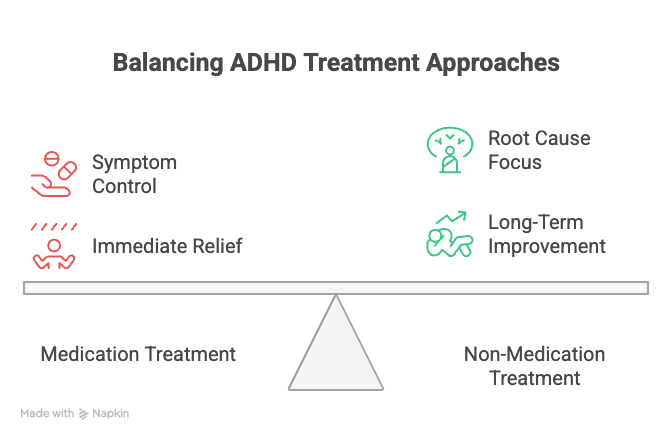
That is why more people are looking for ADHD treatment without medication. They want something deeper than symptom control alone. They want to know what may actually help the brain function better in real life.
Why ADHD Symptoms Look Different in Children, College Students, and Adults
ADHD does not look the same in every stage of life. That is one reason so many people get missed, misunderstood, or pushed into answers that do not fully fit.
In children, ADHD may look easier to spot. A child may fidget in class, interrupt often, lose homework, rush through assignments, or seem unable to stay on task. Teachers may say the child is bright but inconsistent. Parents may feel like every morning, every homework session, and every bedtime routine turns into a struggle. For some families, it feels like the child is always moving, always distracted, or always one step behind.
In college students, the picture often changes. The student may not be climbing on furniture or talking through class. Instead, the struggle may show up in missed deadlines, late night panic, incomplete assignments, poor time management, or the constant feeling of being overwhelmed. A student may look fine from the outside while quietly drowning on the inside. They may sit in front of a laptop for an hour and still not start the paper. They may want to do well, but their brain seems to fight them every step of the way.
In adults, ADHD often hides behind stress, busyness, and shame. A mom may feel like simple tasks take too much energy. A father may miss details at work and wonder why staying organized feels so hard. An adult may forget appointments, start projects without finishing them, run late, lose things, or feel mentally scattered all day. Many adults do not say, “I think I have ADHD.” They say, “Why does life feel harder for me than it seems to for everyone else?”
That is why this conversation matters so much. ADHD is not just a childhood issue. It can affect school, work, parenting, relationships, confidence, and everyday life. It can touch the child in the classroom, the student in college, the mother trying to hold everything together, and the professional who looks successful but feels exhausted inside.
Dr. Emily has shared that symptoms can also look similar even when the root cause is different. One person may truly have an attention problem. Another may be dealing with poor filtering. Someone else may be stuck in stress, poor sleep, anxiety, or overload. On the surface, all three may look distracted. Underneath, the story can be very different.
That is why a label alone is not enough. The real question is not just what the behavior looks like. The real question is what may be driving it.
When people search for ADHD Treatment Without Medication in Tampa, they are often searching for that deeper answer. They want to know why they, their child, or someone they love is struggling. They want to know what can actually help. Most of all, they want hope that life does not have to keep feeling this hard.
Can Anxiety, Stress, Trauma, or Poor Sleep Look Like ADHD?
Yes. That is one reason ADHD can be missed, overdiagnosed, or misunderstood.
A child, college student, or adult may look distracted, restless, forgetful, or overwhelmed. On the surface, that can look like ADHD. But in some cases, the real driver may be anxiety, poor sleep, chronic stress, trauma, or emotional overload.
This matters because the next step depends on the real cause.
If the issue is true attention weakness, the plan may look one way. If the issue is poor filtering, high stress, or a brain stuck in survival mode, the plan may need to look very different. From the outside, both people may seem unfocused. Underneath, the story may not be the same.
That is why Dr. Emily has emphasized looking deeper than the label. The goal is not just to ask whether someone looks like they have ADHD. The goal is to understand what may be affecting focus, behavior, organization, memory, and follow through in the first place.
For families, this is where hope begins.
Because sometimes the answer is not that you or your child are lazy, broken, or simply bad at paying attention. Sometimes the brain is dealing with something bigger that needs to be understood first.
Why Can Someone Focus on Video Games but Not School or Work?
This is one of the most searched ADHD questions, and it frustrates a lot of parents, adults, and families.
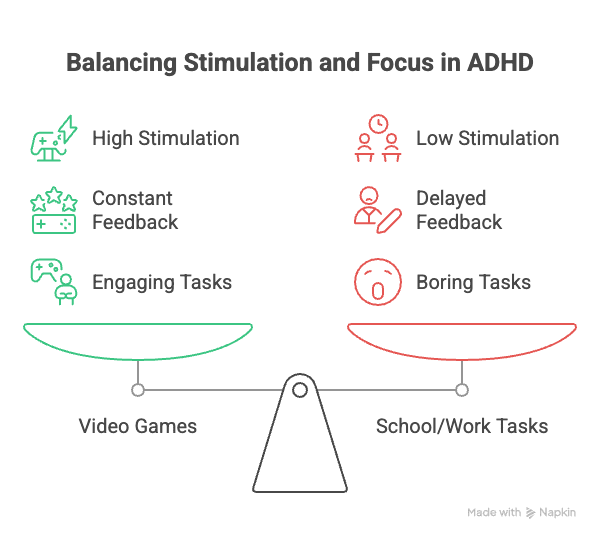
The short answer is this. Video games are built to hold attention. They move fast. They give constant feedback. They feel rewarding. Schoolwork and work tasks usually do not.
That means a person may focus well when the task is highly stimulating, but still struggle when the task feels slow, boring, repetitive, or full of distractions.
This is why the issue is not always simple attention.
Sometimes the brain can pay attention, but cannot filter well. In other words, the brain may notice everything. The teacher talking. A classmate moving. A phone buzzing. A thought popping up. An email coming in. The person is not always refusing to focus. The brain may be having trouble deciding what to ignore.
That matters for children in class, college students trying to study, and adults at work.
A child may play a game for an hour, then fall apart during homework. A college student may scroll, click, and react all night, then stare at a paper and get nowhere. An adult may crush fast moving tasks at work, but avoid the slow tasks that require planning, organization, and follow through.
That is why this question matters so much. Being able to focus on video games does not prove there is no real struggle. It may simply mean the brain responds better to high stimulation than low stimulation.
The better question is not, why can they focus sometimes. The better question is, what kind of focus is easy for this brain, and what kind is hard.
That is where the conversation starts getting useful.
ADHD Symptoms in Adults and Parents Often Show Up as Overwhelm, Not Hyperactivity
For many adults, ADHD does not look like bouncing off the walls. It looks like unfinished tasks, missed details, mental clutter, poor time management, and the constant feeling of being behind.
Many people describe knowing exactly what they need to do, but still struggling to start. Others start fast, then lose steam, miss steps, or get buried by distractions. That is one reason ADHD can be missed for years in adults, especially in parents and professionals who look high functioning on the outside.
This matters because ADHD is not just a school issue. ADHD can affect work, college, parenting, relationships, and daily life. In the United States, about 15.5 million adults have a current ADHD diagnosis, and about half were diagnosed in adulthood. That helps explain why so many adults are now asking better questions about focus, organization, and why simple tasks can feel harder than they should.
For parents, the struggle is often personal on two levels. They may be trying to help a child who is distracted, impulsive, or overwhelmed, while also quietly realizing they have some of the same symptoms themselves. At the same time, CDC data show about 7 million children in the United States ages 3 to 17 have been diagnosed with ADHD. That means millions of families are not just dealing with attention problems in theory. They are dealing with homework stress, emotional blowups, forgotten directions, missed assignments, and tension at home.
Here is the bigger point. When people search for ADHD Treatment and don’t want to take medication, they are often not looking for a quick fix. They are looking for help with real life. They want better follow through. Better organization. Better emotional control. Better mornings. Better workdays. Better evenings at home. They want life to feel manageable again.
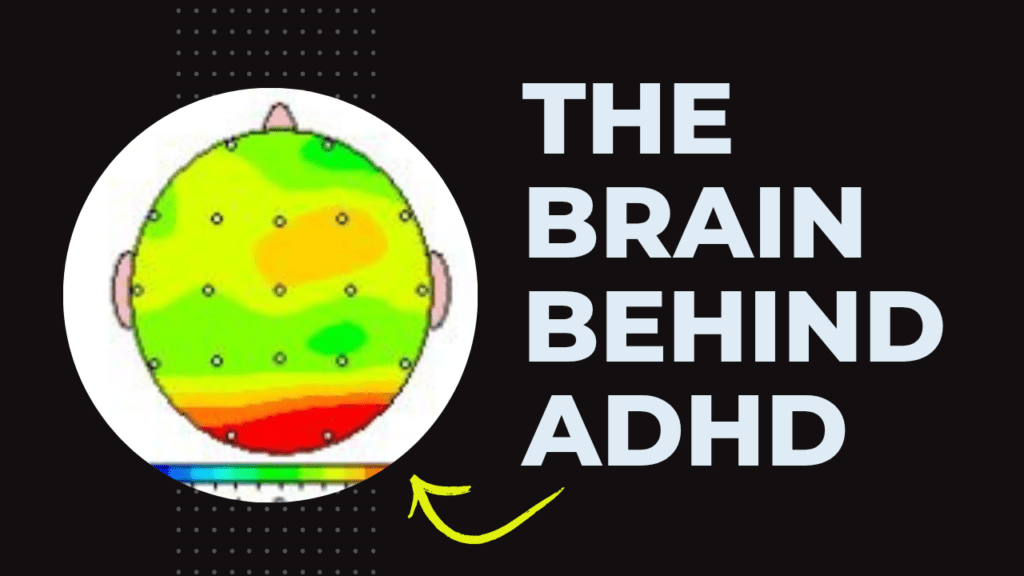
What Does qEEG Brain Mapping Show in ADHD?
When people search for brain mapping ADHD, qEEG brain mapping, or brain mapping Tampa, they are usually asking one simple question.
Can this show what is really going on in the brain?
The answer is yes, a qEEG can show useful information about ADHD, but it is not a stand alone ADHD diagnosis.
At Genesis Brain Institute, qEEG brain mapping is a diagnostic tool, not a treatment. It looks at brainwave patterns and helps show how different brain regions may be functioning. In someone struggling with focus, impulsivity, overwhelm, or follow through, that matters because the brain may not always be struggling for the same reason.
One person may have a true attention weakness.
Another may have a filtering problem.
Another may be stuck in stress, poor sleep, or a high alert state that makes focus much harder.
From the outside, all three can look like ADHD. On the inside, the brain may be telling a different story.
That is where qEEG brain mapping can be helpful.
It may show whether certain brain regions appear overactive, underactive, dysregulated, or simply working harder than they should. It may also help explain why two people with the same ADHD diagnosis can look so different in real life. One may be inattentive. One may be impulsive. One may seem anxious and scattered. Another may look calm but still struggle badly with organization and follow through.
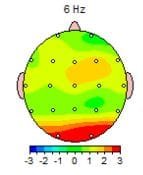
This is one reason Dr. Emily speaks so often about looking deeper than the label.
A diagnosis may group people together.
A brain map can help show what makes that person different.
That difference matters when building a treatment plan.
It is also why brain mapping therapy can be confusing as a search term.
Brain mapping itself is not the therapy. Brain mapping helps guide the therapy. It helps the team understand what may need attention so care can be more personalized.
At Genesis, qEEG brain mapping is paired with neuropsychological questionnaires, cognitive testing, and sometimes eye movement testing. That broader view matters because attention is only part of the story. The team may also look at response inhibition, which is the brain’s filtering ability, along with processing speed, memory, planning, and reasoning.
In simple terms, qEEG brain mapping helps answer a better question.
Not just, does this look like ADHD.
But, what may be driving these symptoms in this specific person?
That is a much more useful place to start.
Is There a Test for ADHD?
There is not one single test that diagnoses ADHD by itself.
A formal ADHD diagnosis is usually based on clinical history, symptom patterns, and whether a person meets DSM-5 criteria across more than one setting, like home, school, work, or relationships. That matters because two people can both carry an ADHD diagnosis and still have very different symptoms, struggles, and needs.
At Genesis Brain Institute, Dr. Emily does not diagnose ADHD during traditional diagnostics.
Instead, her role is to look deeper at how the brain may be functioning and what may be driving the symptoms.
That process can include qEEG brain mapping, neuropsychological questionnaires, and cognitive testing. Dr. Emily specifically talked about using a cognitive assessment through Creyos, including an ADHD protocol that looks at areas like sustained attention, response inhibition, processing speed, memory, and reasoning. Questionnaires such as the SWAN and the others may also be used to give more context.
This is important because these tools are not meant to stamp someone with a label. They are meant to help uncover what may actually be going on.
For one person, the issue may be true attention weakness. For another, it may be filtering. For someone else, anxiety, poor sleep, or stress may be making focus much harder than it should be.
If a formal ADHD diagnosis is needed, Genesis can work with Clinical Psychologist Dr. Fabian Consbruck as part of that next step.
The goal is not to rush toward the fastest label.
The goal is to understand the person well enough to build a smarter plan.