
Christians and mental health is a conversation far too many people are still afraid to have.
That truth was front and center during a recent presentation at the Church Safety Conference at All Saints’ Episcopal Church in Lakeland, Florida, hosted by Trinity Security Allies, where Dr. Emily Kalambaheti, Clinical Neuroscientist and Director of Rehabilitation at Genesis Brain Institute, spoke on a topic many believers feel but few say out loud.
Some people sit in church every Sunday smiling on the outside while quietly falling apart on the inside. They love God. They pray. They read Scripture. They try to stay strong for their family. Yet deep down, they are battling anxiety, depression, trauma, panic, brain fog, exhaustion, or thoughts they do not know how to explain.
What makes it even harder is the shame.
Many Christians have been made to feel that if they are struggling emotionally or mentally, something must be wrong with their faith. They start asking painful questions in silence. Why do I still feel this way if I trust God? Why can I not pray this away? Why do I feel so alone when I know He is with me?
Those questions are real. So is the pain behind them.
One of the most powerful messages from Dr. Emily Kalambaheti’s talk was this, struggling with mental health is not automatically a sign of weak faith.
In many cases, it reflects how the brain and body have responded to stress, trauma, overload, grief, or life experiences. That does not make someone broken. It makes them human.
That is why this conversation matters so much. Faith matters. Prayer matters. Scripture matters. Community matters.
At the same time, brain health matters too. When we begin to understand how faith, prayer, the nervous system, and the brain can work together, something powerful happens. Shame starts to lift. Confusion starts to clear. Hope starts to return.
This is not about replacing faith with science. It is about recognizing that God can work through truth, wisdom, prayer, people, and practical help. He cares about the whole person, heart, mind, body, and soul.
If you have ever wondered what the Bible says about mental health, whether Christians can struggle with mental illness, or how faith and brain health connect, you are not alone. This guide is here to offer clarity, compassion, and hope.
Because sometimes the most healing words a person can hear are these:
You are not failing God. You are not broken beyond hope. And you are not alone.
Why Christians and Mental Health Is a Conversation the Church Can No Longer Avoid
For a long time, the topic of Christians and mental health was treated like something people should keep quiet about.
If someone was anxious, they were told to pray more. If someone was depressed, they were told to have more faith. If someone felt overwhelmed, burned out, panicked, or emotionally numb, they often kept it to themselves because they did not want to be judged.
That silence has hurt a lot of people.
Some believers have suffered quietly for years. They have sat in church services, served on ministry teams, raised their hands in worship, and smiled at everyone around them while feeling exhausted inside. Others have loved Jesus deeply while battling fear, sadness, trauma, or thoughts they were scared to admit out loud.
This is why the conversation around Christians and mental health matters so much.
The church should be one of the safest places in the world to say, “I am not okay right now.”
Instead, many people have felt pressure to hide.
They worry that opening up will make them seem spiritually weak. They fear someone will reduce their pain to a Bible verse used too quickly, instead of listening with compassion. They wonder if asking for help means they are somehow failing God.
It does not.
Struggling with mental health does not automatically mean a person has weak faith. It does not mean they are broken beyond repair. It does not mean they love God any less. In many cases, it means they are carrying more than their brain and body know how to process well in that moment.
Stress changes people. Trauma changes people. Grief changes people. Long seasons of pressure, poor sleep, fear, pain, inflammation, overload, and unresolved experiences can all affect how someone thinks, feels, reacts, and functions.
That is not just a spiritual issue. It is often a human issue, a brain issue, and a nervous system issue too.
This is one reason the church needs a more complete view of care.
Prayer matters. Scripture matters. Wise counsel matters. Community matters. At the same time, understanding what is happening in the brain matters too. When someone is struggling, they do not need shame. They need truth, support, wisdom, and hope.
That is part of why this message from Dr. Emily Kalambaheti at the Church Safety Conference was so important. The goal was not to replace faith with science. The goal was to help people see that faith and brain health can work together.
When the church understands that, something powerful happens.
People stop hiding.
Families stop guessing.
Leaders become more compassionate.
And those who are hurting begin to realize they are not alone.
The truth is simple but powerful: the conversation about Christians and mental health is not a side issue anymore. It is a real issue affecting real people in our churches, homes, schools, and communities every day.
And the more we bring it into the light, the more hope we can offer.
What Does the Bible Say About Mental Health?
When people search what does the Bible say about mental health, they are often asking something deeper.
They are not just looking for verses. They are looking for reassurance. They are looking for hope. They are looking for proof that God has not abandoned them in the middle of their pain.
The Bible may not use modern terms like anxiety disorder, depression, trauma, or panic attack in the same way we do today, but it speaks often about fear, sorrow, grief, despair, weariness, troubled thoughts, and emotional suffering.
In other words, the Bible does speak to the human experience behind mental health struggles.
That matters.
Because one of the biggest lies hurting people today is the idea that if you love God enough, you will never struggle mentally or emotionally.
Scripture shows the opposite. Some of the most faithful people in the Bible walked through deep anguish, exhaustion, fear, and sorrow.
David cried out in pain. Elijah felt overwhelmed and wanted to give up. Job suffered deeply. Jeremiah was known as the weeping prophet. Even Jesus experienced deep sorrow and distress.
That does not mean mental illness is simple. It does mean emotional pain is not foreign to the Bible.
So when people ask about mental health in the Bible or the Bible on mental health, the answer is not that God ignores these struggles. The answer is that God meets people in them.
Scripture shows us a God who stays close to the brokenhearted. A God who listens. A God who cares about the weary. A God who does not shame people for hurting.
That is an important message for Christians carrying silent pain.
The Bible does not teach that every struggle is a spiritual failure. It does not teach that sadness always means sin. It does not teach that fear always means someone does not trust God. Sometimes people in scripture were grieving. Sometimes they were exhausted. Sometimes they were under intense pressure. Sometimes they were crying out for help.
That should bring relief to many people.
It means the question is not always, “What is wrong with your faith?” Sometimes the better question is, “What have you been carrying?”
This is where bible and mental health becomes such an important conversation.
The Bible calls people to prayer, truth, peace, wisdom, and renewing the mind. It also shows again and again that human beings are affected by suffering, loss, stress, and weakness.
That is why we should be careful not to oversimplify mental health struggles in the church.
A person may need prayer. They may also need rest. They may need support. They may need wise counsel. They may need someone to listen. They may need to better understand what is happening in their brain and body.
None of that puts them outside the care of God.
In fact, one of the most hopeful ways to read what does the Bible say about mental illness is this, God cares about the whole person. He is not only concerned with what happens in a church pew on Sunday morning. He cares about what happens in the mind, the body, the emotions, the relationships, and the private battles no one else sees.
That is why this topic matters so much in the conversation around Christians and mental health.
The Bible offers compassion, not condemnation. Hope, not shame. Truth, not silence.
And that gives people room to stop pretending and start healing.
Is Struggling with Mental Health a Sign of Weak Faith?
This may be one of the biggest questions behind the entire conversation about christians and mental health.
Not everyone says it out loud. Still, many people feel it deep down.
If I am anxious, does that mean I do not trust God enough? If I am depressed, does that mean my faith is weak? If I feel overwhelmed, stuck, emotionally numb, or mentally exhausted, am I failing spiritually?
Those questions carry a lot of pain.
For many Christians, the struggle is not only the anxiety, sadness, trauma, or mental fatigue itself. It is also the fear that their struggle means something is wrong with their relationship with God.
That is a heavy burden to carry.
The truth is, struggling is not the same as surrendering your faith.
A person can love God deeply and still battle fear. A person can pray faithfully and still feel overwhelmed. A person can believe Scripture and still feel mentally exhausted. A person can trust God and still need help.
That does not make them weak. It makes them human.
Throughout Scripture, we see people who were faithful and still struggled. They cried out in distress. They felt burdened. They felt afraid. They felt worn down. Their pain did not prove God had left them. In many cases, it became the very place where they met Him more deeply.
That is an important truth for anyone wrestling with christianity and mental health.
Sometimes people assume faith should erase every hard emotion instantly. Yet real life does not always work that way. Human beings live in bodies. They experience stress. They carry loss. They go through trauma. They deal with lack of sleep, chronic pressure, grief, pain, inflammation, burnout, relationship wounds, and seasons that wear them down.
All of those things can affect the mind, the body, and the nervous system.
So when someone is struggling, the right response is not always, “You need more faith.”
Sometimes the better response is, “Let’s slow down and understand what is really going on.”
That shift matters.
Because when people are already suffering, shame usually makes things worse. Shame pushes people into hiding. Shame keeps people from asking for help. Shame convinces them that if they were stronger, more spiritual, or more mature, they would not feel the way they do.
But shame is not a healing strategy. Compassion is. Truth is. Support is. Wisdom is.
That is one reason Dr. Emily Kalambaheti’s message was so important at the Church Safety Conference. She helped people see that symptoms are real, mental health struggles are real, and those struggles are not automatically a sign that someone is spiritually broken. Sometimes they are signs that the brain and body have been under too much stress for too long.
That is not weakness. That is a warning sign that care may be needed.
For some people, that care may begin with prayer, rest, and trusted community. For others, it may also involve counseling, lifestyle changes, deeper diagnostics, or support that helps explain what is happening beneath the surface.
None of that competes with faith.
In many cases, it honors the fact that God cares about the whole person.
So, is struggling a sign of weak faith? No!
Struggling means you are human. It means something may need attention. It means you may be carrying more than others can see. And it means you deserve compassion, not condemnation.
For anyone searching for hope in the middle of struggle, that truth matters.
You do not have to pretend. You do not have to hide. And you do not have to confuse pain with failure.
Sometimes the bravest thing a Christian can do is admit, “I am struggling,” and let that honesty become the starting point for healing.

Mental Health Is Not Just Spiritual, It Is Also Brain Health
This is where the conversation around Christians and mental health becomes even more important.
For years, many people have been taught to see mental health only through a spiritual lens. Pray more. Read more Scripture. Trust God more. Those things matter deeply.
Still, Dr. Emily Kalambaheti made an important point during her presentation at the Church Safety Conference hosted by Trinity Security Allies. Mental health struggles are not just about character or willpower. They also reflect how the brain and nervous system process stress, emotions, and life experiences.
That shift in understanding changes everything.
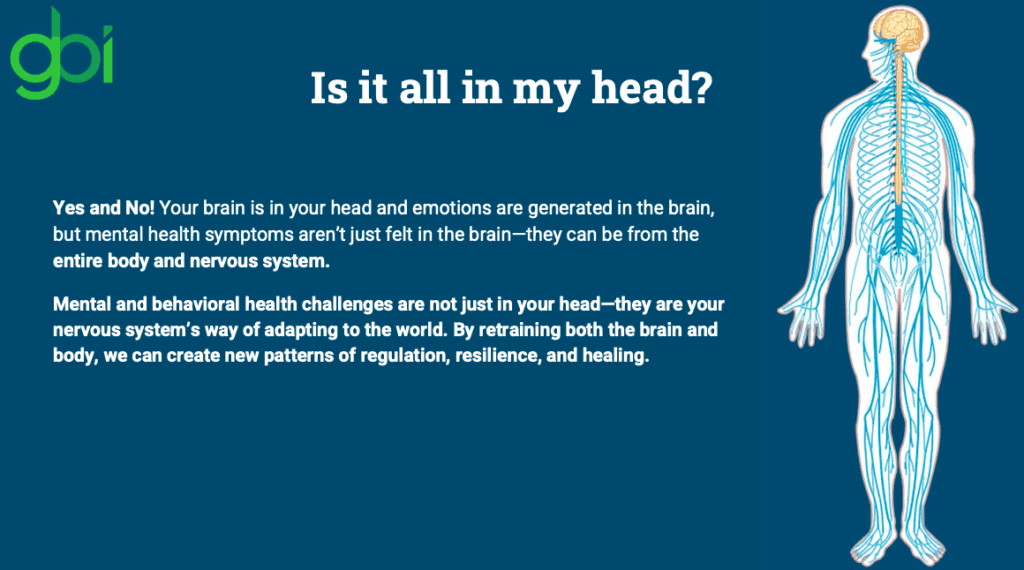
When someone feels anxious, overwhelmed, emotionally flat, panicked, stuck, or unable to regulate their reactions, it does not always mean they are having a spiritual failure. Sometimes it means their brain and body have been stuck in survival mode for too long. These challenges are often connected to the nervous system’s way of adapting to the world, not simply a lack of faith.
That matters for families. That matters for pastors. That matters for churches. And that matters for the person quietly wondering why they cannot just snap out of it.
One of the strongest points from the presentation was this, your symptoms are real. If someone is struggling with fear, sadness, burnout, trauma, or emotional overload, those experiences are not imaginary. They may be tied to real patterns in the brain, body, and nervous system that can be better understood. Mental and behavioral symptoms are not random. They often follow patterns that can be measured and understood through more complete evaluation.
That is where neuroscience can help.
At Genesis Brain Institute in Tampa, this is one reason the diagnostic process goes deeper. The goal is not to guess. The goal is to better understand what may be driving the symptoms underneath the surface. Through the Quant360 Functional Analysis, the team looks at brain function, nervous system regulation, cognition, and other important systems that can affect how a person thinks, feels, and functions. That deeper understanding may include qEEG brain mapping, nervous system testing, cognitive assessments, and psychological assessments.
It is important to be clear here. qEEG brain mapping is not treatment. It is part of the diagnostic process and part of the Quant360 Functional Analysis. It is used to look at electrical activity in the brain so treatment can be more targeted. In other words, it helps show where the brain may be overactive, underactive, or dysregulated so care can be more precise.
This matters in a conversation about faith because it helps people see that prayer and science do not have to compete. Faith can guide the heart while neuroscience helps explain what may be happening in the brain and nervous system. Dr. Emily’s message was not that faith should be replaced. Her point was that God often provides many tools, and wisdom means being willing to understand and use the right ones.
That is a hopeful message.
It means a Christian can pray and still need support.
It means a believer can trust God and still benefit from deeper diagnostics.
It means someone can love Scripture and also want answers about what is happening in their brain.
Those things can work together.
The big takeaway is simple.
Mental health is not only spiritual. It is also neurological. It is also physiological. And understanding that does not weaken faith. It gives people a clearer path forward.
For anyone searching for answers around christians and mental health, that can be a major turning point. Instead of asking only, “What is wrong with me spiritually?” they can begin asking a better question:
What might my brain and nervous system be trying to tell me?
That question does not move someone away from God.
It may actually help move them toward truth, clarity, and hope.
How Prayer, Worship, and Community Can Help the Brain and Nervous System
This is where the conversation around Christians and mental health becomes even more hopeful.
If mental health is connected to the brain and nervous system, then it makes sense that some of the practices God gives us through faith may support those systems in powerful ways.
Prayer is not just a religious routine. Worship is not just a Sunday habit. Christian community is not just something nice to have.
These things can help bring peace, connection, comfort, and regulation to a person who feels overwhelmed inside.
That does not mean they solve every problem on their own. It does mean they matter more than many people realize.
During her presentation, Dr. Emily Kalambaheti, a Functional Neurologist in Tampa, explained that prayer and faith based practices can help support the nervous system. When a person slows down, breathes, prays, reflects, sings, or feels safe in the presence of others, the body often begins to shift. Heart rate can slow. Breathing can become more steady. Tension can decrease. The brain may move out of constant survival mode and into a calmer state.
That matters because many people live with a nervous system that feels stuck on high alert.
They may look fine on the outside. Inside, they feel restless. On edge. Easily triggered. Emotionally drained. Quick to react. Slow to recover.
In that state, even simple life problems can feel overwhelming. This is one reason prayer can be so meaningful.
Prayer helps a person pause.
Prayer creates space to breathe.
Prayer shifts attention away from panic and back toward God.
Prayer reminds the heart and mind that they are not carrying life alone.
That does not mean prayer is a magic formula. It means prayer can be part of how the body and mind begin to settle.
Worship can help in similar ways.
Singing, humming, breathing deeply, speaking truth out loud, and focusing the mind on God can all help regulate the body. Many people do not realize that something as simple as singing during worship may support the nervous system and help move the body toward a calmer state. This is one reason worship can feel so powerful in hard seasons. It is not only spiritual. It can also affect the body in real ways.
That does not make worship less sacred.
It makes it even more beautiful.
God designed the body with systems that respond to peace, safety, rhythm, breath, and connection. So when someone prays, sings, breathes deeply, reflects on truth, and feels held by a caring church community, that may support both the soul and the nervous system at the same time.
Community matters too.
Isolation often makes mental health struggles feel heavier. People spiral in silence. They hide. They overthink. They assume no one else could understand. Yet healing often begins when a person feels safe enough to be honest.
A trusted friend can help.
A caring pastor can help.
A small group can help.
A church that listens without shame can help.
For many people, one of the most healing moments is not when all the symptoms disappear. It is when someone finally hears, “You are not alone in this.”
That is why church culture matters so much in the conversation around christians and mental health.
If churches only tell people to have more faith, many hurting people will keep hiding. If churches combine prayer, truth, compassion, and wise support, people are more likely to come into the light.
This is also where practical care can come in.
At Genesis Brain Institute, faith is not seen as competing with treatment. It can work alongside it. Depending on the person and what deeper diagnostics reveal, treatment may include tools like neurofeedback, biofeedback, HBOT, and TMS treatment.
Neurofeedback helps train brainwave activity toward healthier patterns.
Biofeedback helps people learn how to regulate stress responses like breathing, heart rate, and nervous system activation.
HBOT treatment, or hyperbaric oxygen therapy, helps support healing and oxygen delivery, which may be helpful when the brain and body have been under stress.
TMS, or transcranial magnetic stimulation, is a non drug option that may help support certain underactive brain regions in some people dealing with depression, anxiety, or other forms of dysregulation.
That does not mean everyone needs every tool.
It means help can take more than one form.
Some people need prayer and community. Some need rest and lifestyle change. Some need counseling and support. Some need deeper diagnostics and targeted treatment. Many need a thoughtful mix of several things working together.
That is one of the most encouraging messages from Dr. Emily’s presentation. God often works through many channels. Prayer matters. Faith matters. Community matters. Wise treatment matters too.
The big idea is simple.
Prayer matters. Worship matters. Community matters. And practical tools may help more than people realize.
For someone struggling with anxiety, trauma, fear, burnout, or emotional exhaustion, that is good news.
God does not only care about saving souls. He cares about restoring people.
And sometimes that restoration starts with prayer, continues through wise support, and grows stronger when the brain and nervous system are finally given help too.
Frequently Asked Questions About Christians and Mental Health
What does the Bible say about mental health?
The Bible may not use modern clinical language, but it speaks often about fear, worry, sorrow, grief, despair, peace, hope, and renewing the mind. Scripture shows that emotional pain is part of the human experience and that God meets people in it. The Bible points people toward prayer, truth, rest, wisdom, community, and hope, not shame.
Can Christians struggle with mental health?
Yes. Christians can struggle with anxiety, depression, trauma, burnout, panic, grief, and emotional overwhelm. Struggling does not automatically mean someone has weak faith. It means they are human and may need support, healing, and a better understanding of what is going on spiritually, emotionally, and physically.
Is mental illness a sin?
Mental illness is not the same thing as sin. A person may be suffering, overwhelmed, dysregulated, sleep deprived, traumatized, inflamed, or dealing with deeper brain based issues. People should be treated with compassion and wisdom, not quick judgment.
What does the Bible say about mental illness?
The Bible does not give a simple one line answer for every mental health condition, but it clearly shows that God cares about the brokenhearted, the weary, the fearful, and the burdened. It gives people permission to cry out, ask for help, seek peace, and draw near to God in distress.
Can a strong Christian still have anxiety or depression?
Yes. Loving God does not make someone immune from human suffering. A strong Christian can still go through hard seasons emotionally and mentally. Faith does not always remove the struggle instantly. Sometimes it gives strength to walk through it and wisdom to seek help.
What does the Bible say about anxiety?
The Bible has a lot to say about anxiety, fear, peace, and trust. It encourages people to bring their burdens to God, pray, renew their minds, and remember His presence. For someone struggling, those verses should feel like comfort and invitation, not pressure.
Is it wrong for Christians to go to therapy?
No. Therapy can be a wise and helpful tool. For many people, counseling helps them process pain, trauma, grief, unhealthy patterns, and emotional stress. Seeking help does not mean someone trusts God less. In many cases, it may be part of the help God is providing.
Can prayer help mental health?
Prayer can help mental health by slowing people down, shifting focus, bringing comfort, reducing isolation, and helping regulate the nervous system. Prayer may not be the only support someone needs, but it can be a meaningful and powerful part of healing.
How do faith and neuroscience work together?
Faith and neuroscience do not have to compete. Faith speaks to hope, meaning, truth, peace, and relationship with God. Neuroscience helps explain what may be happening in the brain and nervous system when someone feels anxious, depressed, overwhelmed, or stuck. Both can matter.
Is mental health just spiritual?
No. Mental health can involve spiritual, emotional, neurological, physiological, and relational factors. That was one of the key messages from Dr. Emily Kalambaheti’s presentation. Sometimes the issue is not just what someone believes. Sometimes it is also what their brain and nervous system have been carrying.
What is qEEG brain mapping?
qEEG brain mapping is a diagnostic tool, not a treatment. It is part of the Quant360 Functional Analysis at Genesis Brain Institute and helps measure electrical activity in the brain. That information may help show where the brain is overactive, underactive, or dysregulated so treatment can be more targeted.
Is qEEG brain mapping the same as brain mapping therapy?
No. qEEG brain mapping is used to help understand brain function. It is part of diagnostics. It helps guide care, but it is not treatment itself.
Can brain mapping help ADHD or depression?
qEEG brain mapping may help identify patterns in brain activity that can provide useful insight when someone is struggling with symptoms related to ADHD, depression, anxiety, trauma, or cognitive issues. It is not a standalone diagnosis, but it can be a valuable part of a fuller evaluation.
Can TMS help with anxiety?
TMS treatment is best known for depression, but some people also ask whether TMS helps with anxiety. In certain cases, TMS may be part of a broader treatment strategy when anxiety is tied to dysregulation in specific brain regions. The right approach depends on the person, their symptoms, and what diagnostics reveal.
Does TMS help with depression?
For some people, yes. TMS is a non drug treatment that uses magnetic stimulation to target specific areas of the brain. It may be helpful for some individuals dealing with depression, especially when they feel stuck and want additional options beyond medication alone.
What treatments may support Christians struggling with mental health?
Support may include prayer, counseling, strong community, healthy sleep, exercise, nervous system regulation work, neurofeedback, biofeedback, HBOT, TMS, and other targeted therapies. The right plan depends on the person. The goal is not a one size fits all answer. The goal is to understand what is actually needed.
What should churches do when someone is struggling mentally?
Churches should listen, reduce shame, encourage honesty, pray with people, provide support, and know when to recommend additional help. A healthy church does not force people to hide. It makes room for truth, compassion, and wise next steps.
Encouraging Bible Verses for Mental Health
When you are in the middle of a mental health battle, reading the Bible can sometimes feel overwhelming. You might worry that you aren’t “feeling” the peace the verses promise.
It is helpful to remember that God’s Word isn’t just a list of commands to “feel better”—it is a collection of promises that He is present with you, even when your brain feels foggy or your heart feels heavy.
Here are several verses that speak directly to the weary mind:
Bible Verses for When You Feel Overwhelmed
Psalm 34:18: “The Lord is close to the brokenhearted and saves those who are crushed in spirit.”
The Insight: This reminds us that God doesn’t demand we “fix” ourselves before He comes near. He is closest when we are at our lowest point.
Matthew 11:28: “Come to me, all you who are weary and burdened, and I will give you rest.”
The Insight: Jesus offers rest to the weary. Sometimes, that rest is spiritual, and sometimes it is the physical and neurological rest our bodies desperately need.
Bible Verses For When Anxiety Feels Louder Than Truth
Philippians 4:6-7: “Do not be anxious about anything, but in every situation, by prayer and petition, with thanksgiving, present your requests to God. And the peace of God, which transcends all understanding, will guard your hearts and your minds in Christ Jesus.”
The Insight: This “guarding of the mind” is a powerful image. It suggests that God’s peace acts as a shield for a nervous system that feels under attack.
2 Timothy 1:7: “For God has not given us a spirit of fear, but of power and of love and of a sound mind.”
The Insight: A “sound mind” is exactly what we seek in brain health. This verse affirms that God’s desire for us is mental clarity and emotional stability.
Bible Verses For When You Feel Alone in the Dark
Psalm 42:11: “Why, my soul, are you downcast? Why so disturbed within me? Put your hope in God, for I will yet praise him, my Savior and my God.”
The Insight: The Psalmist “talks back” to his own soul. It is okay to acknowledge that your soul feels downcast; being honest about your mental state is the first step toward healing.
Isaiah 41:10: “So do not fear, for I am with you; do not be dismayed, for I am your God. I will strengthen you and help you; I will uphold you with my righteous right hand.”
The Insight: When you lack the strength to “hold on” to your faith, this verse promises that God is the one doing the holding.
A Final Word of Hope for Christians and Mental Health
The conversation around christians and mental health matters because real people are hurting, often quietly.
Some are sitting in church every week smiling on the outside while fighting fear, sadness, trauma, brain fog, panic, or exhaustion on the inside. Some love God deeply but still feel overwhelmed. Some have prayed for relief and still wonder why the struggle has not lifted.
That does not mean they are weak. That does not mean they are failing God. And that does not mean hope is gone.
One of the strongest takeaways from Dr. Emily Kalambaheti’s presentation at the Church Safety Conference at All Saints’ Episcopal Church in Lakeland, hosted by Trinity Security Allies, is that mental health struggles are real, and they are not always a sign of weak faith. Sometimes they are signs that the brain, body, and nervous system need care.
That is an important shift.
Because when people stop seeing mental health only through shame, they can start seeing it through truth. They can start asking better questions. They can start seeking better answers. They can stop hiding and start healing.
Faith matters. Prayer matters. Scripture matters. Community matters.
At the same time, understanding the brain matters too.
God can work through prayer. God can work through people. God can work through wise counsel. God can work through deeper diagnostics. God can work through the right treatment plan.
That does not shrink faith. It expands hope. For anyone struggling, the message is simple.
You are not alone. You are not crazy. You are not broken beyond repair. And your pain does not disqualify you from God’s love.
There is room for faith. There is room for prayer. There is room for brain health. And there is room for hope.
Next Step to Get Checked Out
If you want to understand how your brain is functioning through the Quant360 Functional Analysis schedule a consultation or request more information at GenesisBrainInstitute.com. Every brain deserves to feel calm, confident, and connected again, especially if you’re suffering.
Disclaimer: This content is for informational purposes only and does not constitute medical advice. Please consult with a licensed healthcare provider. Genesis Brain Institute is a Brain Treatment Center in Tampa offering non-pharmaceutical solutions that bring clarity, restore function, and offer real hope for those who feel lost, stuck, or simply want more from life.