How to improve brain function is not just a question for people worried about memory loss. It is a question for busy professionals, parents, leaders, students, and high performers who want to think clearer, handle stress better, sleep deeper, and feel more like themselves again.
Because when your brain is tired, overloaded, or stuck in stress, life gets harder.
You may notice it at work when simple tasks take longer than they should. You may feel it at home when you snap faster, forget more, or struggle to be present with the people you love. You may even tell yourself, “I am just busy,” when deep down you know something feels off.
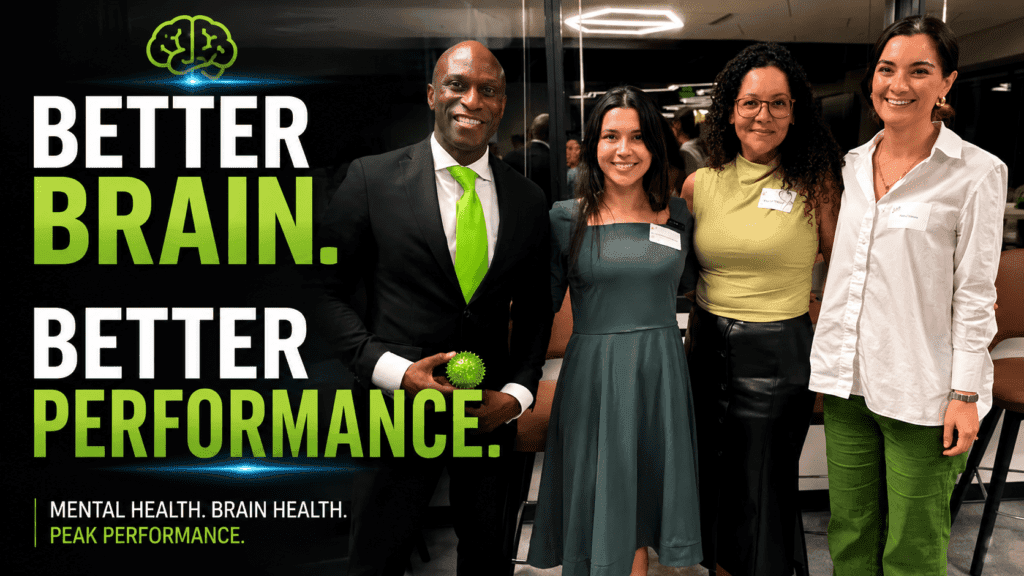
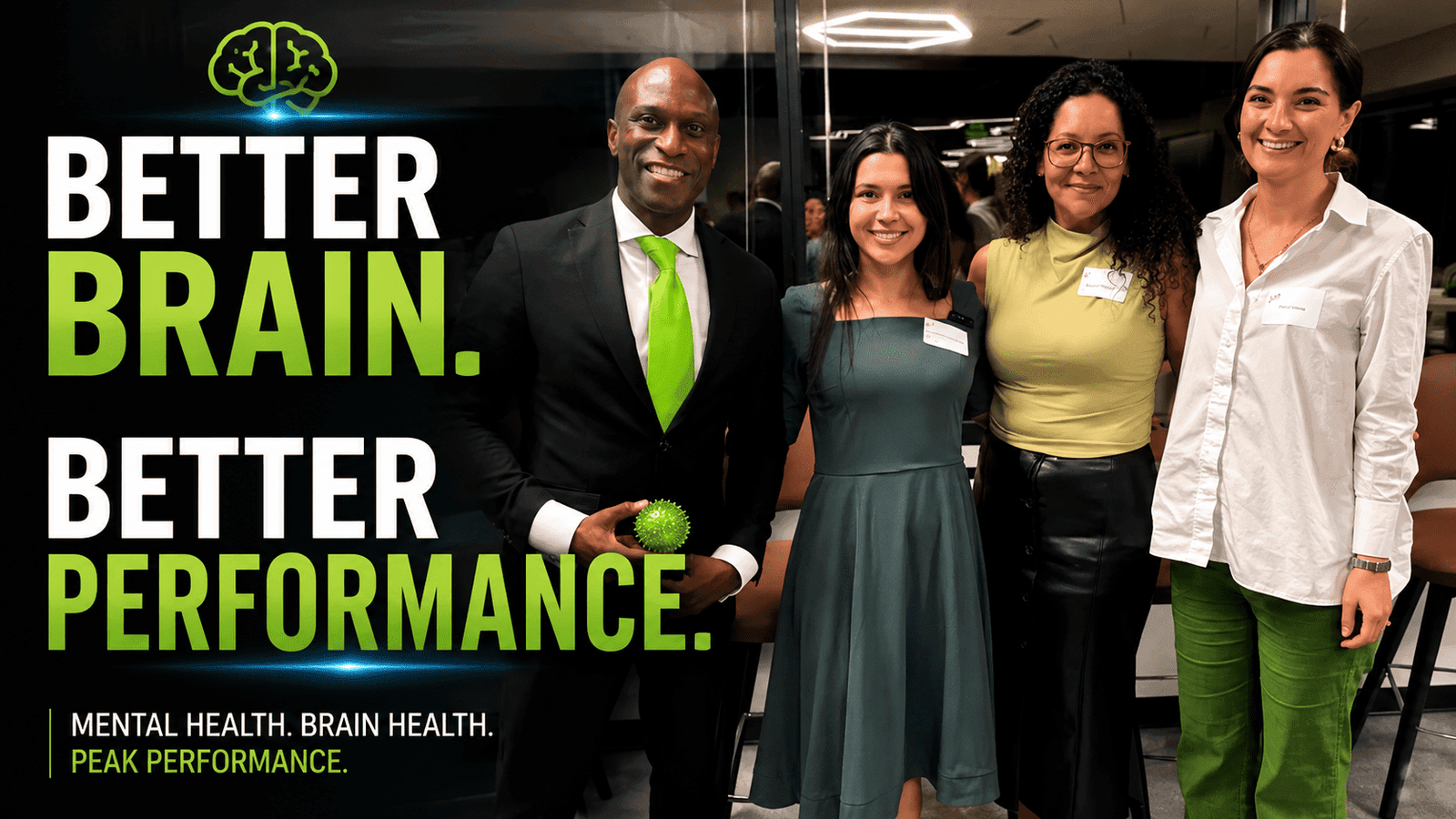
That was one of the biggest takeaways from Brain Power 101, a conversation on mental health, brain health, stress, burnout, and performance for professionals. The event was put on by ALPFA Tampa, where Genesis Brain Institute was invited to speak alongside other leaders in mental health and wellness.
The event was moderated by Kaplan Mobray and featured Dr. Emily Kalambaheti from Genesis Brain Institute, Natalie Rosado from Tampa Counseling Place, and Elizabeth Swan from Blue Pine Psych Services.
Each speaker brought a different perspective. However, the message was clear.
Your mental health, focus, sleep, stress response, emotional control, and performance are all connected to brain function.
The good news is that your brain is not fixed in place. Brain function can change. With better habits, better awareness, better support, and when needed, better testing, you can begin to understand what your brain and nervous system are trying to tell you.
This article will walk you through 7 practical ways to improve brain function, support mental clarity, reduce stress, and recognize when it is time to look deeper instead of guessing.
How to Improve Brain Function Starts With Brain Health
Most people treat brain function like it only matters when something goes wrong. That is the first mistake. Your brain is involved in everything you do. It helps you focus in meetings, control your emotions, make decisions, remember details, sleep at night, and stay calm under pressure.
So when your brain is not working at its best, you feel it everywhere. Work takes longer. Stress feels heavier. Patience gets thinner. Small problems feel bigger than they should. You may still look productive on the outside, but inside you know something feels off.
This is why mental health and brain health cannot stay in separate boxes. Your thoughts, emotions, behaviors, and performance all connect back to the brain. That does not mean every hard day is a brain problem. It also does not mean every symptom needs a label. But it does mean your brain deserves more respect than most people give it.
You would not ignore chest pain for months and say, “I guess I just need to try harder.” You would not drive your car with warning lights flashing and say, “I just need more motivation.” Yet professionals do this with their brain every day. They push through brain fog. They ignore poor sleep. They normalize stress. They explain away irritability. Then they drink more coffee and call it discipline.
That path does not lead to better performance. It leads to burnout. A better path starts by paying attention before the warning signs become your normal. Your brain gives clues. Your body gives clues. Your performance gives clues. The goal is not to panic over every bad day. The goal is to notice patterns early.
That is where improving brain function begins. Not with another productivity hack. Not with pretending you are fine. It starts by taking brain health seriously.
How to Improve Brain Function Tip 1: Protect Your Sleep
Sleep is one of the first places to look when you want to improve brain function. It is also one of the first things busy people sacrifice. That creates a problem because your brain does not recover well when sleep keeps getting pushed aside.
Poor sleep rarely stays in one box. It affects focus, mood, energy, memory, patience, and decision making. One bad night can lead to brain fog the next morning. That fog can lead to more caffeine in the afternoon. Then the extra caffeine can make it harder to sleep that night. Before long, your brain is stuck in a loop that feels normal, but it is not helping you perform.
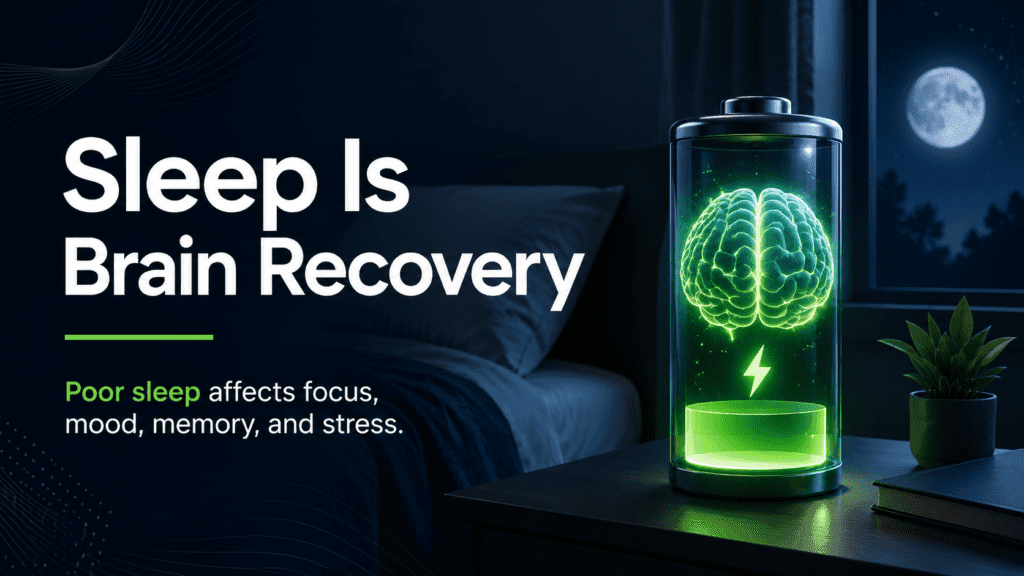
This matters even more for professionals and leaders. You can still answer emails on poor sleep. You can still sit in meetings. You can still push through the day. But pushing through does not mean your brain is working at its best. It often means your brain is borrowing energy from tomorrow or your not performing at the highest level you could.
Many high performers take pride in needing less sleep. They say they function fine on four or five hours. The better question is not, “Can I survive on less sleep?” The better question is, “How much better could I think, lead, and respond if my brain had the recovery it needs?”
Sleep gives your brain a chance to reset. It helps your nervous system calm down. It supports memory, focus, emotional control, and mental clarity. When sleep improves, many people notice that life feels less heavy. They do not just feel less tired. They feel more in control.
A large study in Nature Aging found that about seven hours of sleep was linked with the strongest cognitive performance and mental health in adults, and performance dropped when people slept less or more than that. Another review found that even one night of restricted sleep can increase sleepiness and hurt sustained attention, which matters for driving, work, leadership, and decision making.
Start with the basics. Keep a consistent bedtime when possible. Reduce caffeine later in the day. Get morning sunlight. Limit late night scrolling. Give your brain a calm routine before bed. These tips are not flashy, but they matter because your brain likes rhythm.
If poor sleep continues, do not ignore it. Your sleep can give you important clues about brain health, stress, and nervous system regulation. When your brain cannot fully power down at night, something deeper deserves attention.
How to Improve Brain Function Tip 2: Know Your Baseline
One of the smartest ways to improve brain function is to know your baseline. A baseline shows what normal looks like for you before life, stress, injury, burnout, or poor sleep starts changing the picture.
Most people track things that matter less than their brain. They know their bank balance, calendar, screen time, step count, and favorite coffee order. Yet they do not know their normal focus, sleep, mood, stress tolerance, memory, or emotional control. That is a problem because you cannot improve what you never measure.
Think about it like your car. If your car starts pulling to the right, you notice it because you know how it should drive. If your phone battery starts dying faster, you notice it because you know how long it used to last. Your brain works the same way. When you know your baseline, changes stand out faster.
This matters because decline does not always show up as a crisis. Sometimes it starts small. You need more coffee to focus. You forget why you walked into a room. You read the same email three times. You feel more reactive in meetings. You stop laughing as much. You still function, but you know you are not operating at your normal level.
That is where many high performers get trapped. They wait until the problem gets loud before they take it seriously. They tell themselves they are fine because they can still work, lead, parent, and perform. But being functional is not the same as being optimized.
Start by asking better questions. How do I sleep when I am at my best? How long can I focus before my mind drifts? How do I handle pressure when I feel healthy? How quickly do I recover after stress? How often do I feel clear, calm, and present?
Those answers give you clues. They also help you notice when something changes. If your normal patience drops, pay attention. If your normal focus fades, pay attention. If your normal sleep changes, pay attention. Your brain and body often whisper before they scream.
At Genesis Brain Institute, this is why we encourage people to just get checked out. qEEG brain mapping and other diagnostics can help establish a clearer baseline, so you are not left guessing about how your brain and nervous system are functioning.
You do not need to wait until you crash to get curious about your brain. A baseline gives you a starting point. From there, you can make better decisions, track change, and build a plan around what your brain actually needs.
How to Improve Brain Function Tip 3: Watch for Brain Fog and Burnout
One of the biggest mistakes high performers make is waiting until burnout becomes obvious. They wait until they crash, blow up, shut down, or feel completely numb before they take it seriously.
But burnout usually shows up before that.
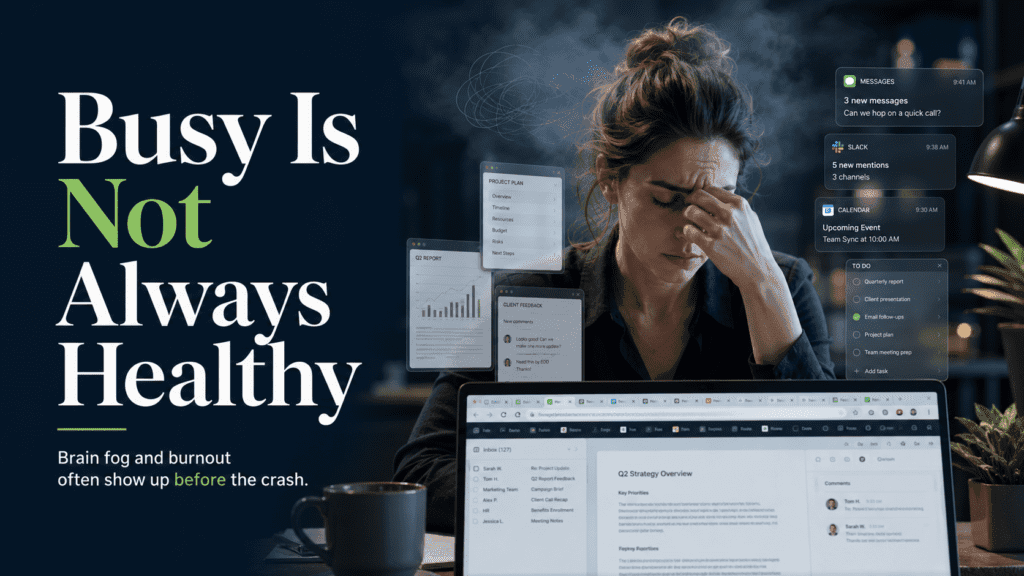
It can start as brain fog. You feel busy, but not sharp. You sit at your desk, stare at your screen, and know you should be moving faster. Yet everything takes more effort than it used to.
It can also show up as emotional changes. You get irritated faster. You avoid conversations. You stop enjoying things that used to feel easy. You still get the work done, but you feel like you are dragging yourself through the day.
During Brain Power 101, Natalie Rosado from Tampa Counseling Place talked about high functioning burnout. That is the kind of burnout many professionals miss because they still look fine on the outside. They keep producing. They keep showing up. They keep doing the things people expect from them.
Inside, though, they feel depleted.
That is the dangerous part. High functioning burnout can hide behind success. The person still answers emails. The parent still gets the kids where they need to go. The leader still runs the meeting. The business owner still solves the problem. So everyone assumes they are fine.
But functional does not always mean healthy.
This is where brain function matters. Burnout is not just a busy schedule. It affects your focus, sleep, mood, memory, stress response, and decision making. Over time, your brain can start to feel like it is running too many tabs at once.
Elizabeth Swan from Blue Pine Psych Services made an important point too. Before you assume everything is a mindset problem, look at the basics. Are you sleeping? Are you eating enough? Do you feel safe? Do you have support? Are you giving yourself any space to process what you keep pushing down?
That sounds simple, but many professionals skip those questions. They want the advanced strategy before they fix the foundation.
Brain fog and burnout are signals. They are not character flaws. They are not proof that you are weak. They are signs that your brain and nervous system need attention.
A practical first step is to name what changed. Are you slower in the morning? Are you more reactive in meetings? Do you feel tired even after rest? Are you forgetting more? Are you less patient at home? Do you feel like your mind never fully shuts off?
Those questions help you stop lying to yourself.
Because “I am just busy” can become a dangerous excuse.
You might be busy. You might also be overloaded. There is a difference.
If you want to improve brain function, start watching the early signs. Brain fog, poor sleep, irritability, low motivation, and emotional flatness deserve attention before they become your new normal.
How to Improve Brain Function Tip 4: Train Your Stress Response
If you want to improve brain function, you have to stop looking at stress like it is only a feeling.
Stress is a full brain and body response. Your heart rate changes. Your breathing changes. Your muscles tighten. Your focus narrows. Your brain starts scanning for danger, even when the danger is just another deadline, another meeting, another bill, or another hard conversation.
Think of it like sitting in your car with your foot on the gas while the car stays in park. The engine is roaring. The fuel is burning. The system is working hard. But you are not moving forward any better. That is what chronic stress can feel like in the brain. A lot of energy goes out, but not much clarity comes back.
That stress response can help in short bursts. You need it when life demands quick action. The problem starts when your body never gets the signal that the moment has passed. Instead of rising and recovering, your nervous system stays on high alert.
Many professionals live there every day. They wake up tense. They check their phone before their feet hit the floor. They rush from one thing to the next. They feel behind before the day even starts. Then they wonder why focus feels scattered, patience runs thin, and simple decisions feel heavier than they should.
During Brain Power 101, Dr. Emily Kalambaheti explained how the brain and body can get stuck in a loop. When your breathing gets faster and your heart beats faster, your body sends a message back to your brain that something is wrong. Then your brain sends more stress signals back to the body. The loop keeps feeding itself.
That is why “calm down” is terrible advice.
Most people already want to calm down. They just do not know how to get their nervous system there. It is like yelling at a smoke alarm instead of finding out why it keeps going off. The alarm is not the enemy. It is telling you something needs attention.
A better goal is to train your stress response. You want your brain and body to rise when life demands it, then recover when the moment passes. You do not want a nervous system that stays flat all day. You also do not want one that lives on fire. You want flexibility.
Start with your breath. Slow breathing sends a different message to your brain. It tells your body that the emergency is not as big as it feels. Even a few quiet minutes can create space between what happens and how you respond.
Then pay attention to your recovery time. How long does it take you to calm down after a hard meeting? How fast do you bounce back after conflict? Can you shift from work mode to family mode, or does your stress follow you into every room?
Those questions matter because stress recovery is part of brain performance.
Natalie Rosado made an important point when she talked about boundaries. When work bleeds into every area of life, your nervous system never gets a true break. Your weekend becomes work. Your vacation becomes work. Your dinner table becomes work. Before long, your body forgets what off feels like.
That is not high performance. That is survival mode with a calendar.
To improve brain function, build small recovery signals into your day. Take a short walk without your phone. Breathe before you answer a stressful message. Stop checking email in bed. Give yourself a clear end to the workday when possible. These small signals teach your brain that life is not one long emergency.
At Genesis Brain Institute, this is one reason we use tools like biofeedback and nervous system regulation training. Biofeedback works like a mirror for your nervous system. It helps you see body signals like breathing, heart rate, and stress response in real time. Once you can see the pattern, you can start training a better one.
Stress will always be part of life. The goal is not to avoid all pressure. The goal is to help your brain and body handle pressure without staying trapped in it.
How to Improve Brain Function Tip 5: Use Feedback Based Brain Training
One powerful way to improve brain function is to stop guessing and start using feedback.
Most people try to change their brain with willpower alone. They tell themselves to focus harder, calm down faster, stop overthinking, or push through the fog. Sometimes that works for a little while. But if your brain and nervous system keep falling back into the same patterns, willpower is not enough.
Think about a golfer trying to fix a swing without a coach, camera, or mirror. They might feel like they are doing it right. But without feedback, they keep repeating the same mistake. The same thing happens with your brain. If you cannot see the pattern, it is hard to train a better one.
That is where tools like neurofeedback and biofeedback can help.
Neurofeedback gives your brain feedback on brainwave activity. Biofeedback gives your body feedback on signals like breathing, heart rate, heart rate variability, and stress response. Both tools help you see what is happening in real time, so you can learn how to shift your state.
That matters because your brain learns through feedback.
You touch a hot stove once, and your brain remembers. You practice a free throw over and over, and your brain improves the pattern. You hear a coach say, “Lift your elbow,” and your body starts adjusting. Feedback helps the brain learn faster because it gives the brain information it can use.
During Brain Power 101, Dr. Emily Kalambaheti used a simple idea. Feedback based tools can work like a coach. They do not do the work for you. They help show your brain and body what needs to change.
This is important for stress, focus, and performance because many people do not realize how dysregulated they are until they see it. They think they are calm, but their breathing says otherwise. They think they are focused, but their brain is drifting. They think they are handling stress well, but their body is still stuck in alarm mode.
Biofeedback can make that hidden pattern visible.
Imagine looking in a mirror before an important meeting. If your collar is crooked, you fix it. The mirror does not judge you. It gives you information. Biofeedback works in a similar way for your nervous system. It shows you what your body is doing, then gives you a chance to practice a better response.
This also connects to something Elizabeth Swan shared during the event. Before you assume everything is emotional, look at the foundation. Are you sleeping? Are you eating enough? Do you feel safe? Do you have support? Are you giving yourself any room to process what you keep carrying?
That is the point.
Better brain function does not come from one magic tool. It comes from better awareness, better patterns, and better support. Technology can help, but it should not replace human care when human care is needed.
For some people, counseling is a key part of healing. For others, brain based training gives them the missing piece. Many people need both. The goal is not to choose one side. The goal is to understand what your brain and nervous system need.
At Genesis Brain Institute, we use feedback based tools as part of a larger plan. Neurofeedback and biofeedback are not random wellness tricks. They are ways to help train regulation, focus, and stress recovery when they fit the person’s needs.
If you want to improve brain function, ask a better question.
What feedback is my brain getting every day?
If the feedback is constant stress, poor sleep, caffeine, chaos, and pressure, your brain learns that pattern. If the feedback includes calm breathing, focused practice, recovery, healthy support, and clear information, your brain can start learning a better one.
How to Improve Brain Function Tip 6: Protect Your Focus
If you want to improve brain function, you have to protect your focus like it matters.
Because it does.
Focus is not just about getting more work done. It affects how you think, lead, listen, learn, decide, and respond. When your focus is strong, your day feels cleaner. You move with more purpose. You catch details faster. You make fewer careless mistakes. You also feel more present with the people in front of you.
The problem is that most people treat focus like it should always be available on demand. They expect their brain to jump from email to text messages, from meetings to family stress, from social media to deep work, and still perform like nothing happened.
That is like opening 37 tabs on your computer, streaming a video, downloading a file, and then wondering why the whole thing slows down.
Your brain has limits too.
Every interruption has a cost. Every notification pulls attention. Every unfinished task takes up mental space. Over time, your brain starts carrying too many open loops. You may sit down to work, but your mind keeps bouncing between everything you have not finished yet.
This is why many professionals feel busy but not productive. They are moving all day, but their brain never gets enough clean space to do deep work.
Kaplan Mobray made a powerful point during Brain Power 101. The event was not just about what happened in the room. The bigger question was what each person would do with it after they left.
That applies to focus too.
It is easy to hear good advice and nod your head. It is harder to change the way you run your day. But better focus does not happen by accident. You have to build an environment that helps your brain win.
Start by reducing the obvious attention leaks. Turn off non essential notifications. Put your phone in another room during deep work. Check email at set times when you can. Give your brain one task at a time when the task matters.
Also, use a capture list. When a thought keeps popping up, write it down. Do not make your brain carry every reminder, idea, task, and worry at the same time. Paper can hold tasks better than your nervous system can.
Think of your focus like a flashlight. When the beam points in one direction, it helps you see clearly. When it keeps swinging all over the room, everything feels harder to find.
Protecting your focus does not mean ignoring people. It does not mean becoming rigid. It means giving your brain the space to do the thing in front of you well.
That is one of the simplest ways to improve brain function. Less noise. More intention. Better recovery between tasks. More room to think.
Brain Function Testing: Why Guessing Is Not Enough
Tips help. Better sleep helps. Stress training helps. Focus habits help. Knowing your baseline helps.
But sometimes tips are not enough.
Sometimes you need answers.
Most people stay stuck because they keep guessing. They guess it is stress. They guess it is age. They guess it is anxiety. They guess it is burnout. They guess they need more discipline, more coffee, or a weekend away.
Then Monday comes, and the same fog is still there.
That is not a plan. That is guessing.
Think about your car. If the check engine light comes on, you do not want someone to say, “Try driving slower.” You want the right diagnostic tools to show what is happening under the hood.
Your brain deserves the same respect.
Brain fog is not always just brain fog. Poor focus is not always poor discipline. Feeling on edge is not always just stress. Trouble sleeping is not always only a bad habit. These can be clues.
At Genesis Brain Institute, this is why we encourage people to just get checked out. Not because every person has a serious problem. We encourage it because most people have never seen how their brain and nervous system are functioning.
They know how they feel. They do not always know why they feel that way.
Through qEEG brain mapping and other diagnostics, Genesis Brain Institute helps establish a clearer baseline. That can include brain function, focus, memory, eye movements, balance, stress response, and other areas that affect daily performance.
qEEG brain mapping is not a treatment. It is a diagnostic tool. It helps show patterns in brain function that can be reviewed with your symptoms, history, and other test results.
That matters because you are not a label. You are not a generic protocol. You are not the same as the next person who feels tired, foggy, anxious, distracted, burned out, or unlike themselves.
Your brain is unique. Your plan should be built around what your brain and body are actually showing.
That is the difference between chasing symptoms and looking for the source.
When you look deeper, the question changes. Instead of asking, “What is wrong with me?” you can start asking, “What is happening, what is my brain showing, and what can we do next?”
That question creates clarity.
And clarity gives you a path forward.
Final Thoughts on How to Improve Brain Function
If you only take one thing from this article, let it be this:
Your brain does not usually quit all at once. It gives warnings first.
The warning might look like poor sleep. It might look like brain fog, short patience, low motivation, or a mind that will not shut off. It might show up as that quiet thought you keep pushing down, “I do not feel like myself.”
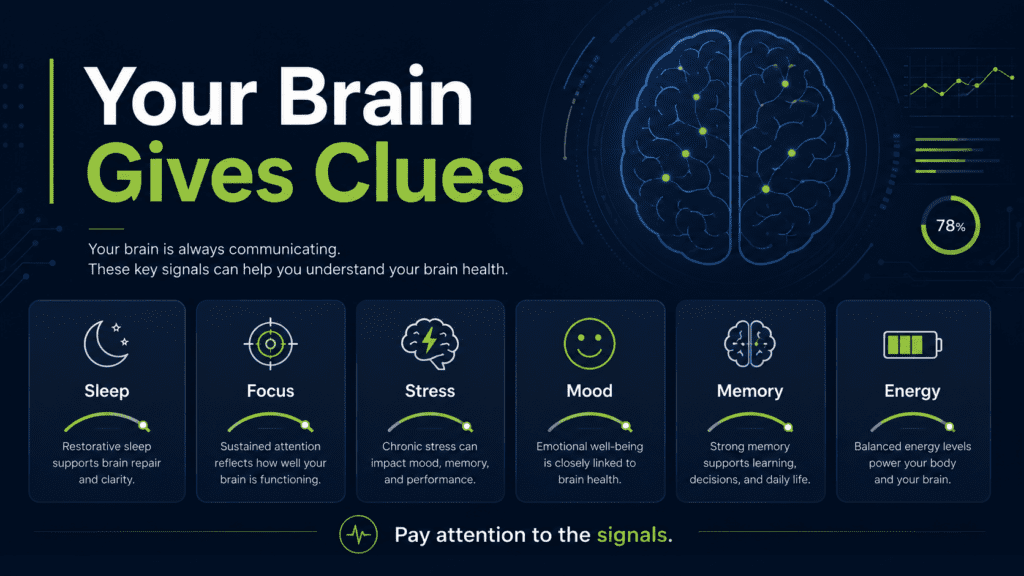
That is the moment to pay attention.
Here is a simple way to use what you just read. Over the next 7 days, track three things: your sleep, your focus, and your stress recovery. Do not make it complicated. Just ask yourself each night, “How did my brain perform today?”
Rate each one from 1 to 10.
Sleep quality.
Focus and mental clarity.
How fast you recovered after stress.
After a week, look for patterns. If your focus drops after poor sleep, that is a clue. If stress stays high long after the moment passes, that is a clue. If you keep needing caffeine to feel normal, that is a clue too.
This is how you stop guessing.
You do not need to become obsessed with every symptom. You do need to become honest about patterns. Your brain and body are always giving feedback. Most people are just too busy to listen.
The 7 tips in this article give you a starting point. Protect your sleep. Know your baseline. Watch for burnout. Train your stress response. Use feedback based tools. Protect your focus. Look deeper when the same signs keep showing up.
If the patterns keep repeating, get checked out.
At Genesis Brain Institute, qEEG brain mapping and other diagnostics help establish a clearer baseline of brain and nervous system function.
Better brain function starts with better information.
And better information gives you a better path forward.
Disclaimer: This content is for informational purposes only and does not constitute medical advice. Please consult with a licensed healthcare provider. Genesis Brain Institute is a Brain Treatment Center in Tampa offering non-pharmaceutical solutions that bring clarity, restore function, and offer real hope for those who feel lost, stuck, or simply want more from life.