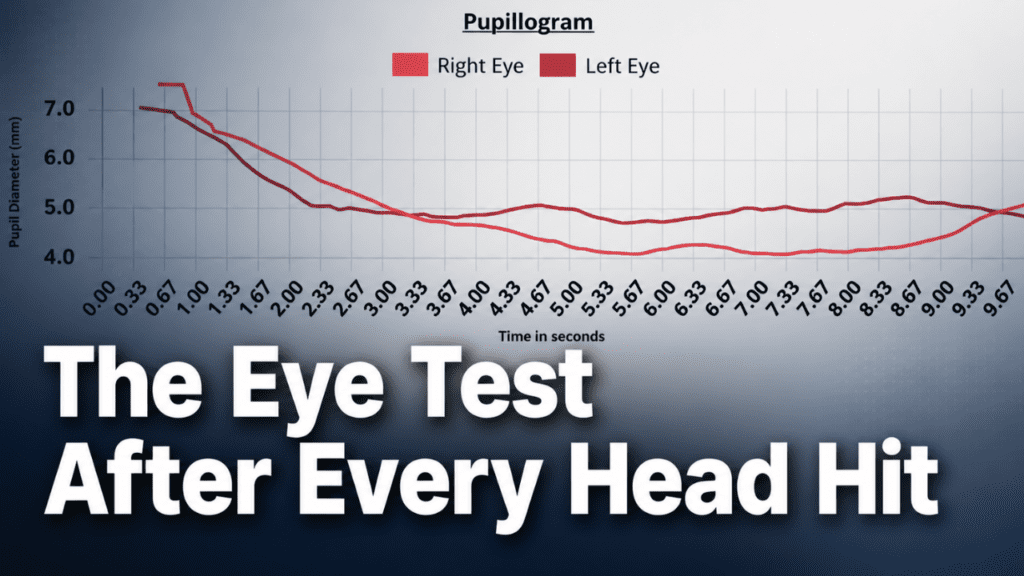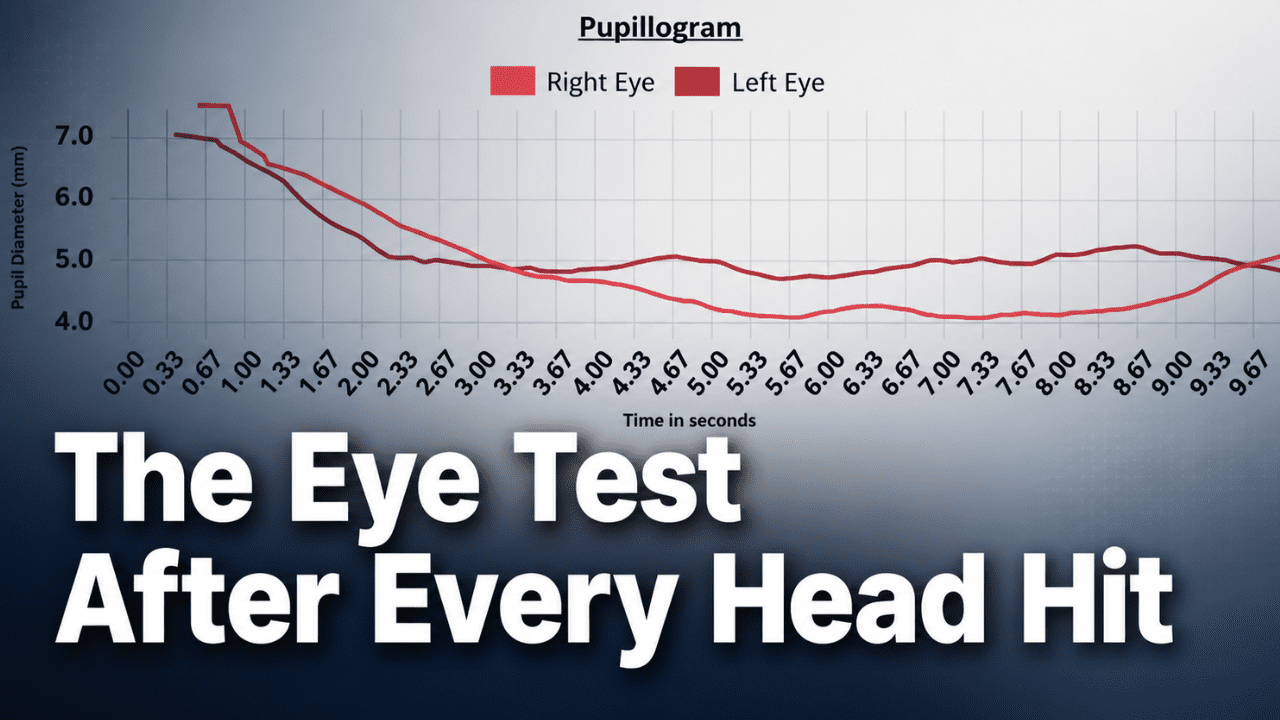
How to check for a concussion in eyes starts with the pupil’s response to light, also called the pupil light reflex.
When light enters the eye, the pupil should get smaller. Then, when the light is removed, the pupil should recover and get larger again.
That sounds simple, but it gives doctors important information about how the brain and autonomic nervous system are responding.
The autonomic nervous system helps control things your body does without you thinking about them. This includes pupil size, heart rate, blood pressure, sweating, stress response, and recovery after stimulation.
After a concussion, car accident, sports hit, or fall, this system can become dysregulated. A person can react to light, sound, stress, or movement, but struggle to calm back down.
That is one reason someone can feel anxious, foggy, dizzy, light sensitive, or easily overwhelmed after a head injury.
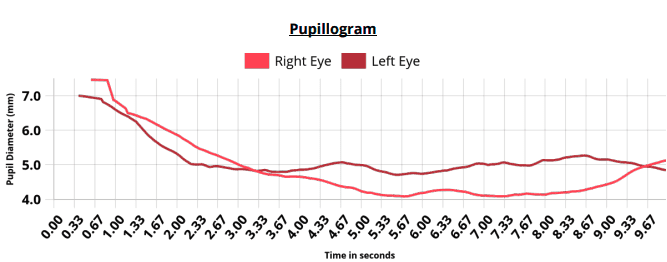
In her explanation, Dr. Emily Kalambaheti describes the pupil test as a way to measure several important details. How large are the pupils before light? How fast do they constrict? How small do they get? How quickly do they recover? Are the right and left eyes responding the same way?
Those details matter because a basic exam with a small flashlight can miss deeper patterns. The pupils can look reactive, but still not be functioning efficiently.
This is why advanced eye testing can be valuable after an injury. It gives objective data instead of relying only on symptoms or a quick visual check.
At Genesis Brain Institute, this is one part of a much larger clinical picture. We do not use one test alone to understand a concussion. We look at the eyes, balance, cognition, brain activity, symptoms, and history together so we can better understand what the brain is showing us after injury.
What Does a Pupil Test Measure After a Concussion?
A pupil test after a concussion measures how the pupils respond to light. It looks at how large the pupils are, how fast they get smaller, how small they become, how quickly they recover, and whether the right and left eyes respond the same way.
This matters because the pupils are connected to the autonomic nervous system. This system helps control automatic body functions, including stress response, heart rate, blood pressure, sweating, and recovery after stimulation.
After a concussion, the brain can react to light but struggle to recover after the light is removed. That delayed recovery can help explain why some people feel light sensitive, foggy, overwhelmed, anxious, or prone to headaches after injury.
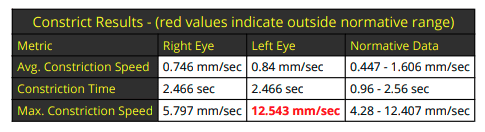
A basic flashlight exam can show whether the pupils react. Advanced pupillometry shows how well they react, how fast they recover, and whether the response is symmetrical. That deeper information helps clinicians understand how the nervous system is functioning after an injury.
Why Eye Movement Testing Matters After a Concussion
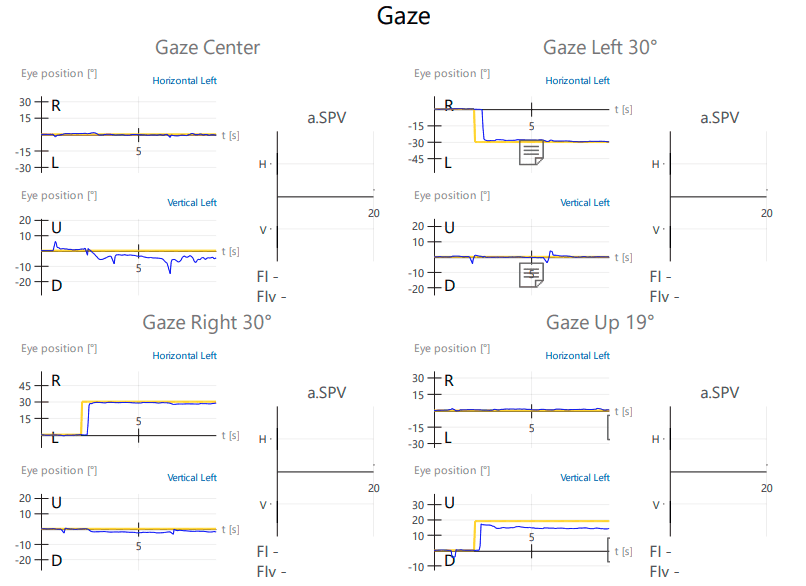
Eye movement testing after a concussion helps show how well the brain is controlling the eyes. This is important because the eyes do not move on their own. They are guided by brain pathways, cranial nerves, the brainstem, and the vestibular system.
At Genesis Brain Institute, this type of testing can include VOG, also called video oculography. VOG measures eye movements while a patient looks at targets, tracks motion, or responds to visual patterns.
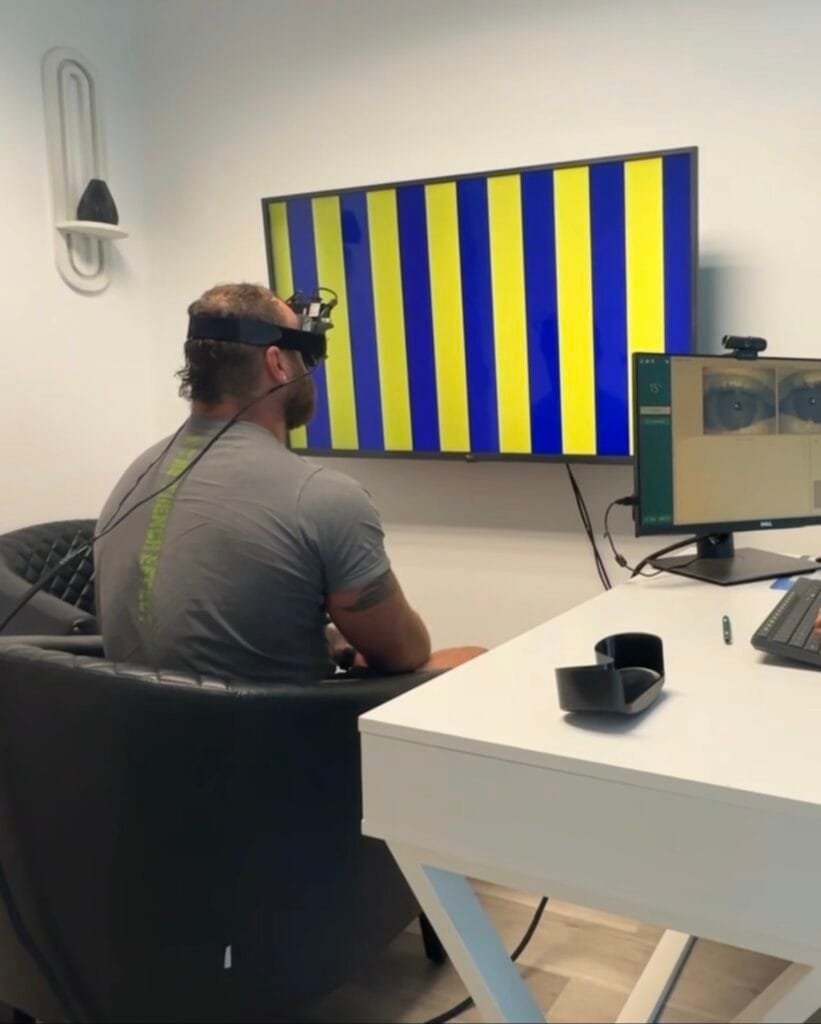
This can help evaluate several types of eye movement, including:
Gaze fixation, which is how well the eyes stay still on a target.
Smooth pursuits, which show how well the eyes follow a moving object.
Saccades, which are fast eye jumps used during reading and scanning.
Vestibular ocular reflexes, which help the eyes stay on target while the head moves.
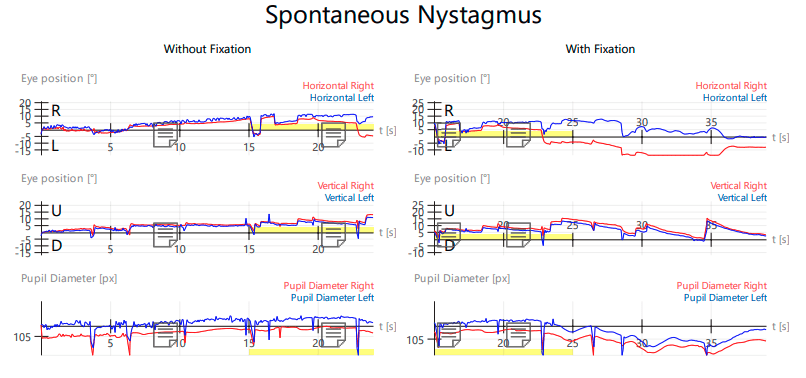
These movements matter after a concussion because head injuries can affect the systems that help the eyes, brain, and body work together. When those systems are not working well, a person can experience dizziness, trouble reading, motion sensitivity, visual fatigue, poor focus, or feeling overwhelmed in busy environments.
This is why eye movement testing can reveal problems that a regular vision check can miss. A person can have 20/20 vision and still have trouble with how the brain controls the eyes.
Why Balance Testing Matters After a Concussion
Balance testing after a concussion helps show how well the brain is combining information from the eyes, inner ear, neck, and body.
Most people think balance means standing on one foot. Clinically, it is much deeper than that. Balance depends on several systems working together at the same time. Your visual system tells your brain what you see. Your vestibular system helps detect motion and head position. Your proprioceptive system tells your brain where your body is in space. Your neck also sends important information about position and movement.
After a concussion or whiplash injury, these systems can stop working together smoothly. A person may not fall over, but their brain may be working much harder to stay steady.
That is why someone can feel fine sitting still, but feel worse in a grocery store, crowded room, school hallway, moving car, or bright environment. Their brain is taking in too much information and struggling to organize it.
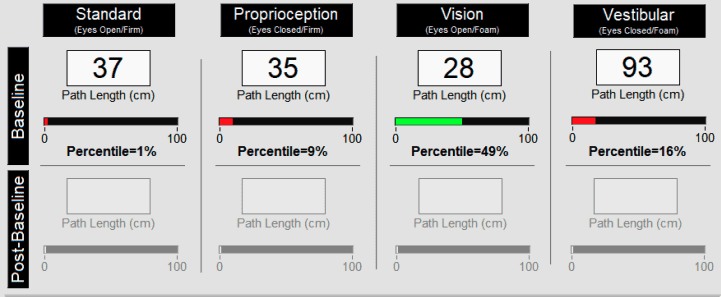
At Genesis Brain Institute, balance testing can measure how much a person sways under different conditions. This may include standing with eyes open, eyes closed, on a firm surface, and on a foam surface. Testing can also include different head positions to see how the neck and vestibular system affect stability.
This gives more information than simply asking, “Are you dizzy?”
A person may not describe dizziness, but the data can still show that the brain is overusing vision, underusing body awareness, or struggling when visual input is removed. That matters because concussion recovery is not only about symptoms. It is also about how efficiently the brain and nervous system are functioning.
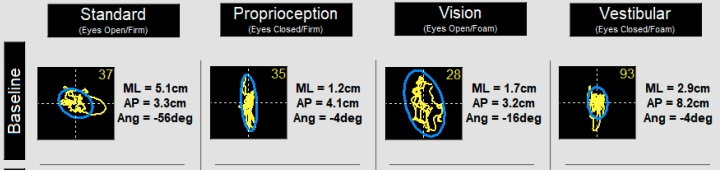
Balance testing is still only one part of the picture. It does not stand alone. But when it is combined with pupil testing, VOG, cognitive testing, qEEG brain mapping, symptoms, and history, it helps create a clearer view of how the brain is responding after injury.
Why Cognitive Testing Matters After a Concussion
Cognitive testing after a concussion helps turn “brain fog” into measurable data.
Brain fog is one of the most common complaints after a concussion, but it is not specific enough by itself. One person may feel foggy because their attention is poor. Another person may feel foggy because their processing speed is slower. Another person may feel like their memory is worse, when the real issue is that the brain never took in the information clearly in the first place.
That distinction matters.
If the brain is not paying attention well, it cannot store the information well. If it does not store the information well, it cannot recall it later. So what feels like a memory problem can actually begin as an attention problem.
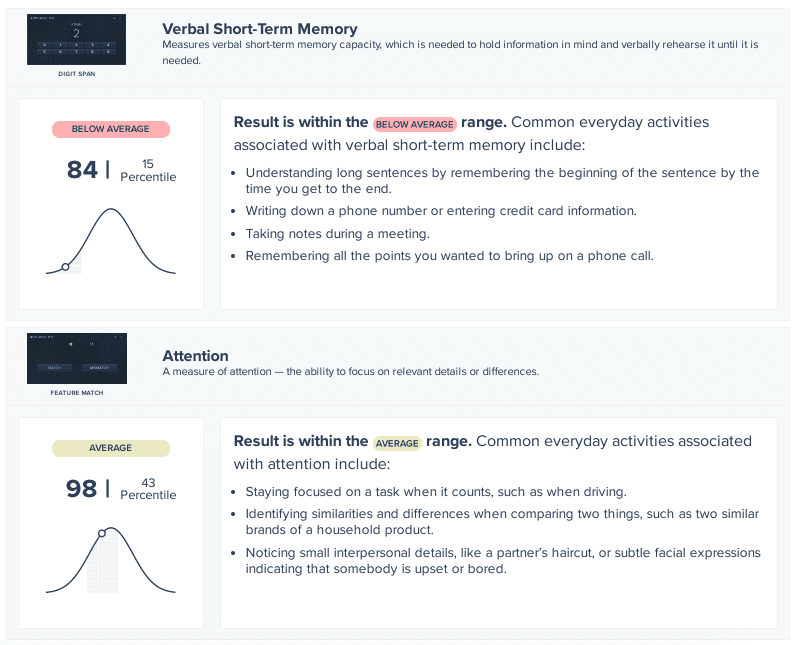
At Genesis Brain Institute in Tampa, cognitive testing can look at different areas of brain performance, including attention, working memory, short term memory, episodic memory, response inhibition, spatial planning, processing speed, and reasoning.
Each area tells a different part of the story, Dr. Christopher Gleis explains.
Working memory helps you hold information long enough to use it, like following steps, remembering directions, or completing a task in order.
Short term memory helps you take in information and recall it soon after.
Episodic memory helps you remember the details around an event, like where something happened, when it happened, and what else was going on.
Response inhibition helps your brain filter out distractions. This is important because a person can struggle to focus, not because they are lazy, but because their brain is giving too much importance to background noise, movement, light, or other sensory input.
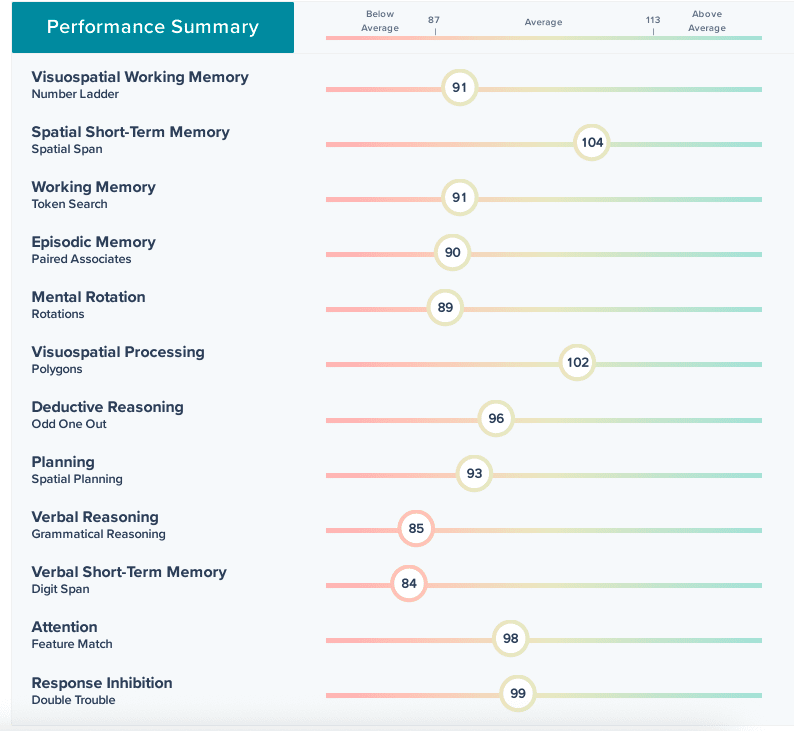
After a concussion, these systems can change. A person can start losing their place while reading, forgetting conversations, missing steps at work, feeling overwhelmed in busy rooms, or needing much more effort to do things that used to feel automatic.
This is why cognitive testing is so important. It helps show which thinking systems are working well and which ones are under strain.
Cognitive testing does not stand alone. It is one part of the larger picture. When combined with pupil testing, VOG, balance testing, qEEG brain mapping, symptoms, and history, it helps create a clearer understanding of how the brain is functioning after injury.
Why qEEG Brain Mapping Matters After a Concussion
qEEG brain mapping after a concussion helps measure electrical activity in the brain.
This matters because a concussion does not always show up on a CT scan or MRI. Those scans are important when doctors need to look for structure problems, like bleeding, swelling, or major damage. But many concussion symptoms are related to function, not structure.
That means the brain can look normal on imaging, but still not work the way it did before the injury.
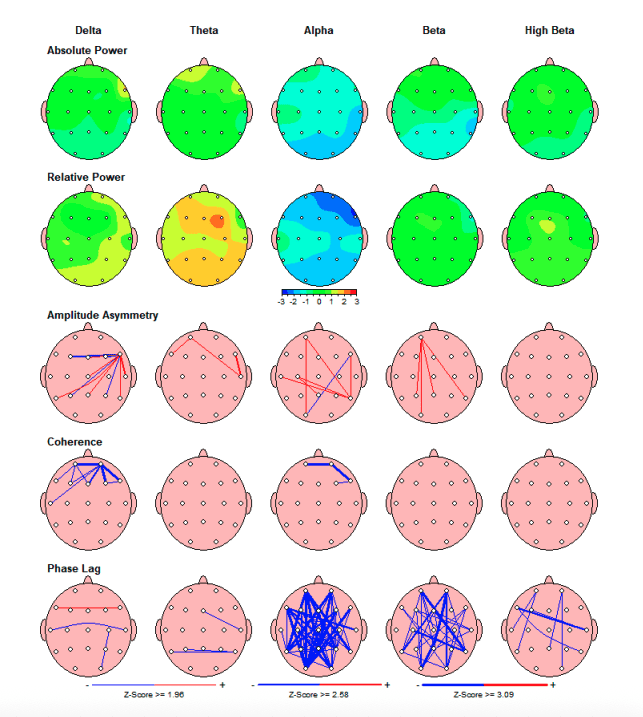
qEEG stands for quantitative electroencephalogram. It measures brainwave activity and helps show patterns in different regions of the brain. Instead of only asking how someone feels, qEEG gives objective information about how the brain is operating.
After a concussion, the brain can show signs of slowing, overactivation, poor communication, or abnormal patterns in certain areas. These patterns can help explain symptoms like brain fog, poor focus, fatigue, sleep problems, headaches, mood changes, and trouble processing information.
This does not mean qEEG alone diagnoses a concussion.
That is important.
At Genesis Brain Institute, qEEG brain mapping is not used as the only answer. It is one part of a larger clinical picture. The value comes from comparing brain activity with symptoms, history, pupil testing, VOG, balance testing, and cognitive testing.
This is where the bigger picture becomes powerful.
If a patient says they feel foggy, cognitive testing can help show which thinking skills are affected. If they feel dizzy or visually overwhelmed, VOG and balance testing can help show how the eyes, vestibular system, and body are working together. If they are light sensitive or easily overstimulated, pupillometry can help show how the autonomic nervous system is responding.
Then qEEG adds another layer by showing how the brain’s electrical patterns are functioning.
One test gives a clue.
Several tests together help tell the story.
Why One Concussion Test Is Never Enough
One concussion test is never enough because the brain does not work through one system alone.
A concussion can affect vision, balance, memory, attention, processing speed, mood, sleep, pain, and nervous system regulation. That means one person may show changes in the pupils. Another person may show changes in balance. Another person may show changes in cognition. Another person may show changes in eye movements or brainwave activity.
That is why a single normal result should not always end the conversation.
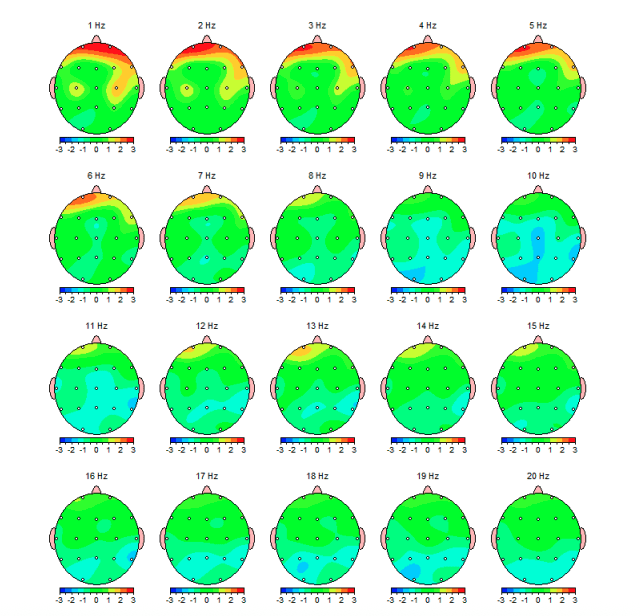
A person can pass one test and still struggle in another area. For example, their pupils may respond well to light, but their balance testing may show that the brain is overusing vision to stay steady. Their VOG may show trouble with tracking or fast eye movements. Their cognitive test may show weak attention or response inhibition. Their qEEG may show brainwave patterns that help explain why the person feels foggy, tired, overwhelmed, or unlike themselves.
This is also why symptoms matter.
If someone says, “I feel off,” “I cannot focus,” “light bothers me,” “I feel dizzy in stores,” or “I am not thinking like I used to,” those symptoms should not be ignored just because one test looked normal.
At Genesis Brain Institute, the goal is to connect the data via our Quant360 Functional Analysis. Pupil testing, VOG, balance testing, cognitive testing, qEEG brain mapping, symptoms, and injury history all help tell a more complete story.
The brain deserves more than one snapshot.
It deserves a full picture.
What New Research Shows About Eye Testing and Concussions
New research continues to support the idea that the eyes can reveal important information after a concussion.
For example, Purdue University reported on a peer reviewed study involving Reflex, a smartphone based app designed to measure the pupil light reflex. The goal was to see whether changes in the way the pupils respond to light could help detect concussion related biomarkers.
That matters because it points to a bigger shift in brain health.
Concussion testing is moving beyond “How do you feel?” and toward objective data. Eye based testing can help measure how the nervous system responds, how quickly it reacts, and how well it recovers after stimulation.
At Genesis Brain Institute, we see this as part of a larger movement toward better brain measurement. The eyes can give important clues, but they are still one part of the story. That is why eye testing should be interpreted alongside other clinical findings, symptoms, history, balance testing, cognitive testing, VOG, and qEEG brain mapping.
What Happens When a Concussion Is Missed
When a concussion is missed, a person may keep living with symptoms they do not fully understand.
They may be told they are fine because their imaging looked normal. They may try to push through headaches, light sensitivity, dizziness, sleep problems, mood changes, brain fog, or trouble focusing. Over time, this can affect school, work, sports, relationships, and daily life.
A missed concussion can also create confusion.
Someone may think they are lazy, anxious, forgetful, emotional, or not trying hard enough. In reality, their brain and nervous system may still be struggling after injury.
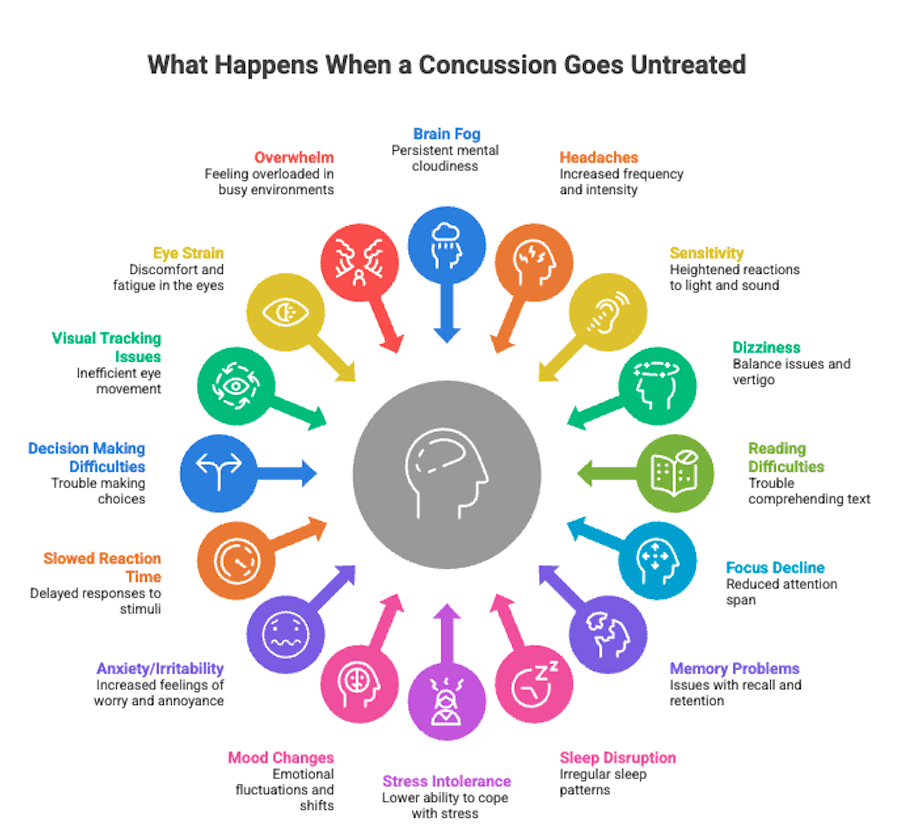
This is why objective testing matters. It helps turn vague symptoms into information that can be measured, explained, and used to guide the next step.
Better Testing Creates a Clearer Path Forward
Better concussion testing does not mean relying on one report, one symptom, or one score.
It means looking at the full picture.
The pupils can show how the autonomic nervous system responds to light. VOG can show how the brain controls eye movements. Balance testing can show how the brain uses vision, body position, neck input, and vestibular information. Cognitive testing can show how attention, memory, filtering, and processing are working. qEEG brain mapping can add another layer by measuring electrical patterns in the brain.
Together, these tests help clinicians better understand what the brain is showing after injury.
At Genesis Brain Institute, that is the goal. We do not want patients guessing, pushing through, or being told everything is fine when they still feel off. We want to measure, connect the data, and help create a clearer path forward.
A concussion can be confusing.
The right testing can bring clarity.
Disclaimer: This content is for informational purposes only and does not constitute medical advice. Please consult with a licensed healthcare provider. Genesis Brain Institute is a Brain Treatment Center in Tampa offering non-pharmaceutical solutions that bring clarity, restore function, and offer real hope for those who feel lost, stuck, or simply want more from life.