How to get rid of brain fog is one of the most common questions people search when they no longer feel like themselves.
You may still be working, caring for your family, answering emails, and getting through the day, but everything feels harder than it used to.
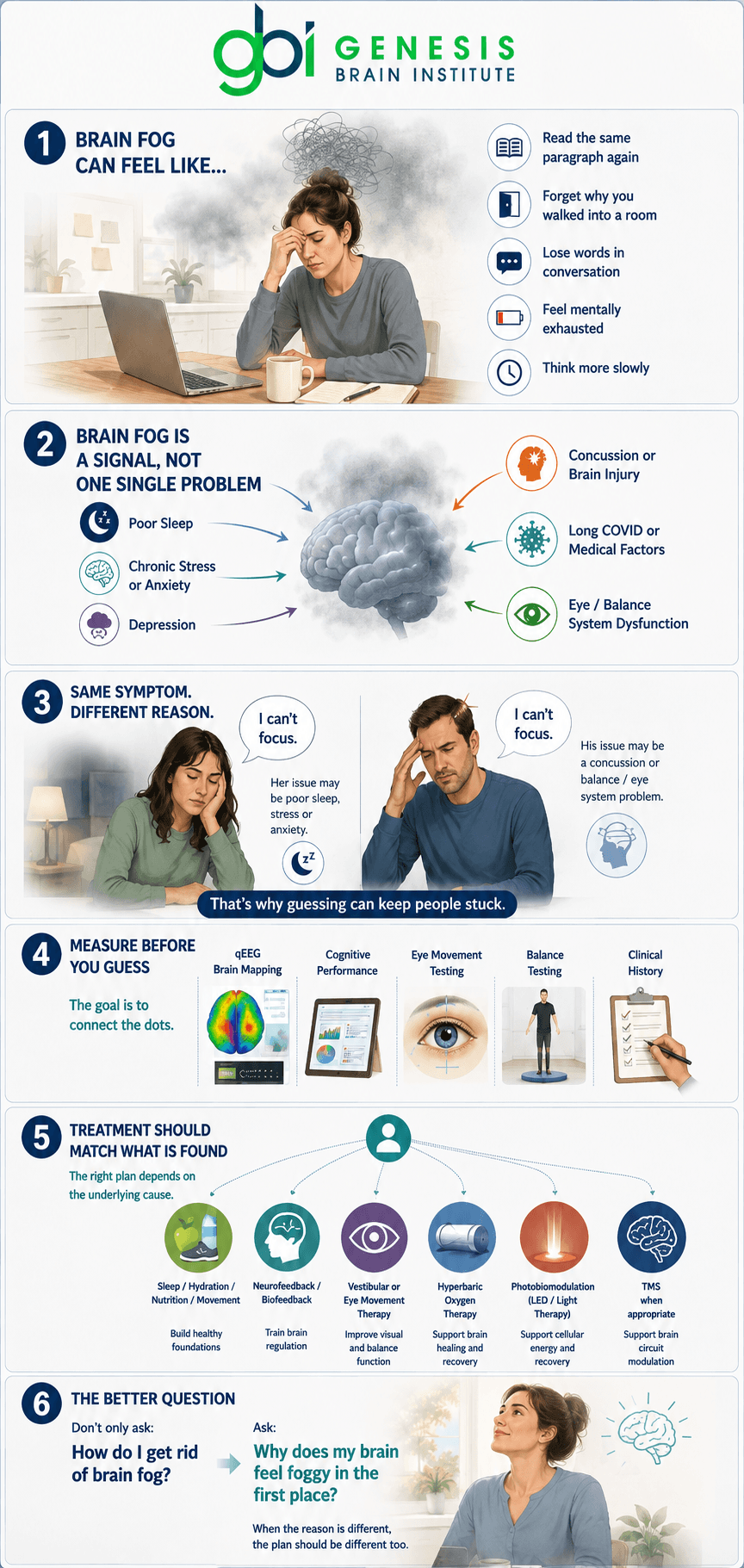
You read the same paragraph more than once. You forget why you walked into a room. You lose words in conversation. You feel tired, foggy, slower, and frustrated because you know your brain can work better than this.
Brain fog is not one single problem. It is a signal. And before you can know the best way to clear brain fog, it helps to understand why your brain feels foggy in the first place.
What Is Brain Fog?
Brain fog is not a medical diagnosis. It is a term people use when their thinking feels slower, heavier, or less clear than normal. Some people describe it as mental fog, brain cloudiness, or a foggy head.
Brain fog can make it harder to focus, remember words, follow conversations, make decisions, or stay mentally sharp during the day. For some people, it feels mild. For others, it can affect work, school, relationships, and daily life.
The important thing to understand is this, brain fog is usually a sign that something deeper may be affecting how the brain and your body are working together.
What Does Brain Fog Feel Like?
Brain fog symptoms can look different from person to person, but many people describe the experience in similar ways. They often say they do not feel sick, but they do not feel like themselves either.
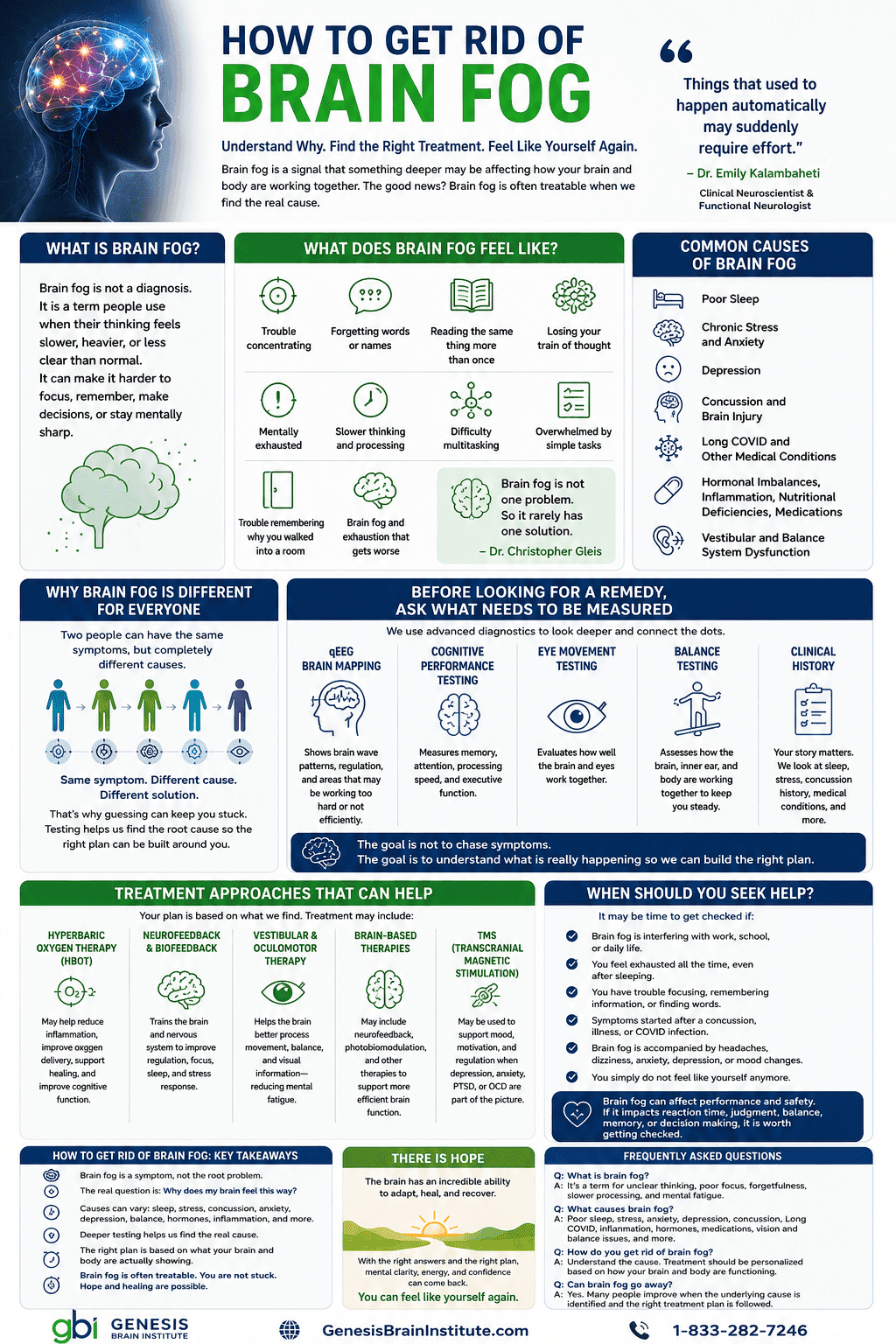
Common brain fog symptoms include:
- Trouble concentrating
- Forgetting words or names
- Reading the same thing more than once
- Losing your train of thought
- Feeling mentally exhausted
- Slower thinking and processing
- Difficulty multitasking
- Feeling overwhelmed by simple tasks
- Trouble remembering why you walked into a room
- Brain fog and exhaustion that gets worse throughout the day
Some people describe brain fog as feeling like their brain is running through mud. Others say they feel mentally tired all the time, even after a full night’s sleep.
“Things that used to happen automatically may suddenly require effort. Following conversations, making decisions, remembering information, or focusing at work can start to feel harder than they once did.”
Dr. Emily Kalambaheti, Clinical Neuroscientist and Functional Neurologist
That does not mean you are lazy, unmotivated, or imagining things. It means your brain and body may be working harder to do things that once felt easy.
Why Do I Keep Forgetting Things?
If you find yourself asking, “Why do I keep forgetting things?” occasional forgetfulness can be normal. But when it starts happening more often, it may be a sign that your brain is working harder than it should.
Brain fog and forgetfulness often happen together. You may forget why you walked into a room, struggle to remember a name, lose your train of thought, or have trouble remembering something you just read.
There can be many reasons for this, including poor sleep, stress, anxiety, medications, concussion, illness, nutrition, or changes in how efficiently the brain is processing information.
If your forgetfulness is becoming more frequent or feels different than normal, the goal should not be to guess. It may be worth looking deeper to understand what could be contributing to the change.
If forgetfulness is one of your biggest concerns, read more about why you may be forgetting things so quickly.
What Causes Brain Fog?
One reason brain fog can be so frustrating is that there is no single cause.
Many people search for a brain fog remedy hoping to find one answer. In reality, brain fog is often a symptom of something else affecting how the brain and body are functioning.
Some of the most common causes of brain fog include:
Poor Sleep
Sleep is when the brain restores energy, processes memories, and clears waste products that build up throughout the day. When sleep quality suffers, concentration, memory, processing speed, and mental clarity often suffer too.
Research has consistently shown that even modest sleep deprivation can negatively affect attention, decision making, reaction time, and cognitive performance.
Chronic Stress and Anxiety
When the brain and nervous system remain in a constant state of stress, mental resources get redirected toward survival rather than optimal performance.
This can make it harder to focus, remember information, regulate emotions, and think clearly. Many people describe this experience as feeling mentally drained, overwhelmed, or unable to concentrate.
Depression
Brain fog is a common symptom of depression. Many people assume depression is only about feeling sad, but it can also affect motivation, focus, memory, processing speed, and mental energy.
As Dr. Christopher Gleis often explains, when motivation centers in the brain are not functioning efficiently, even simple daily activities can begin to feel difficult or exhausting.
Concussion and Brain Injury
A concussion can affect brain function long after the initial injury has healed. Some people experience persistent symptoms such as brain fog, slower thinking, memory problems, headaches, dizziness, or difficulty concentrating.
In many cases, people report that they simply do not feel like themselves, even when routine scans appear normal.
Long COVID and Other Medical Conditions
Researchers continue to study the connection between Long COVID and cognitive symptoms such as brain fog, fatigue, and memory problems. Hormonal imbalances, autoimmune conditions, nutritional deficiencies, medication side effects, and other medical issues can also contribute to mental fogginess.
Vestibular and Balance System Dysfunction
Many people do not realize that the brain, eyes, ears, and balance system work together constantly. When this system is not functioning properly, the brain may need to work harder to process information, maintain balance, and navigate the environment.
The result can be mental fatigue, difficulty concentrating, dizziness, and brain fog.
Why Brain Fog Is Different for Everyone
Brain fog is not one thing. That is why one brain fog treatment may help one person and do very little for someone else.
Two people can both say, “I cannot focus.”
But one person may be dealing with poor sleep. Another may be dealing with chronic stress. Another may have lingering effects from a concussion. Another may have changes in balance, eye movement, hormones, inflammation, depression, anxiety, or nervous system regulation.
The symptom may sound the same.
The reason may be completely different.
That is why guessing can keep people stuck. A person may try more coffee, more supplements, more rest, or another brain fog remedy and still feel foggy because the real issue has not been identified.
Research supports this idea. Sleep loss can affect attention, reaction time, memory, and decision making (research on Sleep and Cognitive Performance). Chronic stress can affect learning, memory, and working memory. Concussion can cause ongoing problems with thinking, focus, and mental energy. Long COVID research has also shown that brain fog can involve measurable changes in memory, reasoning, and executive function (research on Long COVID and Brain Fog).
This is why the better question is not only, “How do I get rid of brain fog?”
The better question is:
“Why does my brain feel foggy in the first place?”
At Genesis Brain Institute, this is where diagnostics become important. Brain fog may involve attention, memory, processing speed, eye movements, balance, sleep, stress, concussion history, or brain wave patterns. Looking deeper can help reveal which systems may be under stress and why someone may feel mentally foggy, exhausted, or slower than they used to feel.
Before Looking for a Brain Fog Remedy, Ask What Needs to Be Measured
Most brain fog advice starts with things to try.
- More sleep.
- More water.
- Less stress.
- Better food.
Those may help some people, but they do not explain what is actually happening in the brain.
That is where deeper testing can matter.
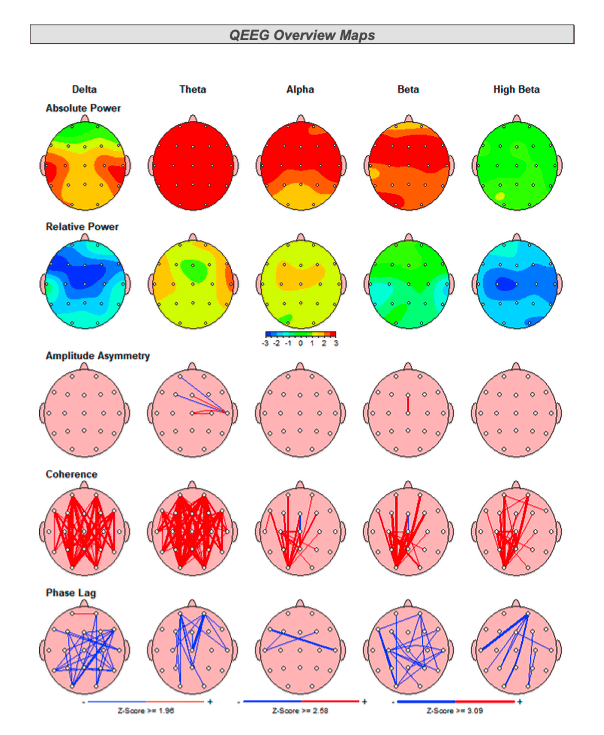
A qEEG Brain Map may show patterns that match what a person is feeling. For example, too much slow wave activity can be associated with feeling foggy, forgetful, groggy, or mentally slower. Not enough faster brain wave activity may also affect focus, attention, and cognitive efficiency.
The location matters too.
If slower activity shows up in one area, it may tell a different story than if it appears across larger parts of the brain. If the front of the brain is affected, it may relate more to focus, planning, emotional regulation, or decision making. If the pattern appears in areas linked to injury, it may raise different questions about concussion history or trauma.
That does not mean qEEG Brain Mapping gives one simple answer for every person.
It means it can provide more information.
At Genesis Brain Institute, qEEG Brain Mapping is one part of a larger diagnostic picture. Cognitive performance testing may show how memory, attention, and processing speed are working. Eye movement testing may show whether the brain and eyes are communicating efficiently. Balance testing may show whether the body and brain are using sensory information well.
This matters because brain fog is often described as one problem, but the brain may be showing several different patterns underneath it.
The goal is not to chase symptoms.
The goal is to measure what can be measured, connect the dots, and build the next step around what the brain and body are actually showing.
How to Treat Brain Fog the Right Way
Basic habits matter. Sleep, hydration, nutrition, movement, and reducing alcohol can all support brain health.
But if brain fog continues, keeps getting worse, or comes with exhaustion, headaches, dizziness, memory issues, anxiety, depression, or a history of concussion, it may be time to look deeper.
The brain is one of the most energy demanding organs in the body. It needs oxygen, blood flow, healthy brain wave activity, clear communication between brain regions, and accurate input from the eyes, ears, balance system, and body.
When one of those systems is not working well, the brain may still function, but it may have to work harder to do the same job.
That is why brain fog treatment should be based on what is actually found.
Researchers believe Hyperbaric Oxygen Therapy may help address some of the underlying processes associated with brain fog. Studies suggest HBOT may reduce chronic inflammation and oxidative stress while improving blood vessel function and oxygen delivery to tissues. By supporting the brain’s energy demands and recovery processes, these changes may help improve symptoms such as fatigue, poor concentration, memory problems, and mental fog that are commonly seen in Long COVID and post concussion syndrome (Research on Hyperbaric Oxygen Therapy for Long COVID Brain Fog).
If the brain is having trouble with regulation, neurofeedback training and/or biofeedback may help train the brain and nervous system toward better control. This may be especially helpful when brain fog appears alongside stress, anxiety, poor sleep, or nervous system dysregulation.
If eye movements or balance are part of the problem, vestibular therapy and oculomotor therapy may help reduce the extra workload placed on the brain. Many people do not realize how much energy the brain uses to keep the body balanced, track movement, process visual information, and stay oriented in space.
If qEEG Brain Mapping shows patterns linked with slower processing, poor focus, too much slow wave activity, or inefficient communication between brain regions, therapies such as neurofeedback, photobiomodulation, or other brain based treatments may be used to support more efficient brain function.
If depression, anxiety, PTSD, or OCD are part of the picture, treatments such as Transcranial Magnetic Stimulation (TMS) may also be considered when appropriate. TMS uses magnetic stimulation to target specific brain regions involved in mood, motivation, and regulation.
The goal is not to throw treatments at symptoms.
The goal is to identify what is forcing the brain to work harder than it should and build a plan around what the brain and body are actually showing.
Brain fog is not one problem. So it rarely has one solution.
When you understand what is making the brain work harder than it should, the path forward becomes much clearer.
When Should You Seek Help for Brain Fog?
Everyone experiences occasional forgetfulness or mental fatigue from time to time. But persistent brain fog is different.
It may be time to seek help if:
- Brain fog is interfering with work, school, or daily life.
- You feel exhausted all the time, even after sleeping.
- You have trouble focusing, remembering information, or finding words.
- Symptoms started after a concussion, illness, or COVID infection.
- Brain fog is accompanied by headaches, dizziness, anxiety, depression, or mood changes.
- You simply do not feel like yourself anymore.
Brain fog can also affect performance and safety. If your work involves driving, operating equipment, making fast decisions, caring for others, managing details, competing in sports, or responding under pressure, slower thinking and poor focus can create real risk.
This matters even more after a concussion, illness, or major change in mental clarity. If your brain fog is affecting reaction time, judgment, balance, memory, or decision making, it is worth getting checked instead of trying to push through it.
Frequently Asked Questions About Brain Fog
What is brain fog?
Brain fog is a term people use to describe unclear thinking, poor focus, forgetfulness, slower processing, and mental fatigue. It is not a diagnosis by itself, but it can be a sign that something is affecting how the brain and body are functioning.
What causes brain fog?
Brain fog can be linked to poor sleep, chronic stress, anxiety, depression, concussion, Long COVID, medication side effects, inflammation, hormonal changes, vision issues, balance problems, and other health factors.
How do you get rid of brain fog?
The best way to get rid of brain fog is to understand what is causing it. Some people improve with better sleep, nutrition, movement, and stress support. Others may need deeper testing and a more personalized plan based on brain function, eye movement, balance, cognitive performance, or nervous system regulation.
Can anxiety cause brain fog?
Yes. Anxiety can contribute to brain fog by keeping the nervous system in a stressed state. This can affect focus, memory, sleep, decision making, and mental clarity.
Can Long COVID cause brain fog?
Yes. Many people with Long COVID report brain fog, fatigue, memory problems, poor concentration, and slower thinking. Research continues to study why this happens and which therapies may help.
When should I get checked for brain fog?
You should consider getting checked if brain fog is ongoing, getting worse, affecting your work or daily life, or appears with headaches, dizziness, memory issues, anxiety, depression, fatigue, or a history of concussion.
How to Get Rid of Brain Fog: Key Takeaways
If you are searching for how to get rid of brain fog, there is a good chance you are tired of being told everything looks normal when you know you do not feel normal.
You may still be getting through the day, but it takes more effort. You may still be working, showing up, caring for people, and handling responsibilities, but inside, you know something feels off.
That is why brain fog should not be brushed aside.
Brain fog is not the root problem.
It is the signal.
It can show up as poor focus, memory problems, slower thinking, mental exhaustion, word finding issues, or the feeling that your brain is working harder than it should.
But here is the hope.
Brain fog is often treatable. For many people, it can improve when the right cause is found and the right plan is built.
You are not stuck with this forever.
The answer is not always another cup of coffee, another supplement, or another attempt to push through. The better first step is to understand why your brain feels foggy in the first place.
At Genesis Brain Institute, qEEG Brain Mapping, cognitive performance testing, eye movement testing, balance testing, and a detailed clinical history can help create a clearer picture of how the brain and body are functioning together.
Because the same symptom can come from different systems.
And when the reason is different, the plan should be different too.
The goal is not to guess your way out of brain fog.
The goal is to understand what your brain and body are showing so the next step is built around you.
Disclaimer: This content is for informational purposes only and does not constitute medical advice. Please consult with a licensed healthcare provider. Genesis Brain Institute is a Brain Treatment Center in Tampa offering non-pharmaceutical solutions that bring clarity, restore function, and offer real hope for those who feel lost, stuck, or simply want more from life.