Mental training for athletes is becoming one of the most important ways to improve focus, resilience, and performance. Athletes train their bodies every day, but the brain is what helps them stay calm under pressure, make quick decisions, recover after mistakes, and keep going when the game gets hard.
At Genesis Brain Institute in Tampa, we use this type of training with athletes, elite performers, and people working to improve their mental health. We have seen how training the brain and nervous system can help people gain better control over how they focus, respond, and recover.
But we do not want this kind of training to stay inside a clinic.
Genesis Brain Institute and Genesis Brain Foundation want to help bring safe, effective, and measurable brain training into gyms and schools. Our goal is to give the next generation tools that may help them perform better in sports, improve in school, strengthen resilience, and handle pressure before it becomes a crisis.
This is not about giving students another presentation on mental health.
It is about giving them active exercises they can repeat, practice, and improve over time.
In this article, we will look at three brain exercises used in mental training for athletes:
- Biofeedback
- Neurofeedback
- Vagus Nerve Stimulation
Each one trains a different part of performance, including self regulation, executive function, and recovery.
What Is Mental Training for Athletes?
Mental training for athletes is the repeated practice of skills that help the brain and body perform under pressure.
It includes focus, self regulation, decision making, emotional control, resilience, and recovery. Recovery means more than bouncing back after a mistake. It also means helping the body settle and recover after a hard workout, practice, or game.
Tim Grover, who trained some of the world’s top athletes and wrote Relentless, explains that mental toughness is not built through motivation alone. It is built by doing the work again and again, especially when the athlete is tired, uncomfortable, frustrated, or under pressure.
That is why mental training should not be treated like a one time speech.
Athletes do not build stronger muscles by listening to someone talk about strength. They build strength through reps.
The same is true for the brain.
With the right exercises, athletes can practice how to stay focused, control their response, make better decisions, recover faster, and keep performing when the game gets hard.
Bringing Brain Training Beyond the Clinic
At Genesis Brain Institute in Tampa, we can use a wide range of clinical tools to train the brain and nervous system. For people who are able to come into the clinic, this allows us to build a multimodality plan based on their goals, testing, and how their brain is performing.
At the same time, neurotechnology and medical technology are growing quickly. More devices are now being designed for use in gyms, schools, and homes without a doctor present. They may not have the same power or range as clinical equipment, but many can still provide effective, focused training when the right device is used for the right purpose.
That creates both opportunity and confusion.
Many devices make similar claims. Two products may both say they help reduce stress, but they may work in very different ways. One may use neurofeedback to train brain activity. Another may use biofeedback to train breathing, heart rhythm, and the body’s stress response.
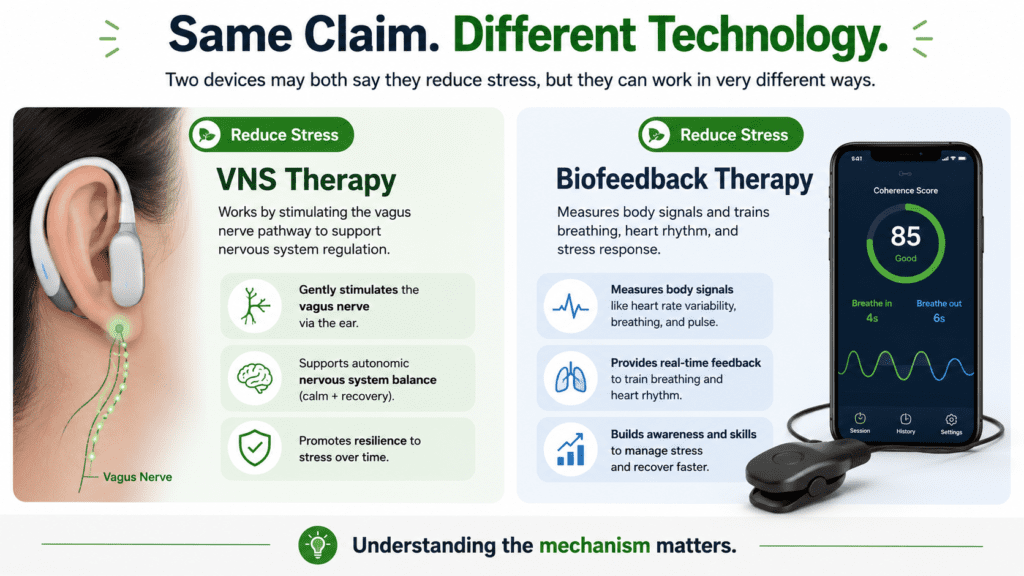
Both may be effective, but they are not doing the same job and you can spend a lot of money testing which will get you the result you’re looking for.
That is why we look beyond the claim on the box. We look at what the technology measures, what part of the brain or nervous system it is designed to train, how it should be used, and whether the results can be tracked.
When the right technologies are combined, they can create a more complete approach. One exercise may train focus and executive function. Another may improve coherence and recovery. A third may help the nervous system shift out of high alert.
The goal is not to use more devices.
The goal is to choose the best tools, use each one for the right purpose, and build a program that trains the whole system.
Three Mental Training Exercises for Athletes
Mental training for athletes should be active, simple, and easy to repeat.
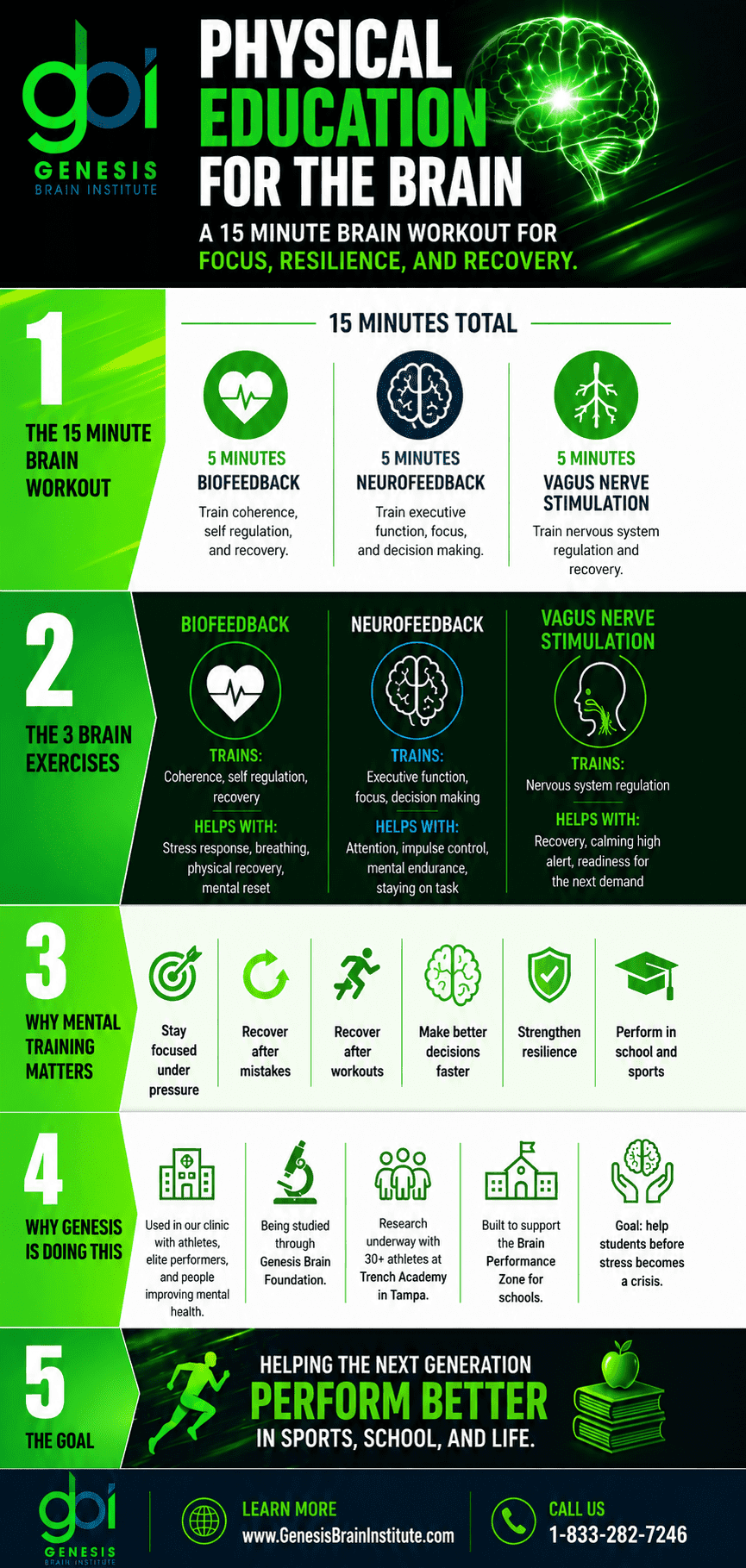
The Brain Performance Zone is designed as a 15 minute brain workout made up of three five minute exercises.
Each exercise trains a different part of performance:
Biofeedback trains coherence, self regulation, and recovery.
Neurofeedback trains executive function, focus, and decision making.
Vagus nerve stimulation trains the nervous system to shift between performance and recovery.
Together, these three exercises give athletes a fast, structured way to train the brain and nervous system before, after, or alongside physical training.
In the next three sections, we will take a closer look at each technology, including:
- What it is
- Why it is effective
- What the athlete can expect during the exercise
The goal is not to make brain training complicated.
It is to make it practical enough to use in gyms, schools, and eventually at home, while making the training more effective through a multimodality approach that works on the brain, body, and nervous system together.
What Is Biofeedback?
Biofeedback allows athletes to see how their bodies respond to stress in real time.
During the five minute exercise, a sensor measures the small changes in time between heartbeats. This is called heart rate variability, or HRV.
HRV gives us useful information about how the autonomic nervous system is responding.
The autonomic nervous system controls many body functions that happen without us thinking about them, including heart rate, breathing, digestion, and recovery.
It has two main sides.
The sympathetic nervous system is like the gas pedal. It helps the body speed up, react, compete, and handle pressure.
The parasympathetic nervous system is like the brake. It helps the body slow down, recover, rest, and prepare for the next demand.
Athletes need both.
The goal is not to stay relaxed all day. The goal is to move into high performance when needed and then recover when the demand is over.
We currently use HeartMath for this biofeedback exercise.
At the same time, the Genesis Brain Foundation research team and the Genesis Brain Institute medical team continue to evaluate new technologies to determine which tools are safest, most effective, and best suited for young people in schools, gyms, and homes.
Why Is Biofeedback Effective for Athletes?
Athletes need their autonomic nervous system to switch at the right time.
The sympathetic side acts like the gas pedal. It helps an athlete react, compete, and meet a physical demand.
The parasympathetic side acts like the brake. It helps the body slow down, repair, rest, and prepare for the next demand.
Problems begin when the body stays on the gas too long.
A hard workout, close game, missed play, poor sleep, or pressure at school can keep the nervous system in a high stress state. Breathing may stay shallow, muscles may remain tense, and the heart rhythm may become less organized.
This is known as an incoherent state.
Biofeedback helps the athlete practice moving toward coherence, where breathing, heart rhythm, and the nervous system work together in a smoother pattern.
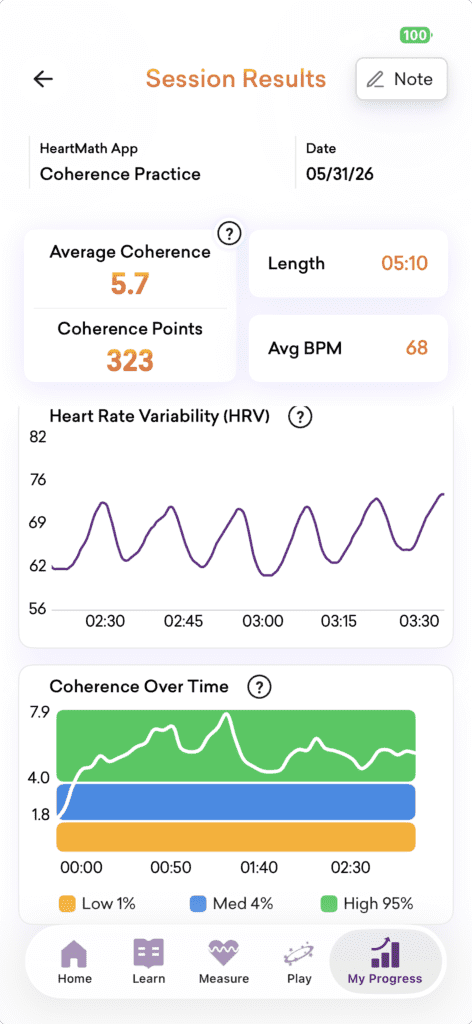
That shift can help an athlete stay composed during competition, reset after a mistake, and recover faster after physical exercise.
Research in athletes has linked HRV biofeedback with better stress control, improved autonomic function, lower anxiety, stronger performance in some sports, and faster cardiovascular recovery after exercise.
The value is not only learning how to feel calm.
It is learning how to press the gas when it is time to perform and apply the brake when it is time to recover.
What Can an Athlete Expect During Biofeedback?
The athlete wears a small sensor and completes a guided breathing exercise for about five minutes.
The screen shows how the heart rhythm changes in real time. At first, the pattern may look uneven or scattered. As the athlete adjusts breathing and focus, the pattern may become smoother and more coherent.
The athlete can also see a coherence score and track improvement during the session and across repeated training days.
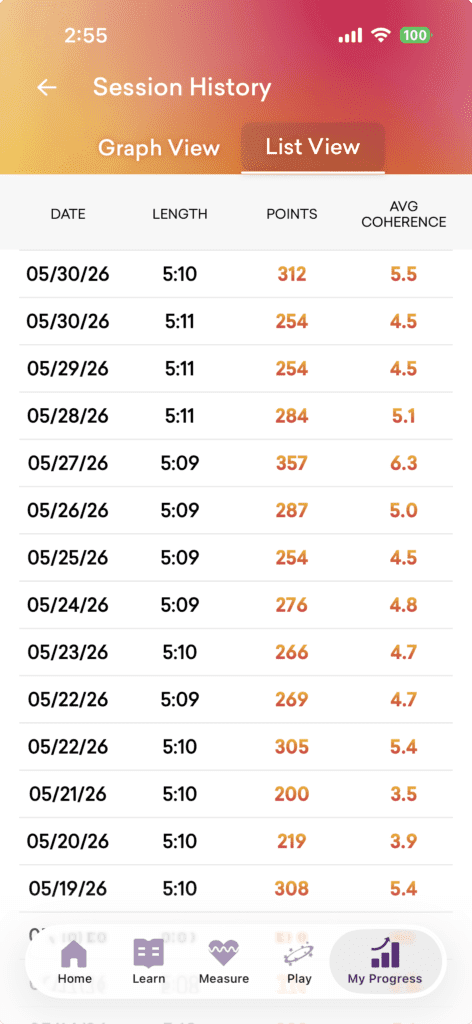
This makes the exercise easy to understand.
The athlete is not being told to calm down and hoping it works. The athlete can see whether the body is moving from stress toward a more organized state.
Over time, this can help athletes recognize when they are stuck on the gas, use their breathing to apply the brake, and return to a state that supports focus, recovery, and performance.
What Is Neurofeedback?
Neurofeedback allows athletes to see and train their brain activity in real time.
While biofeedback measures signals from the body, neurofeedback measures activity from the brain.
For this five minute exercise, we currently use Mendi, a noninvasive headband that uses functional near infrared spectroscopy, or fNIRS. It measures changes in oxygenated blood flow in the prefrontal cortex, the area at the front of the brain involved in focus, working memory, self control, and decision making.
The athlete completes a simple game controlled by brain activity. As activity in the prefrontal cortex increases, the athlete sees the game respond on the screen.
This gives the brain instant feedback.
Just as a coach helps an athlete correct physical form, neurofeedback helps the athlete recognize and repeat the brain activity connected with focused effort.
Through repeated sessions, the athlete practices activating and maintaining the brain systems used for executive function.
Executive function is the brain’s management system. It helps an athlete remember the play, block out distractions, control impulses, adjust quickly, and make the right decision under pressure.
Genesis Brain Institute’s medical team and the Genesis Brain Foundation research team will continue comparing neurofeedback technologies to identify which tools offer the best combination of safety, effectiveness, and practical use for young people.
We are also looking to partner with companies that share our mission of bringing effective and affordable brain training into schools across the country. The goal is to find technology that works, can be used consistently, and is cost effective enough to reach more students.
Why Is Neurofeedback Effective for Athletes?
Athletic performance depends on more than strength, speed, and skill.
An athlete must stay focused, remember instructions, control impulses, read what is happening, and make the right decision within seconds. These abilities are part of executive function.
Executive function acts like the brain’s coach. It helps an athlete decide what deserves attention, what action to take, and when to change the plan.
When executive function is working well, a basketball player can resist taking a bad shot. A quarterback can remember the play while reading the defense. A baseball player can wait for the right pitch instead of swinging too early.
Neurofeedback gives the brain repeated practice using these skills.
Instead of completing a game with a controller, the athlete uses focused brain activity to create a response on the screen. This gives the brain immediate information about when it is reaching and maintaining the state being trained.
Research on neurofeedback in athletes has reported improvements in areas such as attention, concentration, reaction time, working memory, self regulation, and sports performance. A systematic review and meta analysis also found evidence that neurofeedback can improve athletes’ cognitive performance and reaction time.
These skills also matter in school.
The same student who must ignore distractions, remember the play, and make a quick decision on the field must also listen to directions, hold information in mind, control an impulse, and complete work in the classroom.
Neurofeedback trains the brain systems that help student athletes manage both.
What Can an Athlete Expect During Neurofeedback?
The athlete wears a lightweight headband and completes a simple five minute brain training exercise.
There are no buttons to press.
The athlete uses focus and mental effort to control what happens on the screen. When activity in the prefrontal cortex increases, the game responds.
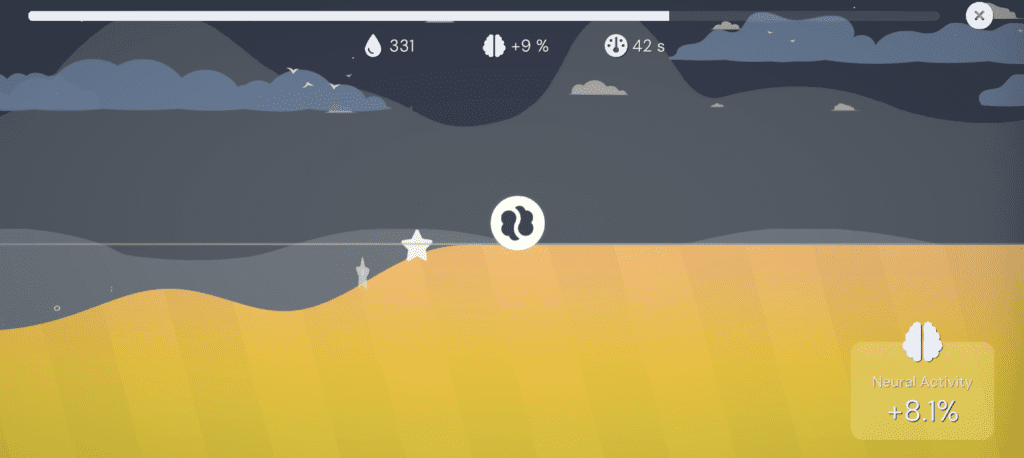
We all have several thoughts moving through our minds at the same time. The athlete may be thinking about practice, school, lunch, a mistake from earlier, or what they are doing after the session.
To succeed at the exercise, the athlete must bring attention back to one task.
When the mind begins to wander, the device shows it right away. The game slows down, changes, or stops responding as well.
During a student’s first session, we may wait until the game is going well and then ask a simple math question.
The student quickly sees what happens when the brain tries to focus on the game and solve another problem at the same time.
This helps students understand that multitasking is not the same as fully focusing on two things. Attention is being pulled back and forth, and performance can drop.
At first, holding a focused state may feel difficult. The athlete may become distracted, lose control of the game, and need to refocus.
That is part of the training.
Each time the athlete notices the distraction and brings attention back, the brain completes another rep.
Over repeated sessions, athletes can work on maintaining focus for longer periods, recovering from distractions faster, and gaining better control over the mental skills used for executive function.
The exercise is short, but it requires real effort.
Just as muscles can feel tired during physical training, the brain may feel challenged during neurofeedback. That challenge gives the athlete a chance to practice focus, control, and mental endurance.
What Is Vagus Nerve Stimulation?
The vagus nerve is one of the main communication pathways between the brain and the body.
It helps carry signals between the brain and major systems involved in heart rate, breathing, digestion, stress, and recovery.
Vagus nerve stimulation, or VNS, activates part of this pathway to help the nervous system shift out of high alert and toward a more regulated state.
For this five minute exercise, we currently use ZenBud. Unlike many VNS devices that use electrical stimulation, ZenBud uses focused ultrasound through a wearable placed around the ear.
Electrical VNS can be extremely powerful and is used in other home devices and in our clinic. However, Genesis Brain Institute has a medical team available to review health history, answer questions, and consider whether someone may be at risk for an adverse response.
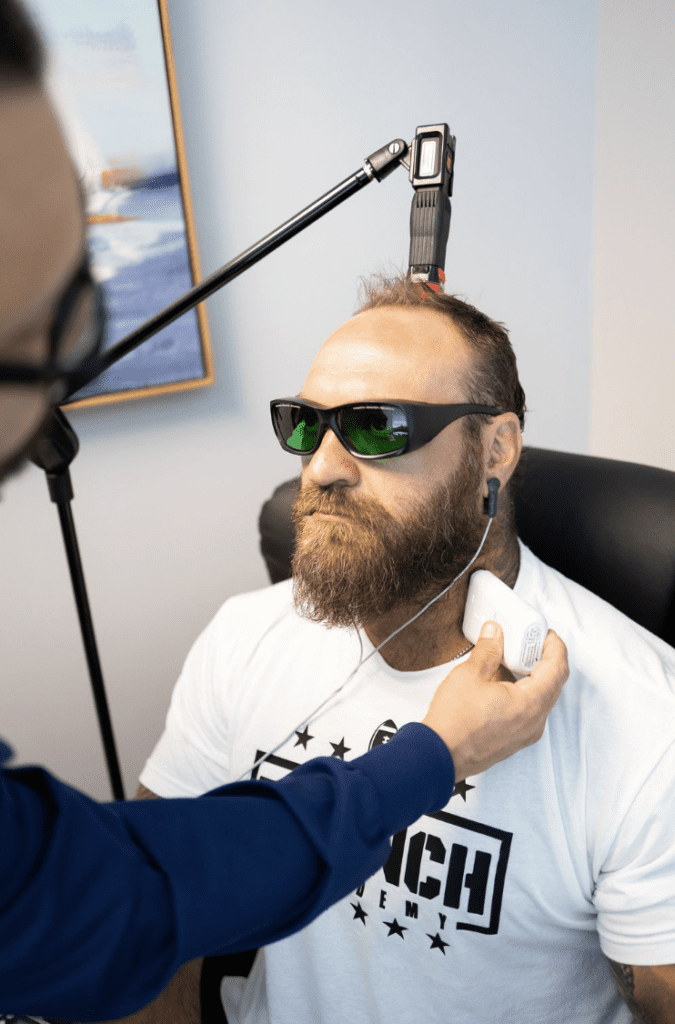
That same level of medical oversight is not always available in a school, gym, or other community setting.
For that reason, we chose an ultrasound based device for the Brain Performance Zone. It gives students a noninvasive way to complete the exercise without using electrical stimulation.
The vagus nerve is closely connected with the parasympathetic side of the autonomic nervous system, which acts like the body’s brake.
This does not mean athletes should remain calm all day.
Athletes need to press the gas when it is time to compete. They also need to apply the brake when it is time to recover, refocus, sleep, or prepare for the next demand.
VNS gives the nervous system another form of training designed to help it make that shift more effectively.
Why Is Vagus Nerve Stimulation Effective for Athletes?
Athletes ask a lot from their nervous systems.
During competition, the body must react quickly, stay alert, and produce energy. After the demand is over, the nervous system must shift toward recovery.
The vagus nerve helps support that shift.
Stimulating this pathway can increase parasympathetic activity, which helps the body apply the brake after physical or mental stress. This may support heart rate recovery, blood pressure regulation, fatigue, sleep, and the ability to settle after intense activity.
That matters after a hard workout, practice, or game.
An athlete may stop moving, but the nervous system can remain in competition mode. The heart may still be racing, the body may feel tense, and the mind may continue replaying what happened.
VNS helps train the system responsible for moving out of that high alert state.
Research has connected vagus nerve activity with executive function under pressure, fatigue, burnout, and athletic recovery. Studies have also found that noninvasive VNS may improve some post exercise recovery measures, including parasympathetic reactivation, blood pressure, pain, and fatigue.
VNS may also help with the mental side of performance.
A review of healthy adults found improvements in executive function and accuracy following auricular vagus nerve stimulation. These are skills athletes use when they must stay focused, control an impulse, and make a good decision under pressure.
The goal is not to remove the intensity an athlete needs to compete.
It is to help the athlete control that intensity, recover when the demand is over, and be ready to perform again.
What Can an Athlete Expect During Vagus Nerve Stimulation?
The athlete wears a small device around the ear for about five minutes.
The session is simple. There is no game to control and no breathing pattern to follow. The athlete sits comfortably while the device stimulates the area connected with the auricular branch of the vagus nerve.
Some athletes may feel a light sensation around the ear, while others may feel very little.
The exercise gives the nervous system a chance to shift away from high alert and toward a more regulated state.
This can be especially useful after physical training, when the body is tired but the nervous system is still active.
It may also be used after a stressful school day, before an important event, or after an athlete has struggled to reset from pressure or frustration.
Unlike biofeedback and neurofeedback, the athlete is not trying to control a score on the screen.
The work is happening through stimulation of the vagus nerve pathway.
Genesis Brain Institute and Genesis Brain Foundation are also testing other technologies to identify which tools produce the best performance results and can be used safely in schools, gyms, and homes.
We are looking to work with companies that share our mission to strengthen youth mental health and make effective brain training available to more young people.
This makes VNS an important third part of the 15 minute brain workout. Biofeedback helps the athlete see and control the body’s stress response. Neurofeedback trains focused brain activity. VNS helps the nervous system move toward recovery.
How Tom Brady and Other Elite Athletes Train Their Brains
Brain training exercises and mental training are widely used by athletes who want to improve focus, decision making, recovery, and performance under pressure.
Tom Brady has publicly used cognitive exercises designed to train attention, memory, processing speed, and decision making.
NFL quarterback Kirk Cousins has used neurofeedback as part of his training. His sessions were shown in the Netflix series Quarterback, where he worked on maintaining focus while his brain activity was measured.
U.S. figure skating champion Amber Glenn has also used neurofeedback and breathing exercises to strengthen mental control and improve consistency under pressure.
Many professional athletes also use hyperbaric oxygen therapy and other advanced technologies to help the brain and body recover after intense training and competition.
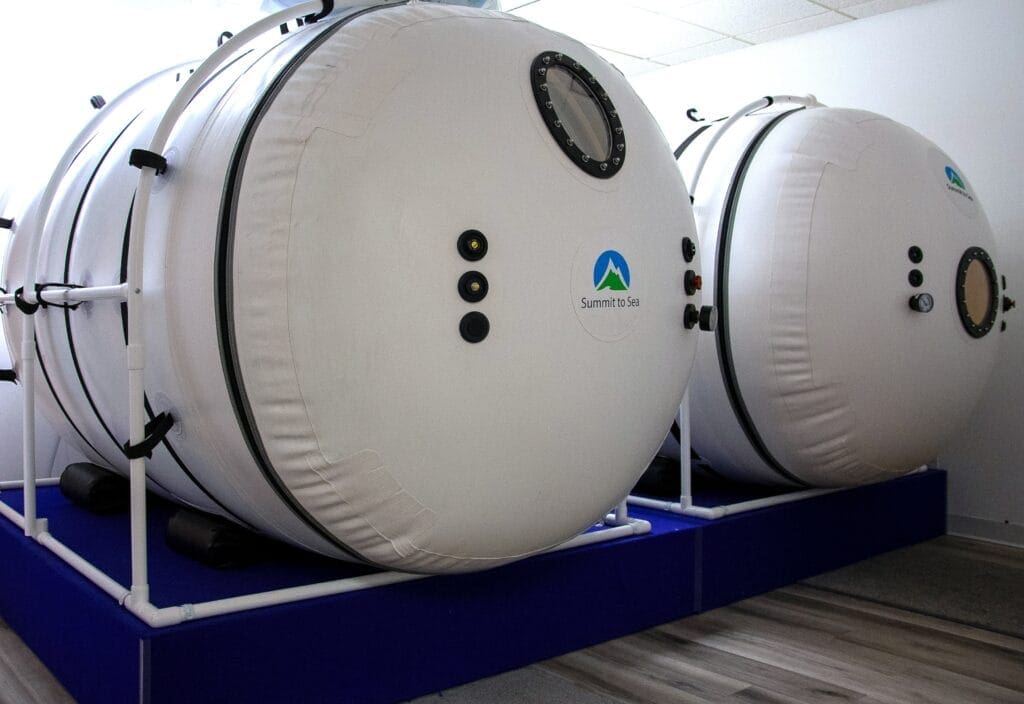
What was once available mainly to elite athletes is becoming more practical for students, schools, gyms, and families.
Genesis Brain Institute and Genesis Brain Foundation have been in contact with Vielight and other technology companies that share our passion for improving performance, strengthening youth mental health, and making effective brain training available to more young people.
We want to work with companies that care about more than selling a device.
We are looking for partners willing to help test outcomes, improve safety, lower costs, and bring effective brain training into schools across the country.
The goal is to give the next generation access to tools that help them focus better, recover faster, become more resilient, and perform at their best.
Mental Toughness Training Builds Resilience
Resilience is the ability to recover, adjust, and keep moving when something does not go as planned.
For an athlete, that may mean bouncing back after a mistake, a loss, an injury, a bad call, or a difficult workout.
Resilience does not mean the athlete never feels pressure, frustration, fear, or disappointment.
It means those moments do not take control for long.
Tim Grover’s work with elite athletes shows that mental toughness is built through discipline, repetition, and learning how to perform when conditions are not perfect.
The athlete may be tired. The crowd may be loud, and the last play may have gone badly. Even when the body hurts, a mentally strong athlete finds a way to reset and complete the next task.
That ability can be strengthened.
Biofeedback helps athletes practice controlling the body’s stress response.
Neurofeedback helps them return attention to the task after distraction.
Vagus nerve stimulation helps the nervous system shift out of high alert and toward recovery.
Together, these exercises give athletes repeated practice responding to pressure instead of being controlled by it.
That is how resilience grows.
Not through one speech.
Not by telling a young athlete to be tougher.
It grows by facing small challenges, learning how to reset, and completing the next rep.
These skills matter far beyond sports.
A resilient student is better prepared to handle a difficult test, a poor grade, conflict with a friend, disappointment, and the daily pressure of growing up.
Strengthening resilience early can help young people become more prepared for the challenges they will face in school, sports, work, and life.
How Mental Training Helps Student Athletes in School
The same brain skills that help an athlete perform on the field also help a student perform in the classroom.
A student athlete must listen to instructions, remember what to do, block out distractions, control impulses, manage frustration, and complete the task in front of them.
Those are executive function skills.
They are used when an athlete remembers a play, reads the defense, waits for the right moment, or changes direction.
They are also used when a student follows a lesson, solves a problem, studies for a test, or finishes an assignment.
Self regulation matters in both places too.
An athlete may need to recover after a mistake and focus on the next play.
A student may need to recover after a poor grade, a hard class, or a stressful moment and still be ready to learn.
That is why mental training for athletes can have value beyond sports.
When students practice focus, resilience, recovery, and nervous system control, they are strengthening skills that can help them perform better throughout the school day.
The goal is not only to build better athletes.
It is to help build students who are more focused, more resilient, and better prepared to handle pressure in school and in life.
Measuring Mental Performance Training Results
At Genesis Brain Institute, we test, train, retest, and adapt.
We begin by understanding how the brain and nervous system are performing. We then build a plan, track progress, repeat testing, and adjust the program based on what the data shows.
That same approach is guiding our research through Genesis Brain Foundation.
For athletes and students, we want to measure whether repeated mental training creates meaningful changes in areas such as:
- Reaction time
- Impulse control
- Executive function
- Processing speed
- Memory
- Stress regulation
- Mental recovery
- Physical recovery
Athletes complete baseline testing, at least 30 training sessions, and repeat testing at the end of the program.
For schools, the goal is to learn which exercises will have the greatest impact on focus, self regulation, resilience, classroom performance, and the ability to handle pressure before a student reaches a crisis.
We also want to understand how often students should train, how long each session should last, and which combination of technologies produces the strongest results.
The goal is not to prove a marketing claim.
It is to learn what works, who it helps most, and how the program should be adapted for athletes, schools, and different age groups.
Parents, coaches, and school leaders deserve more than promises.
They deserve real data showing whether the training is making a difference.
Measuring Mental Performance Training Results
At Genesis Brain Institute, we test, train, retest, and adapt.
We begin by understanding how the brain and nervous system are performing. We then build a plan, track progress, repeat testing, and adjust the program based on what the results show.
This is the same approach we use with people seeking help for ADHD, anxiety, depression, concussion, and other concerns that can affect brain performance.
It is also the approach we use with athletes, executives, and elite performers who may not be struggling but still want an edge.
Mental health is brain health.
That is why we believe the same technologies used to strengthen focus, self regulation, recovery, and brain performance in the clinic should also be studied for use in schools and gyms.
Genesis Brain Foundation is helping fund that research.
One of our first studies will include more than 30 athletes at Trench Academy in Tampa. These young athletes already put in the physical work and want an edge. Their coach, Taylor Scott, wants to give them every opportunity to strengthen both the physical and mental sides of performance.
But his vision goes beyond creating better athletes.
“We’re not just making them into great athletes. We’re making them into better men.”
Taylor wants his athletes to build stronger habits, make better decisions, become more disciplined, and learn how to be the hardest worker in the room. Those lessons can help prepare them to become better leaders, employees, husbands, and fathers in the future.
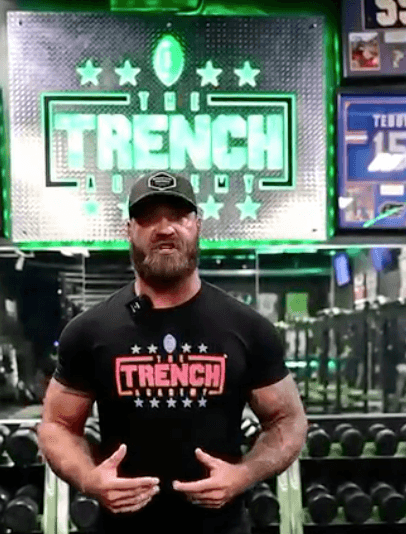
Athletes will complete baseline testing, at least 30 brain training sessions, and repeat testing at the end of the program.
We will look for changes in areas such as:
- Reaction time
- Impulse control
- Executive function
- Processing speed
- Memory
- Stress regulation
- Mental recovery
- Physical recovery
For schools, we want to learn which exercises will have the greatest impact on focus, self regulation, resilience, classroom performance, and the ability to handle pressure before a student reaches a crisis.
We also want to understand how often students should train, how long each session should last, and which combination of technologies produces the strongest results.
The goal is not to prove a marketing claim.
It is to learn what works, who it helps most, and how these programs should be adapted for athletes, students, schools, and different age groups.
Parents, coaches, and school leaders deserve more than promises.
They deserve real data showing whether the training is making a difference.
The Brain Performance Zone Brings Mental Training Into Schools
The Brain Performance Zone is a school based program designed to help students strengthen focus, self regulation, resilience, and recovery through active brain training.
Students rotate through three short exercises using biofeedback, neurofeedback, and vagus nerve stimulation.
Each station lasts about five minutes.
Together, they create a 15 minute brain workout that can fit into the school day without taking students away from learning for long periods.
This is not another presentation where students sit and listen to someone talk about stress or mental health.
Students actively practice controlling their breathing, improving coherence, strengthening focus, and helping the nervous system recover.
The goal is to help before a student reaches a crisis.
A child should not have to be failing, overwhelmed, suspended, or struggling with severe symptoms before learning how to manage pressure.
These exercises give students repeated opportunities to build the brain skills they use every day.
Students need focus to follow directions and impulse control to stop and think. Resilience helps them recover after a mistake, poor grade, conflict, or disappointment. Self regulation helps them move from stress back toward a state where learning can happen.
The Brain Performance Zone brings those skills into one active and repeatable program.
It is physical education for the brain.
Why Active Mental Health Training Matters in Schools
Most school mental health programs begin by teaching students about stress, emotions, or warning signs.
That education has value.
But students also need a chance to practice what to do when stress shows up.
The Brain Performance Zone is active training.
Students are not only hearing about focus, resilience, and self regulation. They are using exercises that challenge them to control their breathing, bring attention back after distraction, and help the nervous system recover.
That repeated practice matters.
A one time presentation may help a student understand stress.
A repeated exercise can help the student build a response to it.
This is also a proactive approach.
Schools often respond after a student is already failing, acting out, missing class, shutting down, or reaching a mental health crisis.
We believe students should begin strengthening these skills before that happens.
Just as physical education helps build a stronger body, active mental training can help students build a stronger response to pressure.
The goal is not to remove every difficult moment.
It is to help students become more prepared when those moments come.
Testing the Future of Brain Performance Technology
Neurotechnology and medical technology are changing quickly.
New devices are being created for brain training, nervous system regulation, recovery, focus, and mental health.
At Genesis Brain Institute, we continue to test these technologies for effectiveness, safety, ease of use, and real world value.
A device may work well inside a clinic but not be the right fit for a school, gym, or home.
That is why we look at more than what the company says it can do.
We want to know:
- What part of the brain or nervous system does it train?
- Is it safe for young people?
- Can it be used without a medical team present?
- Is it easy enough to use correctly?
- Can progress be measured?
- Is it affordable enough to reach more students?
- Does it improve performance, recovery, or mental health?
We are also looking for companies willing to work with Genesis Brain Foundation and Genesis Brain Institute to validate outcomes and make effective technology more accessible.
The goal is not to fill schools with devices.
The goal is to find the best tools, combine them in the right way, and create programs that can strengthen youth mental health and performance across the country.
Mental Training for Athletes Can Build a Stronger Next Generation
Athletes already measure speed, strength, endurance, and reaction time.
We believe focus, resilience, self regulation, executive function, and recovery should be trained with the same level of purpose.
That is the vision behind this work.
Genesis Brain Institute is using these technologies in the clinic.
Genesis Brain Foundation is helping fund research to validate how they can be used in gyms and schools.
Trench Academy is giving young athletes the chance to train more than their bodies.
The Brain Performance Zone is being built to help students practice the skills they need before pressure becomes a crisis.
Mental training for athletes is not about making young people perfect.
It is about helping them become more prepared.
More focused.
More resilient.
Better able to recover.
Better able to perform when things get hard.
And better equipped for school, sports, work, relationships, and life.
Mental toughness is built through reps.
It is time to give the next generation a place to put those reps in.
If you have questions about the Brain Performance Zone, call Genesis Brain Institute and ask to speak with Michael Kawula.
Disclaimer: This content is for informational purposes only and does not constitute medical advice. Please consult with a licensed healthcare provider. Genesis Brain Institute is a Brain Treatment Center in Tampa offering non-pharmaceutical solutions that bring clarity, restore function, and offer real hope for those who feel lost, stuck, or simply want more from life.