EyeBOX Concussion Test in Tampa
FDA Cleared Eye Tracking That Measures What Symptoms Alone Cannot
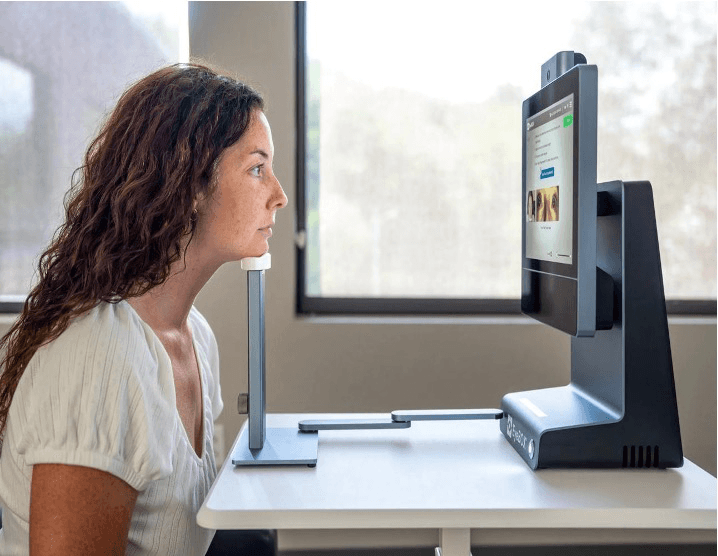
If you are looking for a concussion test, EyeBOX gives you objective information about how your eyes are moving after a possible head injury. In about four minutes, we’ll track subtle movements of both eyes while you watch a short video. The system turns those movements into data that can help clinicians evaluate possible concussion, also known as mild traumatic brain injury.
EyeBOX, a simple concussion test, is FDA cleared as an aid in the diagnosis of concussion for people ages 5 through 67 when used with a neurological assessment.
At Genesis Brain Institute in Tampa, we take it one step further. We do not rely on one concussion test to explain your entire brain and nervous system. We use EyeBOX alongside other objective testing to build a clearer picture of what is happening and what deserves a closer look.
We Don’t Guess. We Measure.
A Quick 4-Minute FDA Cleared Concussion Test
We Record Eye Position 500 Times Per Second
EyeBOX records both eyes at 500 Hz while you watch a short video. This high speed tracking captures subtle eye movements and turns them into objective data your clinical team can review.That should balance much better visually with the other box.
We Collect Roughly 100,000 Data Points in Just 4-Minutes
The technology can collect approximately 100,000 pupil position measurements during the analyzed portion of the test. EyeBOX is FDA cleared for use in patients ages 5 through 67 as an aid in concussion diagnosis.
About 100,000 Measurements From One Short Test
You can tell a doctor that you feel dizzy. You can explain that your head hurts. You can say that concentrating feels harder or that something simply feels different.
While you watch a small video travel around the screen, EyeBOX follows the movement of both eyes hundreds of times every second. The system looks at patterns that can be difficult to see during a standard visual examination.
Instead of relying only on what someone feels or what a clinician can observe with the naked eye, EyeBOX gives our medical team data that can be reviewed, compared and interpreted as part of the larger neurological picture.
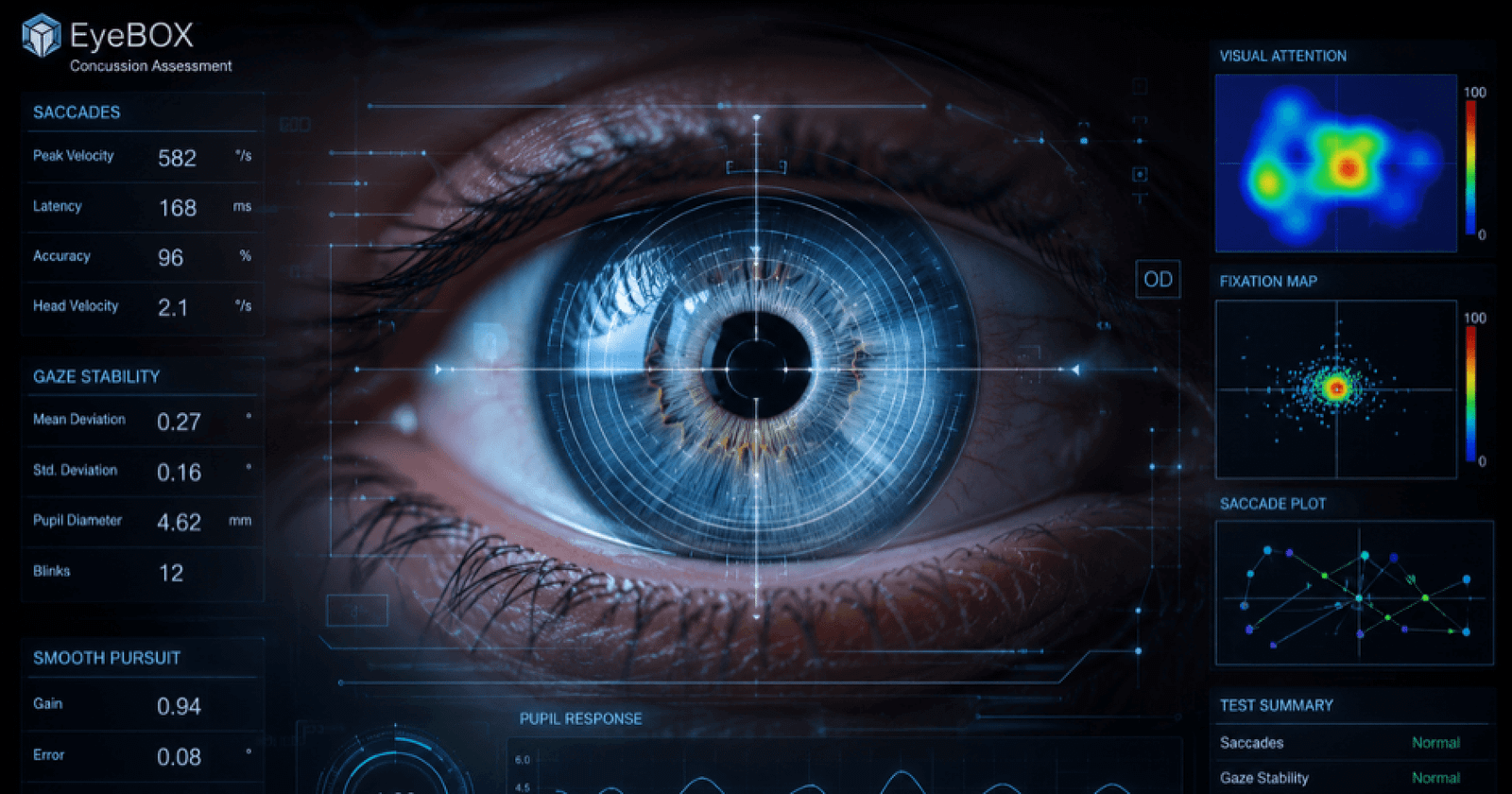
EyeBOX Can Measure and Report Data About:
- Pupil Size
How the size of each pupil compares with expected patterns. - Pupil Dynamics
How the pupils constrict and dilate over time. - Blinks
Measurements involving blink frequency and duration. - Saccades
The fast eye movements your brain uses to quickly shift your gaze. - Visual Tracking
How your eyes move while following the video around the screen. - Eye Coordination
How closely the right and left eyes move together. - Oculomotor Stability
Patterns showing how consistently the eyes follow the visual target. - Gaze Movement
Measurements involving eye movement speed, direction and departure from the expected path.
One short test creates much more than a single number.
It creates another set of objective information about neurological function.
EyeBOX Is FDA Cleared
There is an important difference between a wellness device and a medical device that has gone through FDA review.
EyeBOX is intended to measure and analyze eye movements as an aid in diagnosing concussion, also known as mild traumatic brain injury, in people ages 5 through 67 when used together with a standard neurological assessment.
That wording matters. EyeBOX does not replace a physician. EyeBOX does not replace a complete neurological evaluation. EyeBOX does not claim that every concussion will create abnormal eye movements. Instead, it gives our trained clinicians another objective measurement to include when evaluating someone after a possible concussion.
At Genesis Brain Institute in Tampa, that is exactly how we want to use advanced diagnostic technology.
Why Can Your Eyes Tell Us Something About Your Brain?
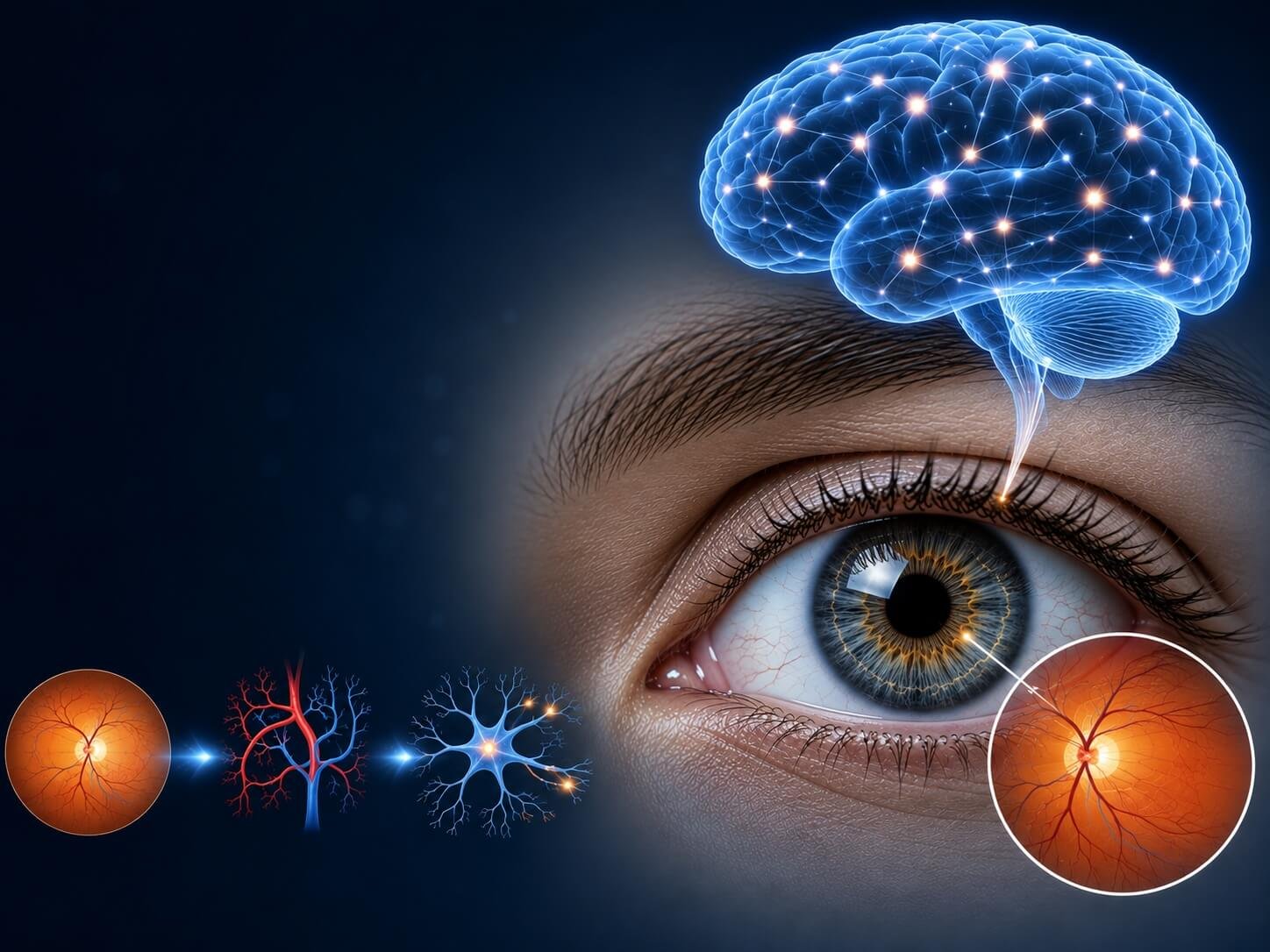
Your eyes do much more than see.
Every time you follow a moving car, read a sentence, look from one person to another or focus on something across the room, your brain has to coordinate an incredibly fast series of signals.
Your brain, brainstem, cranial nerves, eye muscles and visual system work together to control those movements.
A disruption in these neurological pathways can change how the eyes move. That is why doctors have examined eye movement as part of neurological evaluations for generations.
EyeBOX brings technology and objective measurement into that process. Instead of only asking you to follow a finger while someone watches your eyes, EyeBOX records thousands of measurements and turns them into a detailed report.
That gives the clinician something additional to evaluate.
Not just how the eyes look. How the eyes actually moved.
Research Behind Objective Eye Tracking
282 Participants
A multicenter study evaluated 282 people ages 5 to 67 across six emergency department and concussion clinic sites, including 177 adults and 105 pediatric patients.
The baseline free eye tracking algorithm demonstrated 80.4% sensitivity and 66.1% specificity compared with the study’s clinical reference standard.
Researchers reported an area under the curve of 0.717.
When nine participants whose primary complaint was neck pain were excluded, sensitivity increased to 83.7%, while specificity remained similar at 65.6%.
112 Adolescents
Researchers studied 112 adolescents experiencing persistent symptoms four to twelve weeks after concussion.
A clinical vision and vestibular examination alone produced an area under the curve of 0.73. The BOX Score alone produced 0.67.
When researchers combined the clinical examination with objective eye tracking, the area under the curve increased to 0.81.
That finding supports something we strongly believe at Genesis Brain Institute:
Different tests can become more valuable when the information is looked at together.
404 Adolescents
Another study compared 180 uninjured adolescents with 224 adolescents experiencing acute or persistent concussion symptoms.
Researchers found differences involving eye position, pupil measurements and other eye tracking metrics.
Adding eye tracking data also improved a model that already included clinical and demographic information.
31 Healthy Athletes
Researchers tested 31 healthy adolescent athletes at two different times.
Several objective eye movement measurements demonstrated moderate to moderately high consistency between testing sessions.
This matters because useful measurements should show reasonable stability when nothing meaningful has changed.
One Concussion Test Does Not Tell the Whole Story
EyeBOX is an impressive technology. But this might be the most important thing on this page:
EyeBOX is not the entire neurological evaluation at Genesis Brain Institute.
A concussion can affect different people in different ways. One person may struggle with eye movement.
Another may develop balance problems. Someone else may notice slower thinking, headaches, memory trouble, dizziness or changes in concentration. Two people can even experience the same accident and show very different neurological patterns afterward. That is why Genesis Brain Institute does not build an evaluation around one machine. Depending on your history, symptoms and reason for testing, our clinical team can look at several areas of function.
Eye Movement
EyeBOX and other visual testing can provide information about how the eyes and neurological pathways are functioning.
Balance
Objective balance testing can measure how well your brain integrates information from your visual, vestibular and sensory systems.
Cognition
Cognitive testing can measure areas such as attention, memory, processing speed and executive function.
Brain Activity
qEEG brain mapping can measure patterns of electrical brain activity and provide a different view of brain function.
Each test asks a different question. The value comes from understanding how the answers fit together.
The BOX Score Is Only Part of the EyeBOX Report
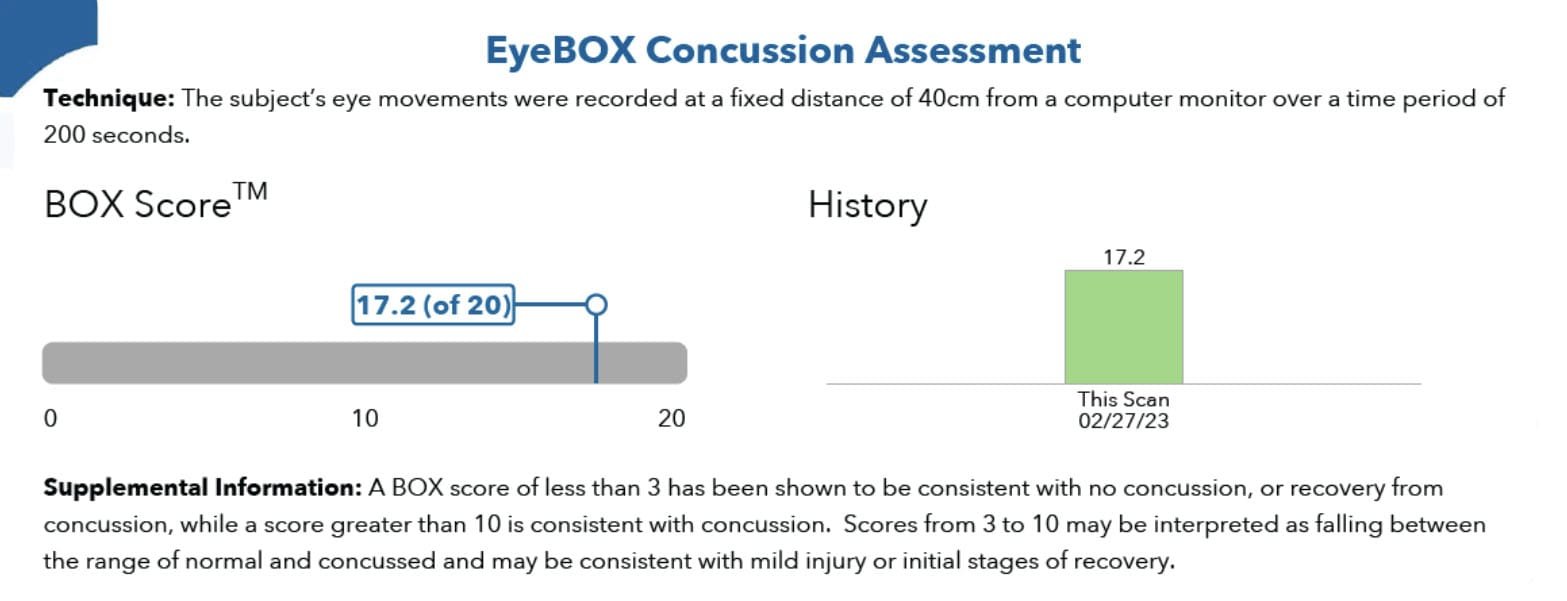
EyeBOX produces a BOX Score on a scale from 0 to 20.
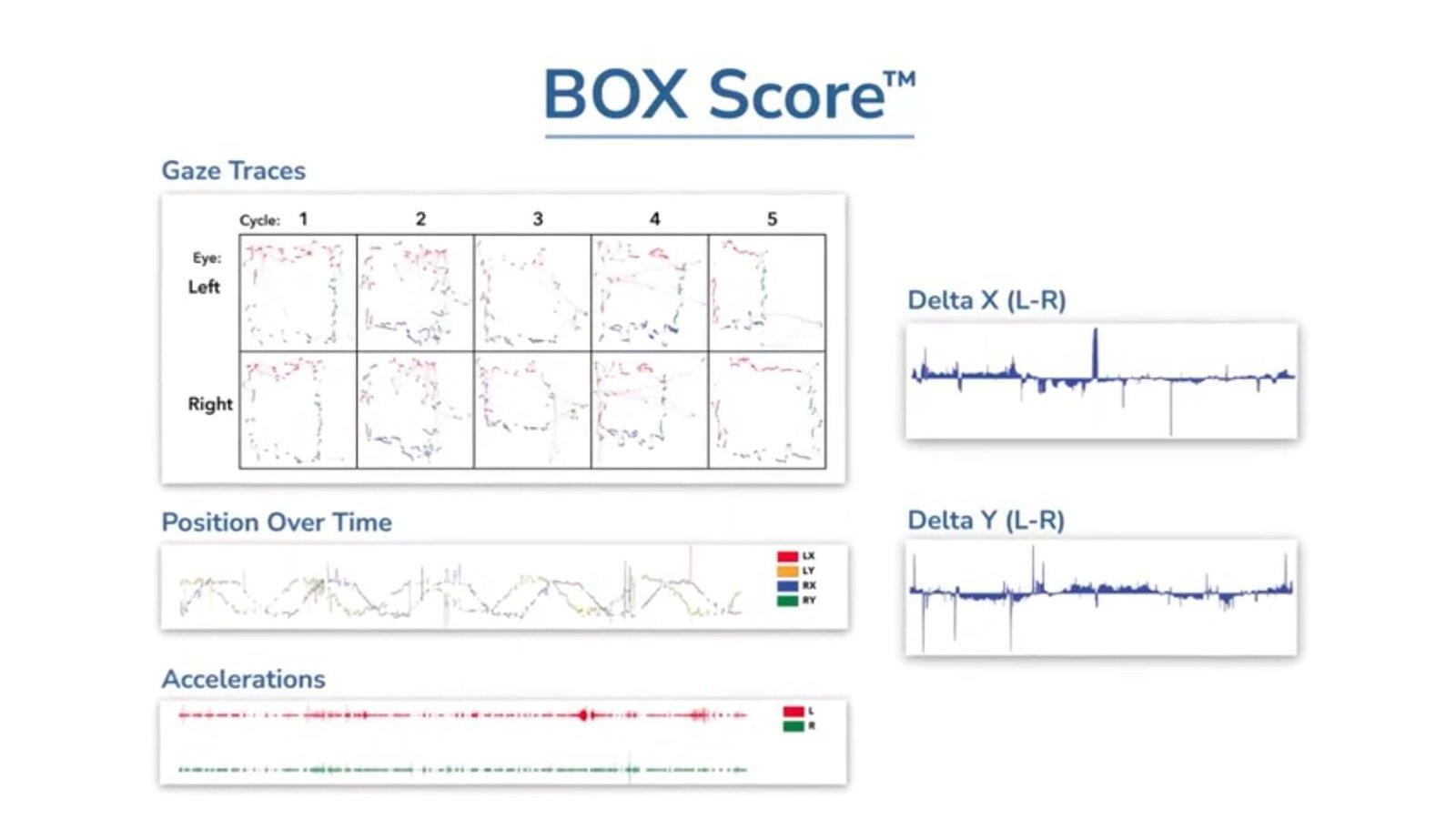
That score can help the clinician evaluate eye movement patterns associated with concussion during the FDA cleared acute testing window. However, the report contains much more than the BOX Score. It can also include detailed graphs and normative comparisons involving different parts of eye movement and pupil function.
That distinction is important. A single number is easy to understand. A complete report gives the clinician more information to interpret.
At Genesis Brain Institute, we want both.
EyeBOX Does Not Require a Pre Injury Baseline
This is one of the biggest practical advantages of EyeBOX.
Many concussion assessments work best when someone completed testing before the injury occurred. EyeBOX does not require that.
If you were in a car accident yesterday and never had concussion testing before, EyeBOX can still be used within its FDA cleared indication.
If you fell and hit your head, you do not need to find an old test before being evaluated.
If your child gets injured during a soccer game and never completed preseason testing, the absence of a baseline does not prevent EyeBOX testing.
That matters because most head injuries are not planned.
Baseline Concussion Testing for Young Athletes
If your child plays football, soccer, hockey, lacrosse, basketball, cheerleading or another sport where falls and collisions can happen, you probably hope you will never need a concussion test.
But if something does happen, one question can become very important:
What was normal for my child before the injury?
That is where baseline concussion testing can help.
A baseline test is completed while an athlete is healthy and uninjured.
It gives the medical team a picture of certain functions before a possible concussion occurs.
EyeBOX does not require a baseline to perform its FDA cleared concussion assessment.
However, completing EyeBOX testing while your child is healthy can create a personal reference point that can be useful if an injury happens later.
For many parents, that brings a simple benefit:
You have information from before the hit.
Why Parents Consider Baseline Concussion Testing
Know Your Child's Normal
Every child is different. A preseason measurement can help establish what certain eye movement patterns looked like while your child felt healthy.
Have Something to Compare
If a concussion is later suspected, clinicians can review new findings alongside information collected before the injury.
Do Not Rely Only on Memory
Parents, coaches and athletes may struggle to remember exactly how someone felt or performed months earlier. Objective information gives the medical team another point of reference.
Prepare Before the Season Starts
Baseline testing gives families an opportunity to collect useful information before an injury, rather than trying to recreate the past after something happens.
What Should a Parent Do After a Possible Sports Concussion?
If your child takes a hard hit, falls or suddenly seems different after contact, do not rely only on whether they say they feel fine.
Children and teenagers may want to stay in the game.
They may not fully understand what they are feeling.
They may worry about disappointing teammates.
They may simply assume the symptoms will go away.
Watch for changes.
Headache or Head Pressure
A new or worsening headache deserves attention after a possible head injury.
Dizziness or Balance Problems
Your child may feel unsteady, lightheaded or different when walking.
Thinking or Memory Changes
They may seem slower, forgetful, confused or have trouble concentrating.
Sensitivity or Behavior Changes
Light, noise, mood, sleep or normal behavior can feel different after a concussion.
When something feels wrong, getting more information is better than guessing.
EyeBOX Data Can Tell Us More Than One Concussion Score
The FDA cleared indication for EyeBOX is concussion and mild traumatic brain injury.
We want to be very clear about that.
However, EyeBOX also collects detailed measurements about eye movement and pupil function.
Those measurements can provide useful information about neurological and visual function when interpreted within a broader clinical evaluation.
At Genesis Brain Institute, EyeBOX can therefore contribute information even when a concussion is not the only question we are asking.
For example, someone may be struggling with dizziness, balance, visual tracking, concentration or cognitive performance. Eye movement data can become one part of understanding the larger functional pattern.
We do not use one EyeBOX measurement to declare:
“You have ADHD.”
“You have anxiety.”
“You have Parkinson’s disease.”
“You have a neurological disorder.”
That would be the wrong way to use the information.
Instead, our clinicians can ask:
What are the eyes doing?
What is your balance doing?
What is cognition showing?
What are the other neurological tests showing?
Then we look for the pattern.
That is where more complete testing becomes powerful.
What Happens During an EyeBOX Concussion Test?
Step 1: We Review Your History
Your clinical team reviews your symptoms, injury history and relevant medical information to determine whether EyeBOX is appropriate.
Step 2: You Sit in Front of EyeBOX
Your head rests comfortably in position while the device prepares to track both eyes.
Step 3: You Watch a Short Video
A small video moves around the screen for about four minutes. Your job is simply to watch it.
Step 4: We Review the Data
EyeBOX creates a report containing the BOX Score and additional eye movement information that can be reviewed alongside your other findings.
Who Might Consider Concussion Testing?
Car Accidents
Even when you never lost consciousness, a sudden impact can create forces that affect the brain and nervous system.
Sports Injuries
Football, soccer, hockey, cheerleading and many other sports can expose athletes to head impacts.
Falls
A fall can create neurological symptoms even when the event seemed minor at first.
Other Head Impacts
Work accidents, recreational injuries and other sudden impacts can lead people to seek a more complete evaluation.
Symptoms That Can Lead Someone to Seek a Neurological Evaluation
- Headaches
- Dizziness
- Balance Problems
- Trouble Concentrating
- Brain Fog
- Light or Noise Sensitivity
- Memory Changes
- Feeling Different or Slower
These symptoms can have many causes.
That is exactly why testing matters.
The goal is not to assume every symptom means concussion.
The goal is to gather better information.
Does EyeBOX Replace a CT Scan or MRI?
No. EyeBOX and medical imaging answer different questions. CT and MRI scans look primarily at brain structure. They can help doctors identify bleeding, fractures, swelling and other structural problems when imaging is medically appropriate. EyeBOX measures eye movement physiology. Someone can therefore have structural imaging and EyeBOX testing for very different reasons. EyeBOX should never delay emergency evaluation after a serious head injury. If someone experiences severe or rapidly worsening symptoms after a head injury, emergency medical care should come first.
What If My Injury Happened More Than 7 Days Ago?
The FDA cleared BOX Score concussion classification is intended for use during the acute period following injury. However, the EyeBOX report also contains supplemental eye movement measurements and comparisons with reference data from uninjured individuals. Those measurements can give trained clinicians additional information to consider within the broader neurological evaluation. They should not be used alone to diagnose concussion or another neurological condition.
At Genesis Brain Institute, the question is always bigger than one score:
What does the complete pattern tell us?
Why Genesis Brain Institute Uses EyeBOX
Advanced technology does not automatically create better medicine. Knowing how to connect the information does. Genesis Brain Institute brings together multiple forms of objective neurological testing so our clinical team can examine brain and nervous system function from different directions. That means EyeBOX does not sit alone. It can become part of a much larger picture.
Objective Testing
We measure function instead of relying only on symptoms and observation.
Multiple Data Sources
Different tests look at different neurological systems instead of asking one measurement to explain everything.
Physician Review
Clinical findings and objective testing must still be interpreted in the context of the person.
Personalized Next Steps
The goal is to understand the pattern before deciding what direction makes sense next.
We believe people deserve more than a label.
They deserve more than a quick glance at one test.
And when someone says, “I still don’t feel right,” we believe that deserves a closer look.
Frequently Asked Questions About EyeBOX Concussion Testing
Is EyeBOX FDA cleared?
How long does EyeBOX testing take?
Does EyeBOX require a baseline?
Should my child get a baseline concussion test before sports season?
Does theEyeBOX test hurt?
Can EyeBOX tell me whether I definitely have a concussion?
Can someone have a concussion with a normal EyeBOX result?
Can EyeBOX be useful outside concussion testing?
Take our free TBI test online to Measure Post Concussive Symptom Severity
You Do Not Need Another Guess
Maybe you hit your head yesterday. Maybe the accident happened weeks ago. Maybe your child took a hard hit during practice and you want to know what happened before sending them back. Maybe someone already told you that everything looked fine, but you know you do not feel the same.
Or perhaps concussion is not even the only question.
You want to understand what the brain, eyes and nervous system are actually doing. EyeBOX gives us another way to measure. Balance testing can tell us something different. Cognitive testing adds another piece.
Brain and nervous system testing can add more. Then our clinical team brings those findings together.
Because the goal at Genesis Brain Institute is not to run a test just so we can give you another number. The goal is clarity. Clarity about what the testing shows. Clarity about what deserves attention. Clarity about what the next step could be.
At Genesis Brain Institute in Tampa, our mission is to help people move from uncertainty toward a new beginning of hope.
We Don’t Guess. We Measure.