Feel off balance or not, your brain is making tiny corrections every second to keep you upright.
Most of those movements are so small that you never notice them. You can walk into work, sit through class, compete on the field, or move through your day without realizing how much effort your brain and body use just to keep you steady.
For a student, trouble with balance can look like losing focus in a busy classroom, feeling drained after moving through crowded hallways, or struggling to stay controlled while learning and moving at the same time.
An athlete can feel strong and stable until speed, contact, reaction time, and decision making all come together.
An executive can feel fine while mental energy fades during long meetings, travel, stress, and constant task switching.
A senior can notice unsteadiness, reduced confidence, or a fear of falling, while another senior feels completely steady even though objective testing tells a different story.
Most people only think about balance after they stumble, feel dizzy, or start holding onto walls and furniture. However, balance affects far more than whether you fall. It helps you keep your eyes on a target, respond to movement, make quick decisions, stay focused in busy places, and perform under pressure.
Your eyes, inner ears, feet, muscles, joints, neck, and brain all work together to tell you where your body is in space. When those systems work well together, balance feels automatic. When the brain has to make extra corrections or rely too heavily on one system, you can feel off balance, develop trouble with balance, or simply use more energy than you realize to stay steady.
Balance is not only about whether you fall. It is about how efficiently your brain keeps you upright while you think, move, react, and perform. That is why balance testing matters for students, athletes, executives, healthy adults, and seniors, whether they feel off balance or feel completely steady.
Why Do I Feel Off Balance?
When people ask, “Why do I feel off balance?” they do not always mean the room is spinning. Some feel unsteady while walking. Others notice a rocking, floating, or swaying feeling. You might lean toward one side, lose confidence on stairs, struggle in the dark, or feel as though your equilibrium is off in a crowded store.
These experiences are different from person to person because balance does not come from one body part. Your brain combines information from your eyes, inner ears, feet, muscles, joints, nerves, and neck. It also depends on strength, blood flow, attention, and reaction time. When one source sends weak or conflicting information, your brain has to adjust so you can remain upright.
Think of your balance system like a group text. Your eyes report what they see. Your inner ears report how your head is moving. Sensors throughout your body report where your feet, legs, and joints are positioned. Your brain reads every message and decides how your body should respond.
Trouble with balance can begin when those messages do not match. Your eyes might tell your brain that you are standing still while your inner ear senses movement. An old ankle injury can change the information coming from one foot. Neck tension or an injury can affect how your head and body move together. Fatigue can slow the corrections that normally happen without thought.
That does not mean every balance problem starts in the brain. Balance issues can involve the inner ear, eyesight, muscles, joints, nerves, circulation, medication effects, previous injuries, or a combination of factors. This is why one symptom or one test should never be treated as the whole answer.
Some people clearly feel off balance while walking, turning, or standing. Others only notice their balance feels off when they close their eyes, walk on uneven ground, enter a busy environment, or become tired. A person can also compensate so well that no problem is felt at all.
That last group is easy to overlook. They do not report dizziness or loss of balance. They can work, study, exercise, and compete without knowing that their body is making more corrections than expected. The brain keeps them steady, but it could be relying heavily on vision, tightening certain muscles, favoring one side, or using more attention to control posture.
This is why the better question is not only, “Do you feel off balance?”
It is also, “How efficiently does your brain keep you balanced when the conditions become harder?”
What Causes Trouble With Balance? The Brain and Body Connection
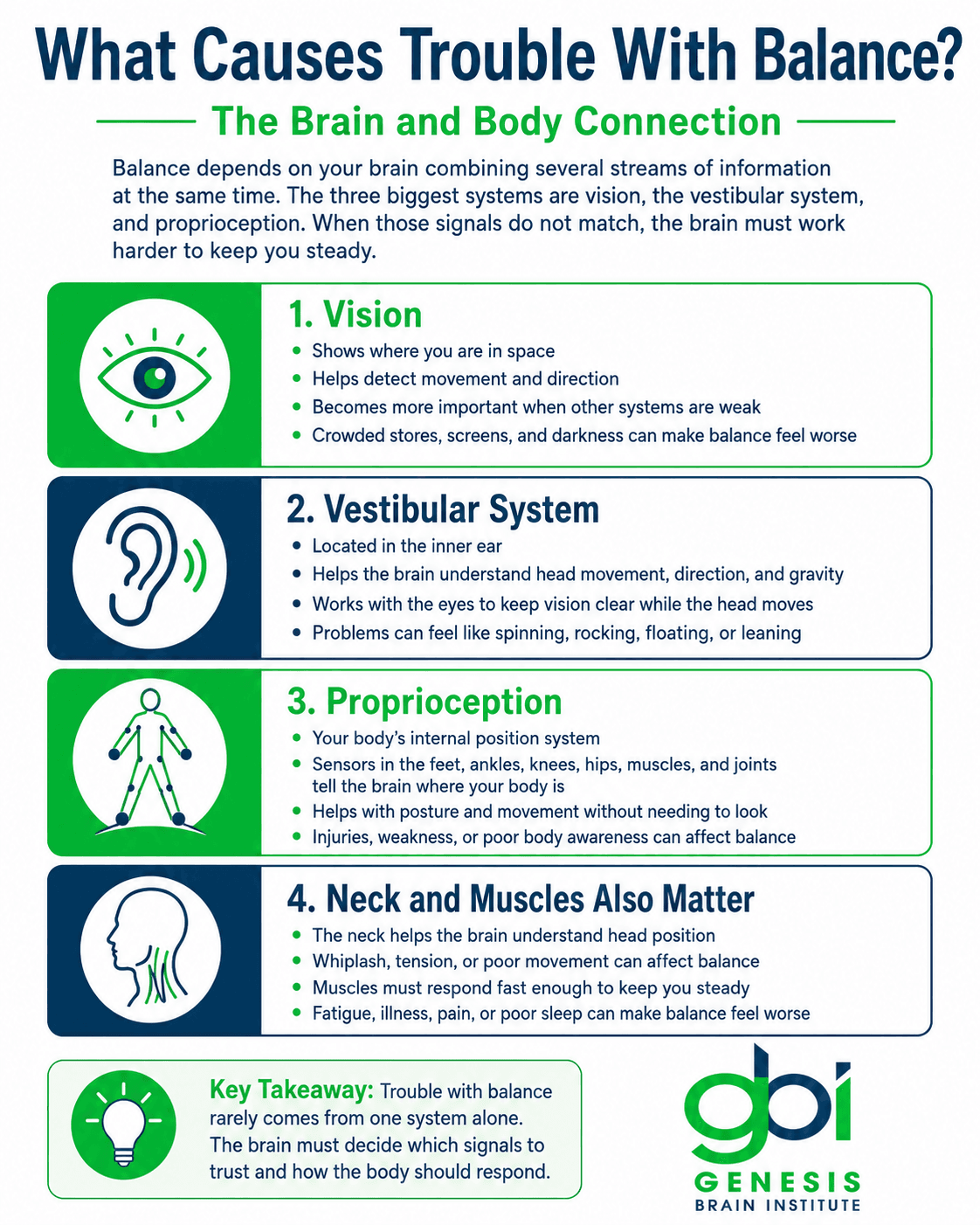
Trouble with balance rarely comes from one system working alone. Instead, your brain must combine several streams of information at the same time. Three systems play the biggest role: vision, the vestibular system, and proprioception.
When these systems send clear and matching information, staying upright feels natural. However, when one system becomes weaker or sends a different message, the brain must work harder to decide what is happening and how the body should respond.
Vision
Your eyes help your brain understand where you are compared with the world around you. They show whether the floor is level, whether an object is moving, and which direction your body is facing.
Vision can become especially important when the other balance systems are not giving the brain enough useful information. For example, a person might feel steady during the day but become less confident in a dark room. Without a clear view of the surroundings, the brain can no longer depend as heavily on the eyes.
Busy environments can also create trouble with balance. A crowded store, moving escalator, large screen, or fast moving traffic can overwhelm the visual system. Someone might describe this as dizziness, motion sensitivity, brain fog, or feeling off balance even though the floor is not moving.
The Vestibular System
The vestibular system is located in the inner ear. It helps the brain understand head movement, speed, direction, and gravity.
This system tells your brain when you turn your head, bend down, look up, or move quickly. It also works closely with the eyes so your vision can remain clear while your head is moving.
When the vestibular system is not working efficiently, a person can feel like the room is spinning. Yet that is not the only possible experience. Some people feel as though they are floating, rocking, leaning, or walking on an uneven surface.
Others do not notice a clear symptom until they turn quickly, move through a crowded place, or try to balance without relying on vision.
Proprioception
Proprioception is your body’s internal position system. Sensors in your feet, ankles, knees, hips, muscles, and joints tell the brain where your body is located without requiring you to look.
You use proprioception when you walk without staring at your feet, reach for something behind you, or close your eyes and touch your nose. This information helps the brain make fast posture changes throughout the day.
An ankle injury, joint problem, weakness, reduced feeling in the feet, or long period of inactivity can change the quality of this information. As a result, the brain can begin relying more heavily on vision or another part of the body.
A person can still appear steady while making these adjustments. Over time, though, that compensation can show up as fatigue, uneven movement, slower reactions, or a balance problem during more difficult conditions.
Your Neck and Muscles Also Matter
The neck contains many sensors that help the brain understand the position of the head. Because of this, neck tension, whiplash, poor movement, or an old injury can affect how the brain combines information from the head and body.
Muscle strength matters too. The brain can recognize that the body is moving, but the muscles still need to respond quickly enough to correct it. Weakness, pain, stiffness, or fatigue can slow that response.
This is one reason trouble with balance can feel different after a long day, hard workout, illness, injury, or poor night of sleep. The same person who feels steady in the morning could notice that their balance feels off when the system is tired.
What Happens When the Signals Do Not Agree?
Imagine your eyes tell your brain that you are standing still, but your inner ear senses movement. At the same time, information from your feet becomes less clear because you are standing on soft or uneven ground.
Your brain now has to decide which message to trust.
Sometimes it solves the problem quickly, and you never notice. In other cases, you might sway more, tighten your muscles, slow down, or reach for support. You could also feel dizzy, mentally tired, nervous, or off balance.
The goal of balance testing is not simply to see whether you fall. It is to change the conditions and observe how your body responds when one source of information becomes less available.
That helps answer an important question: Is your brain using vision, vestibular information, and proprioception efficiently, or is it depending too heavily on one system to keep you steady?
Can You Have Balance Issues Without Feeling Dizzy?
Yes. You can have balance issues without feeling dizzy, spinning, or unsteady.
Dizziness is only one possible sign of a balance problem. Some people feel their equilibrium is off right away. Others adapt so well that they do not notice anything unusual during normal daily activities.
The body can make hundreds of tiny corrections while you stand and move. Most happen automatically. However, feeling steady does not always mean the brain and body are balancing efficiently.
Feeling Steady Is Not the Same as Balancing Efficiently
Imagine two people standing in the same position. Both remain upright, and neither feels off balance.
The first person uses vision, inner ear information, and body awareness efficiently. Their movements stay small and controlled.
The second person also stays upright, but their body makes more corrections. They might shift their weight, tighten their muscles, favor one leg, or depend heavily on vision.
To the eye, both people look steady. Objective balance testing can reveal that their bodies are solving the same task very differently.
This is why a person can say, “My balance feels fine,” while testing shows an unusual sway pattern under certain conditions.
The Brain Can Hide a Weak Link
Your brain is good at finding another way to complete a task. That ability helps you keep moving after an injury or when one source of information becomes less reliable.
For example, someone with reduced body awareness in one ankle might begin watching the ground more closely. A person who does not trust inner ear information might rely more heavily on vision. Someone with neck stiffness could move the rest of the body differently to maintain control.
These adjustments can work well during simple activities. Problems often become easier to see when the task becomes harder.
Closing the eyes removes a major source of information. Standing on foam makes signals from the feet and joints less dependable. Turning the head creates another challenge. Adding a mental task requires the brain to divide its attention.
That is when hidden trouble with balance can appear.
What Is Balance Reserve?
Balance reserve is a simple way to describe how much control you have left when the task becomes more difficult.
It is not a diagnosis or a score from one test. Instead, it helps explain the difference between standing comfortably in an easy setting and staying controlled when the brain faces more demand.
You might have plenty of balance reserve while standing on a firm floor with your eyes open. What happens when the lights are low, the ground is uneven, your head is moving, or you must make a quick decision?
The answer matters because life rarely happens under perfect testing conditions.
What Hidden Balance Issues Can Look Like at Any Age
A student might feel steady but become tired or distracted in a crowded hallway, during physical education, or while completing a task that requires movement and attention.
An athlete can pass a simple standing test but lose control when tracking a ball, changing direction, reacting to contact, and making a decision at the same time.
An executive might never describe having a balance problem. Yet travel, stress, poor sleep, busy visual settings, and constant task switching can make the brain work harder to remain sharp and controlled.
A senior can feel confident at home but struggle when walking in the dark, turning quickly, stepping onto an uneven surface, or moving through a crowded room.
In each example, the person might not feel dizzy. The challenge becomes visible only when the conditions change.
Why Measuring Sway Matters
Sway is normal. No one stands perfectly still.
The important questions are how much the body moves, which direction it moves, and how that pattern changes when vision, body awareness, or head position changes.
A force plate can measure movements that are too small to notice by watching someone stand. It can also compare performance across different testing conditions.
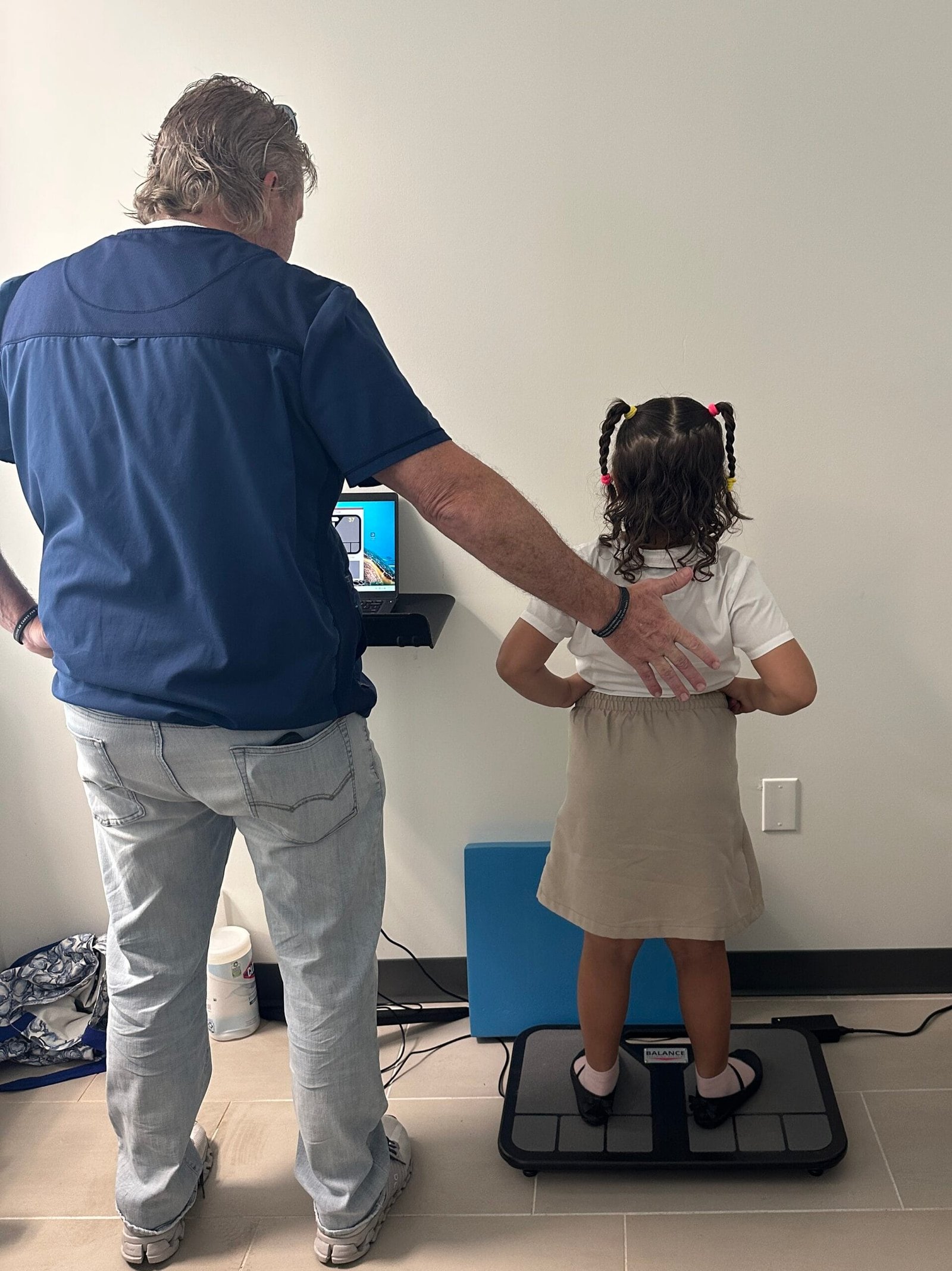
That information does not prove why a person has balance issues. However, it gives the clinical team an objective place to begin. The results can then be compared with symptoms, injuries, eye movement testing, reaction time, cognition, and other findings.
You do not need to feel off balance for balance testing to add value. Sometimes the most useful information appears before the person notices a clear problem.
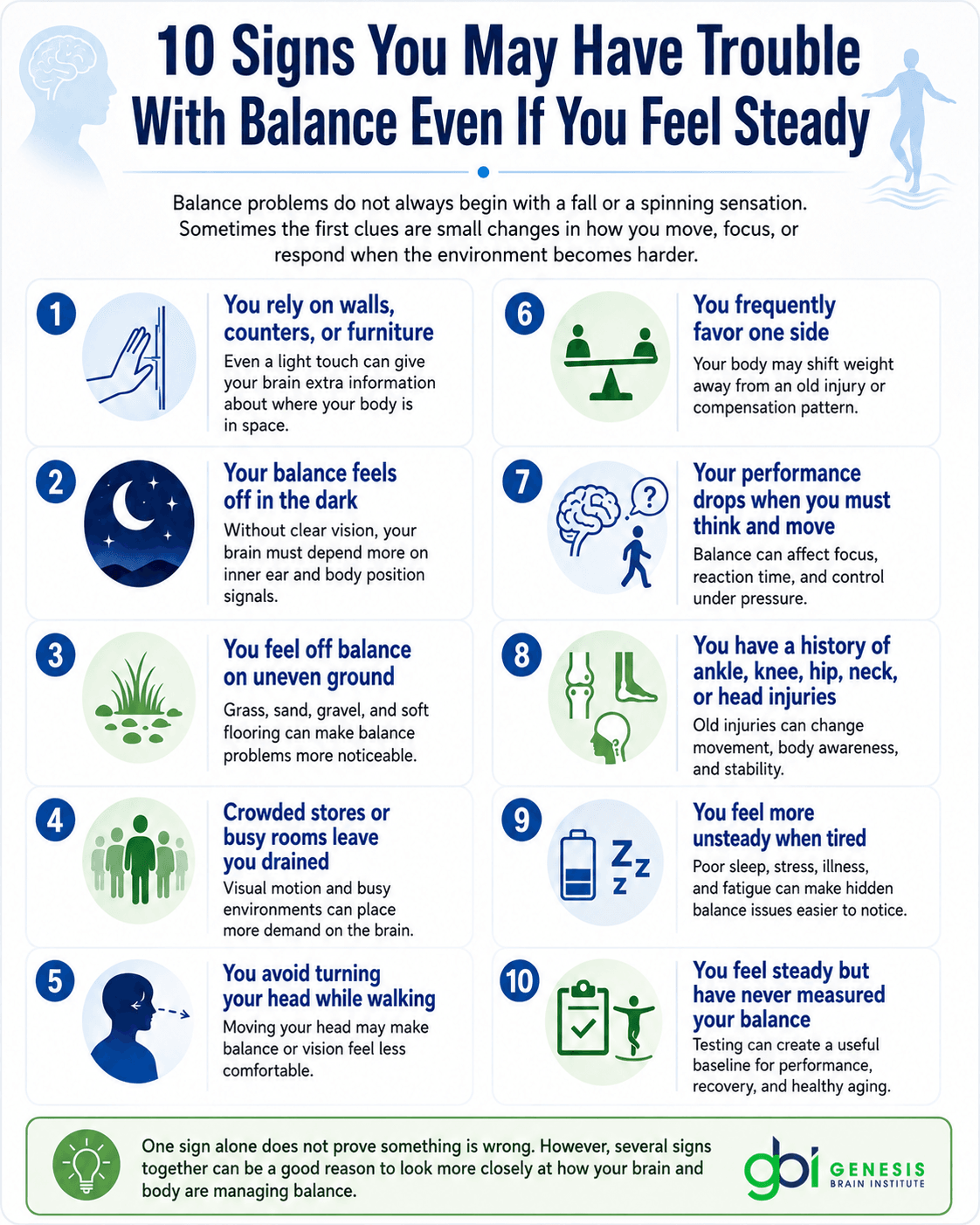
10 Signs You May Have Trouble With Balance Even If You Feel Steady
Balance problems do not always begin with a fall or a spinning sensation. Sometimes the first clues are small changes in how you move, focus, or respond when the environment becomes harder.
Here are 10 signs that your balance system could be working harder than you realize.
1. You Rely on Walls, Counters, or Furniture
You might touch nearby objects without thinking about it. Even a light touch gives the brain extra information about where the body is in space.
2. Your Balance Feels Off in the Dark
Vision helps many people stay steady. When the lights go down, the brain must depend more on the inner ear and body position signals.
3. You Feel Off Balance While Walking on Uneven Ground
Grass, sand, gravel, and soft flooring change the information coming from the feet and joints. Trouble with balance can become more noticeable when the surface is less stable.
4. Crowded Stores or Busy Rooms Leave You Drained
Moving people, bright lights, large displays, and visual motion can place more demand on the brain. You might feel tired, foggy, uneasy, or as though your equilibrium is off.
5. You Avoid Turning Your Head While Walking
Some people slow down or stop before looking to the side. This can be a quiet sign that moving the head makes balance or vision less comfortable.
6. You Frequently Favor One Side
You might place more weight on one leg, wear out one shoe faster, or shift away from an old injury. The body can use these patterns to stay steady without creating obvious symptoms.
7. Your Performance Drops When You Must Think and Move
A student might lose focus during movement. An athlete might react more slowly under pressure. An executive might feel mentally drained in busy settings. A senior might feel less steady while talking and walking at the same time.
8. You Have a History of Ankle, Knee, Hip, Neck, or Head Injuries
Past injuries can change strength, movement, body awareness, or the signals sent to the brain. The original pain can improve while the compensation remains.
9. You Feel More Unsteady When Tired
Poor sleep, stress, illness, and physical fatigue can reduce how quickly the brain and body respond. A balance issue that is hidden in the morning can become easier to notice later in the day.
10. You Feel Steady but Have Never Measured Your Balance
Feeling normal does not provide objective information about sway, sensory dependence, or how your balance changes under harder conditions. Testing creates a baseline that can be useful for performance, recovery, and healthy aging.
One sign alone does not prove that something is wrong. However, several signs together can provide a good reason to look more closely at how your brain and body are managing balance.
What Does a Balance Test Measure When Your Balance Feels Off?
A balance test does more than show whether you can remain standing. It measures the small movements your body makes while your brain works to keep you upright.
At Genesis Brain Institute in Tampa, patients stand on a force plate that records changes in pressure beneath their feet. This movement is called the Center of Pressure path. It shows how far the body sways, which direction it moves, and how the pattern changes under different sensory conditions.
Everyone sways. The goal is not to stand perfectly still. Instead, the test helps show how efficiently your visual, vestibular, and proprioceptive systems work together.
Four Conditions Test Different Balance Systems
The modified Clinical Test of Sensory Integration and Balance includes four 20 second trials. Each condition changes the information available to the brain.
Eyes Open on a Firm Surface
This is usually the easiest condition because the brain can use vision, inner ear information, and signals from the feet and joints.
Eyes Closed on a Firm Surface
Closing the eyes removes visual information. The brain must depend more on the inner ear and body position signals.
Eyes Open on Foam
Foam makes information from the feet and joints less dependable. Vision becomes more important for staying steady.
Eyes Closed on Foam
This is often the most difficult condition. Vision is removed, and the soft surface makes body position information less reliable. The brain must place greater trust in the vestibular system.
Why the Differences Between Trials Matter
A person might perform well with their eyes open but sway much more after closing them. Another person might remain steady on a firm surface but struggle when standing on foam.
Those differences help the clinical team understand which sensory information the person uses most and where the brain could be compensating.
The results can also be compared with adults of the same age and sex. This gives the clinician more useful information than simply watching someone stand and deciding whether they look steady.
A balance test does not diagnose every reason someone feels off balance. However, it provides objective data that can be reviewed alongside symptoms, injury history, eye movements, cognition, reaction time, and other neurological findings.
Balance Issues You Cannot Always Feel: What GBI Data Can Reveal
A person does not have to feel off balance for objective testing to uncover a meaningful pattern. Balance can look normal during an easy task but change when vision, body position, or vestibular information is challenged.
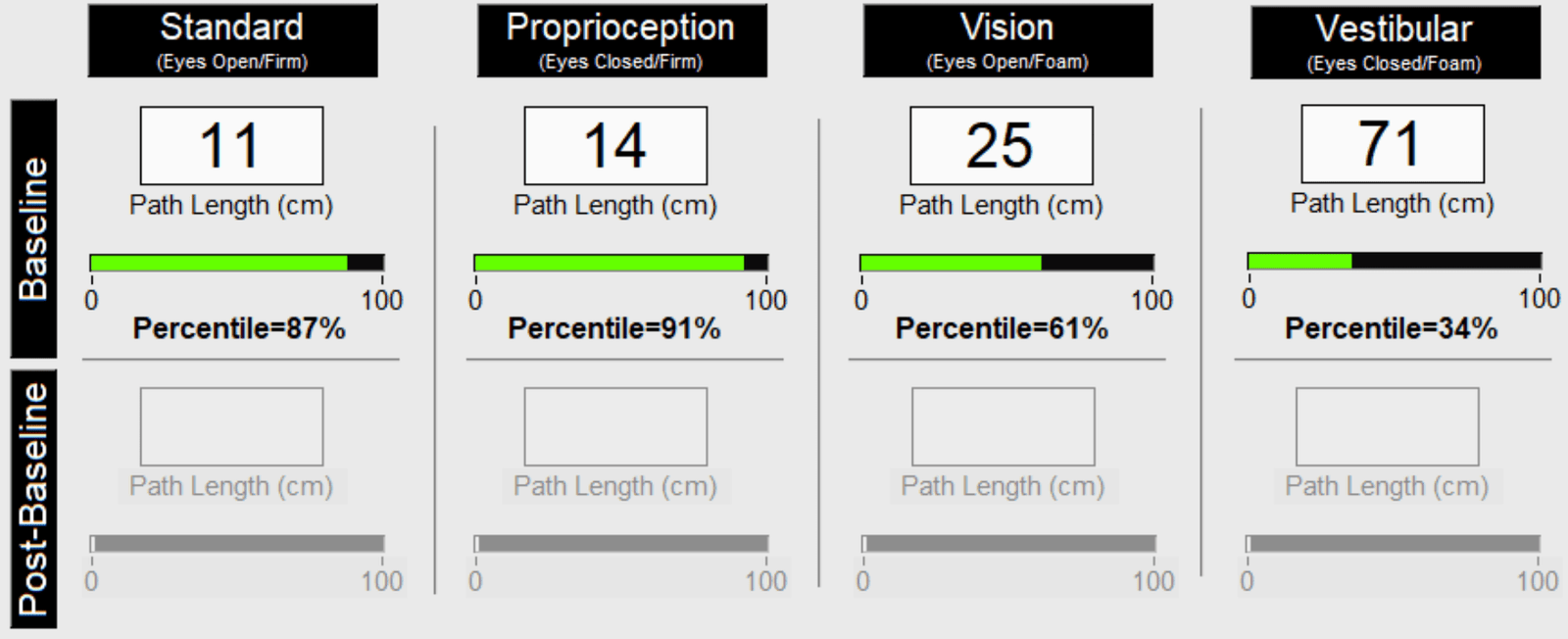
One deidentified patient at Genesis Brain Institute completed balance testing before and after treatment. During the first test, the patient performed well with eyes open on a firm surface, ranking in the 87th percentile. The proprioception condition ranked in the 91st percentile, while the vision condition ranked in the 61st percentile.
However, the vestibular condition told a different story. With the patient’s eyes closed while standing on foam, the result ranked in the 34th percentile. This condition removes vision and makes information from the feet and joints less dependable, requiring greater use of the vestibular system.
Follow Up Testing Showed a Measurable Change
During follow up testing, the vestibular result increased from the 34th percentile to the 95th percentile. The vision condition also increased from the 61st percentile to the 98th percentile.
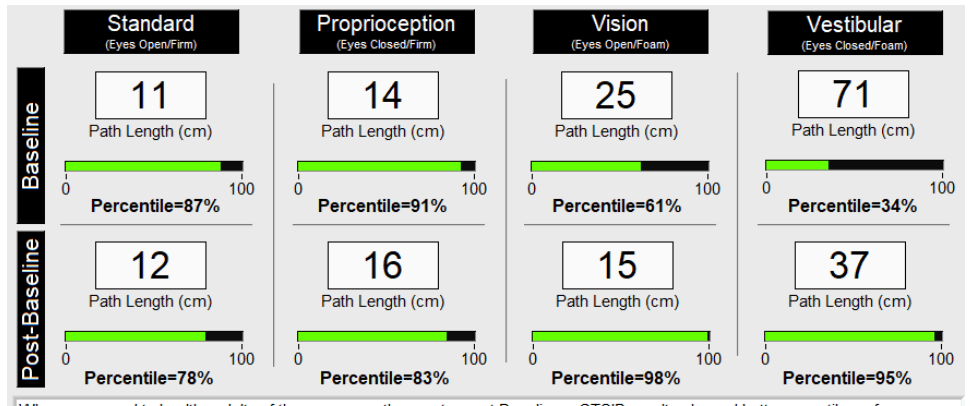
The patient’s total Center of Pressure path length decreased from 121 centimeters to 80 centimeters. That was a measurable change of 41 centimeters across the four testing conditions.
The cervical challenge provided another useful comparison. At baseline, two head and neck positions showed increased path length. During the follow up test, none of the positions showed increased path length compared with the neutral position.
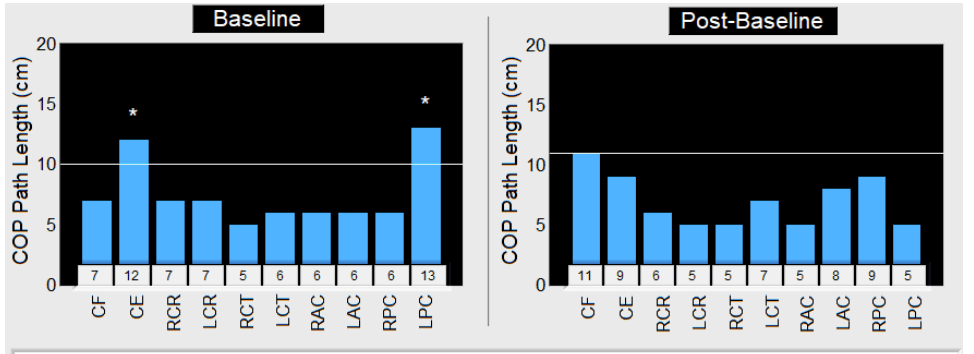
These results do not prove that one therapy caused every change or diagnose a condition by themselves. Instead, they show the value of having objective information before and after care.
Without baseline testing, the patient would have to rely mainly on how they felt. With measurable data, the clinical team could see how balance changed under specific sensory and head position challenges.
That is the real value of testing when someone feels off balance and when they feel completely steady. It helps reveal what the eyes cannot see and what the person cannot always feel.
Can Balance Issues Affect Focus, Reaction Time, and Performance?
Balance is not a separate skill that turns off when you start thinking. Your brain must manage posture while you read, react, speak, move, and make decisions.
When balance is automatic, those tasks can happen together with little effort. When the brain must make more corrections to keep the body steady, more attention goes toward posture and movement.
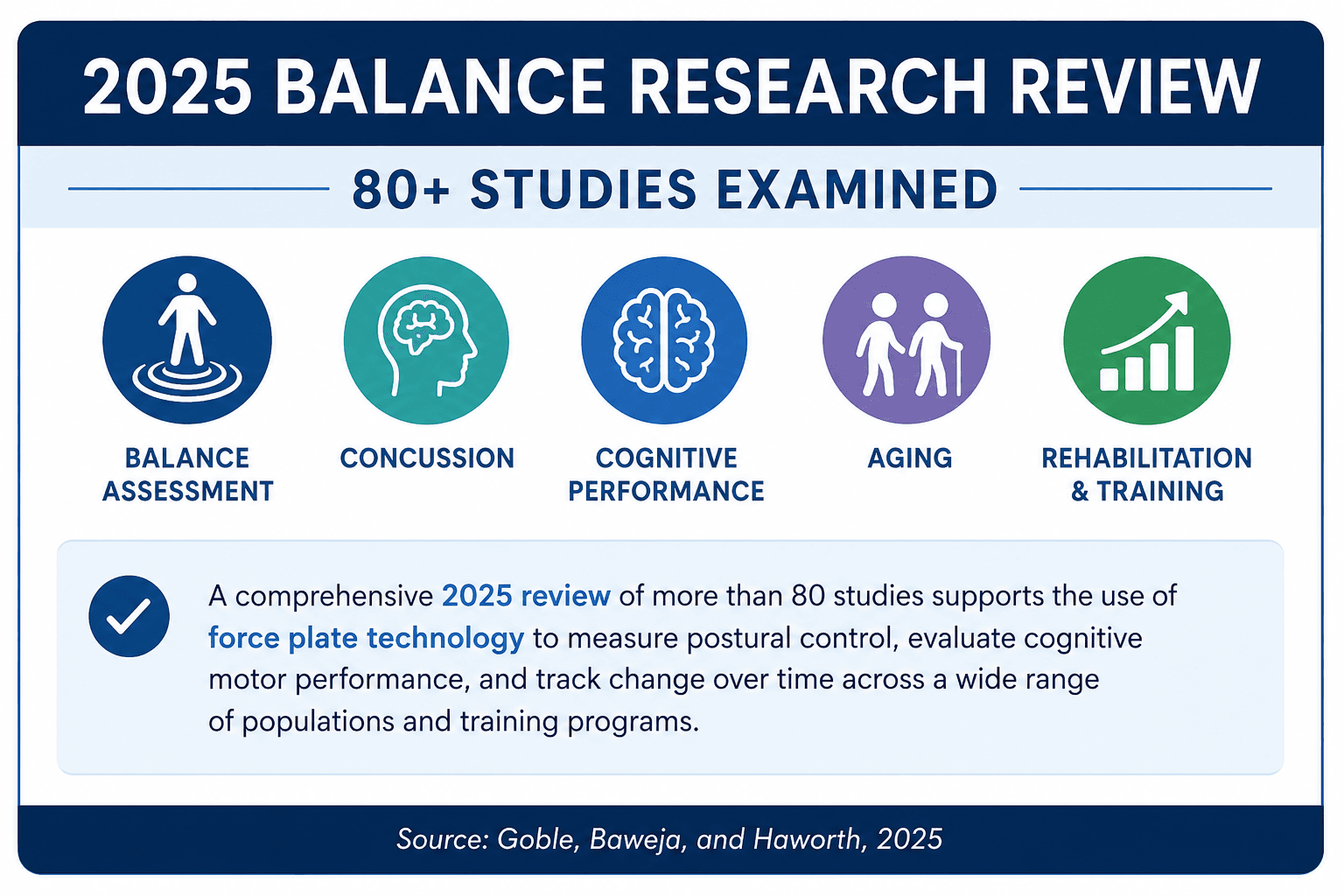
Researchers often study this using a dual task. A person completes a thinking task while standing or moving. The goal is to see what changes when the brain must divide its attention.
A person can look steady during a simple test but respond differently when reaction time, memory, visual tracking, or decision making is added.
Why This Matters
A balance test cannot measure every part of focus, energy, or performance. However, it can show how the body responds when sensory information changes.
That information becomes more valuable when it is compared with reaction time, cognition, eye movements, symptoms, injury history, and other neurological findings.
The bigger question is not only whether you can stay upright.
It is whether your balance remains efficient when your brain also has to learn, react, decide, and perform.
Why One Balance Test Cannot Explain Every Balance Problem
A balance test can show how much your body sways and how that pattern changes under different conditions. However, it cannot explain every reason someone feels off balance by itself.
Two people can have a similar score for very different reasons. One person might rely too heavily on vision. Another could have an old ankle injury, reduced feeling in the feet, neck stiffness, slower reaction time, or a problem processing movement.
That is why the most useful question is not simply, “Was the score good or bad?”
The better question is, “How does this result connect with everything else we know about the person?”
Balance Results Need Context
A clinician should review balance data alongside the person’s symptoms, health history, injuries, medications, daily activities, and goals.
For example, trouble with balance after a concussion should be viewed differently from balance changes linked to aging, an ankle injury, or a long period of inactivity.
The same is true for performance. An athlete trying to return to competition has different needs than a senior who wants to feel safer while walking through the home.
A student who becomes tired in busy settings also needs a different conversation than an executive who wants sharper reaction time and better performance under pressure.
GBI Examines More Than Sway
At Genesis Brain Institute, balance testing can be included as part of a broader functional assessment. The goal is to understand how the brain and body work together rather than judging one isolated number.
Depending on the assessment, the clinical team can compare balance findings with:
- Eye movement testing
- Reaction time and cognitive performance
- Pupillary responses
- Injury and medical history
- Symptoms such as dizziness, fatigue, brain fog, or headaches
- Neurological examination findings
- Brain activity patterns with qEEG testing
These results can help the clinical team see whether several findings point in the same direction.
For example, unusual sway during a head position challenge becomes more useful when it is compared with eye movements, neck history, and the person’s symptoms. A balance issue during a difficult sensory condition can also be viewed alongside reaction time and cognitive performance.
The Goal Is to Find the Pattern
One test provides a clue. Several connected findings can provide a clearer picture.
This is especially important for people who feel off balance but have been told that everything looks normal. It also matters for people who feel steady but want to understand how efficiently their brain and body perform under greater demand.
GBI uses balance data as one piece of the larger story. The purpose is not to label someone from a single score. It is to identify patterns, measure change, and help guide the next step.
Can Trouble With Balance Improve With Training?
Balance can improve when training is built around the reason a person is struggling.
At Genesis Brain Institute, the goal is not to give every patient the same balance exercises. First, the clinical team looks at how the person uses vision, vestibular information, proprioception, eye movements, head position, reaction time, and other neurological skills.
Those findings help guide an individualized training plan.
Neurological Sensory Integration Training
GBI uses neurological sensory integration training to challenge how the brain receives, organizes, and responds to information from the body and environment.
This type of technology can combine balance with visual, motor, vestibular, and thinking tasks. Instead of simply asking someone to stand still, training can require the brain to control posture while tracking movement, reacting to signals, making decisions, or completing a cognitive task.
Depending on the person’s findings, training can involve:
- Visual reaction time
- Eye and hand coordination
- Visual tracking
- Pursuit and saccadic eye movements
- Moving visual patterns
- Go No Go activities
- Balance targeting tasks
- Visual motor coordination
- Cognitive motor training
- Tasks that combine balance, attention, timing, and decision making
These activities help challenge the same systems people use at school, at work, on the field, and during everyday movement.
Training Should Match the Balance Problem
A person whose balance feels off after closing their eyes needs a different approach from someone who struggles while moving their head.
Likewise, an athlete focused on reaction time has different goals from a senior working to protect confidence and independence. A student who becomes overwhelmed in busy settings also needs a different plan from someone recovering after an injury.
The purpose is not to make the task as difficult as possible. The goal is to create the right challenge for the person’s brain and body.
Why Follow Up Testing Matters
Someone can feel better without knowing exactly what changed. Another person can feel the same while objective testing shows measurable progress.
Repeating the balance assessment allows the clinical team to compare sway, sensory conditions, head positions, and overall performance.
Balance training becomes more valuable when it begins with objective testing, follows an individualized plan, and includes measurable follow up.
Who Should Consider a Balance Test?
Balance testing is useful for people who feel off balance and for those who feel completely steady.
Someone with dizziness, unsteadiness, a previous injury, or trouble with balance can use testing to better understand how their body responds under different sensory conditions. However, testing can also create a useful baseline for students, athletes, executives, and seniors who want to measure performance before a clear problem appears.
At Genesis Brain Institute, balance testing can be part of a broader brain performance assessment. The goal is not only to see whether someone can stand without falling. It is to examine how efficiently the brain manages posture, vision, head movement, reaction time, and thinking together.
For a student, that can mean understanding performance during learning and movement. For an athlete, it can provide a preseason or preinjury baseline. An executive can gain more insight into performance under mental and sensory demand. A senior can measure balance while working to protect confidence and independence.
Whether your balance feels off or feels normal, objective testing gives you something your senses cannot provide on their own: a measurable starting point.
Feel Off Balance or Feel Steady? Measure What Your Brain Is Doing
Most people check their vision, blood pressure, hearing, and heart health. Yet few ever measure balance until something feels wrong.
That matters because balance is not only about avoiding a fall. Your brain uses vision, inner ear information, body awareness, eye movements, muscles, joints, and attention to keep you upright every second of the day.
When those systems work well together, balance feels automatic. When they do not, you can feel off balance, notice trouble while walking, struggle in busy environments, or feel as though your equilibrium is off. In other cases, the brain adapts so well that you feel steady while your body makes more corrections than expected.
Objective balance testing helps reveal those hidden patterns. A force plate measures small movements that cannot always be seen or felt. By changing visual and surface conditions, the test shows how the brain responds when one source of balance information becomes less dependable.
For students, balance can affect how the brain manages learning, movement, and busy environments. Athletes depend on it for reaction time, visual tracking, direction changes, and performance under pressure. Executives use balance while traveling, presenting, making decisions, and handling constant mental demand. Seniors rely on it to protect confidence, movement, and independence.
One balance score does not explain the entire story. That is why GBI reviews balance alongside symptoms, medical history, previous injuries, eye movements, reaction time, cognition, and other neurological findings. The goal is not to label someone from a single result. It is to understand the pattern and identify a clearer next step.
Whether you feel off balance or feel completely steady, testing gives you something your senses cannot provide on their own: measurable information about how your brain and body are working together.
Genesis Brain Institute, in Tampa, offers balance testing as part of a broader functional and performance assessment.
Message us to learn more about creating a baseline, understanding your results, and measuring change over time.
Disclaimer: This content is for informational purposes only and does not constitute medical advice. Please consult with a licensed healthcare provider. Genesis Brain Institute is a Brain Treatment Center in Tampa offering non-pharmaceutical solutions that bring clarity, restore function, and offer real hope for those who feel lost, stuck, or simply want more from life.