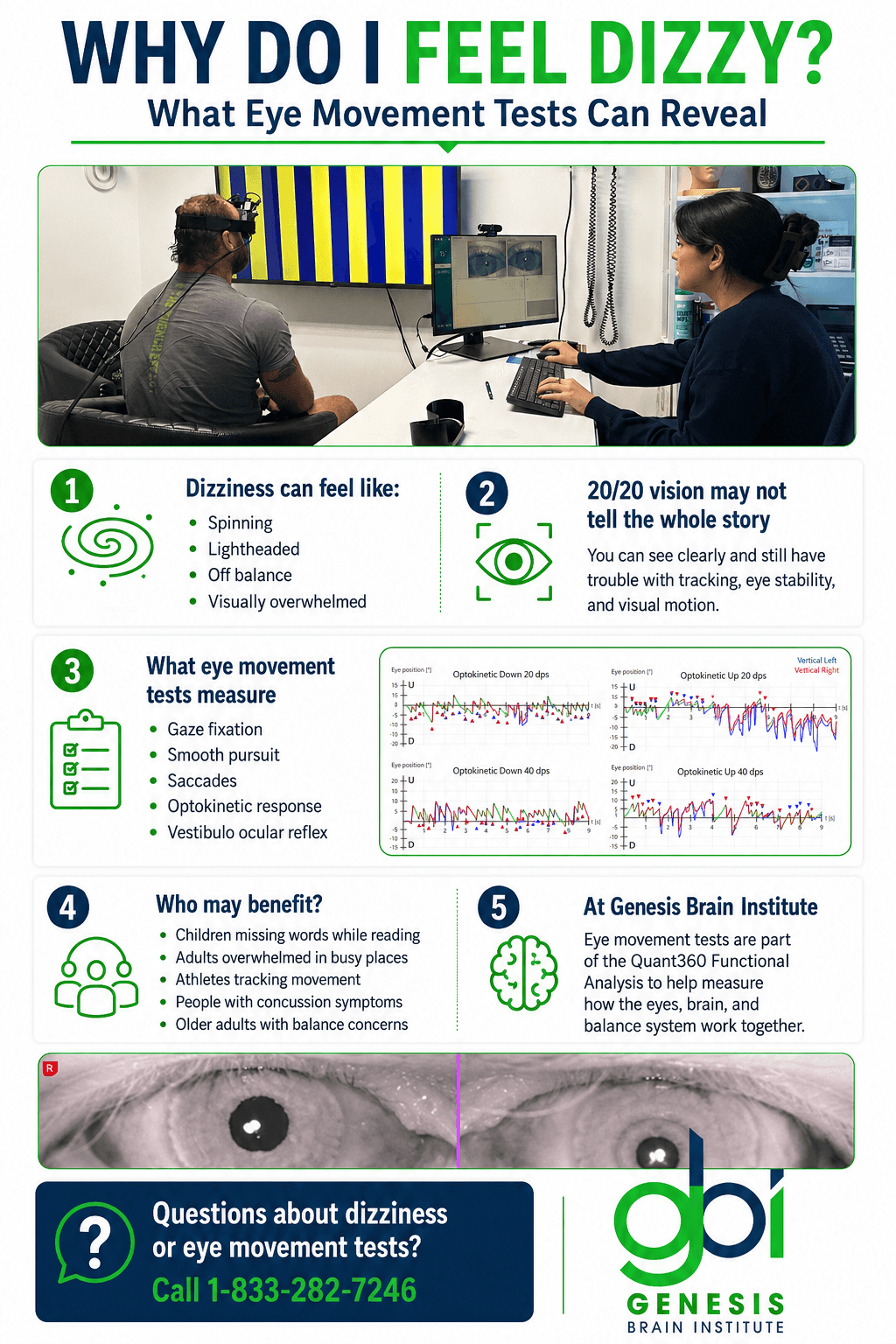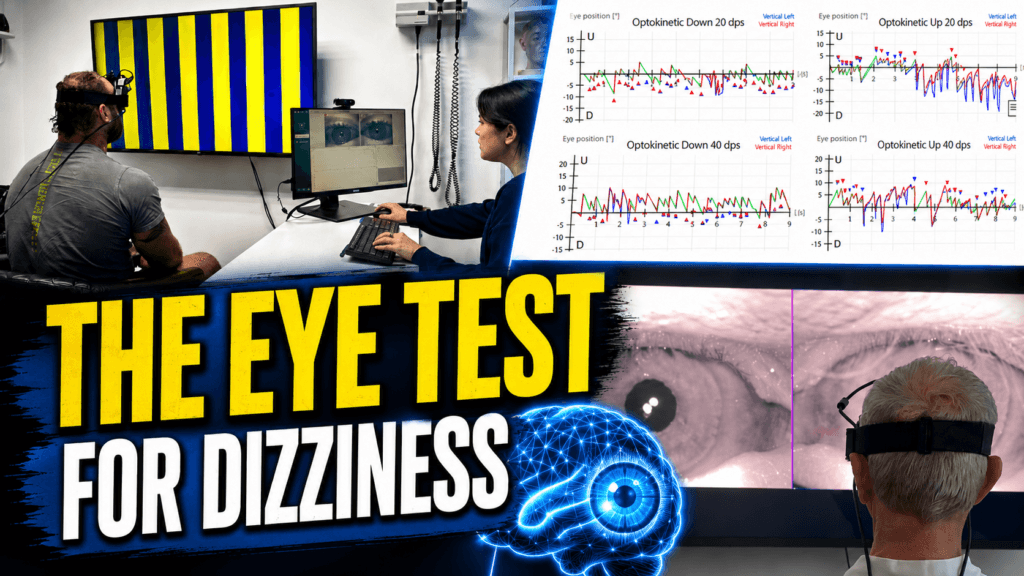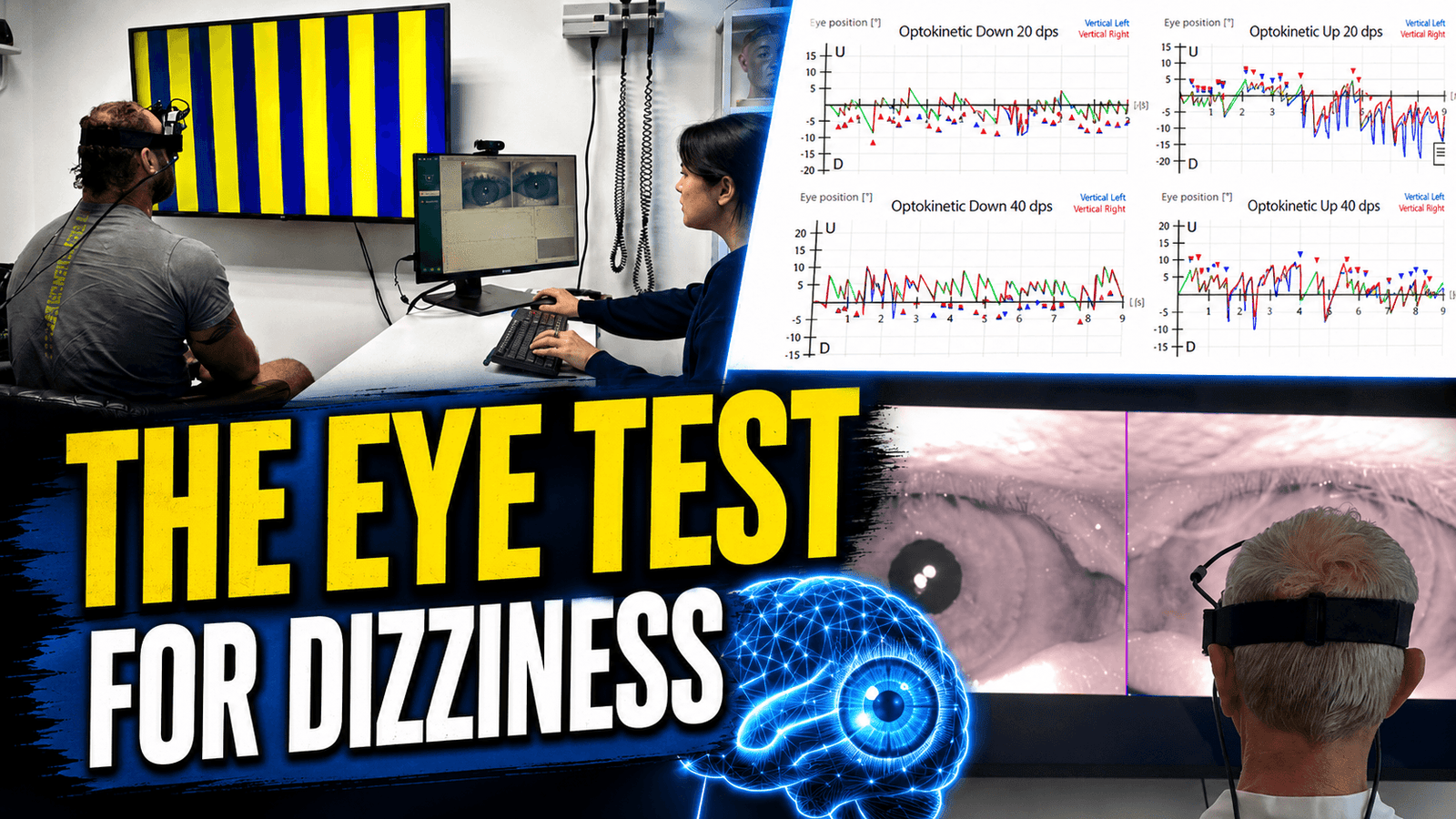
Why do I feel dizzy? It sounds like a simple question, but dizziness does not feel the same for everyone.
The room may spin. You may feel lightheaded, unsteady, pulled to one side, or disconnected from the space around you. For some people, it happens while standing up. For others, it appears while driving, walking through a busy store, turning their head, reading, or looking at a screen.
Balance depends on more than the inner ear. Your eyes, brain, inner ears, muscles, and joints must constantly share information. Your brain compares these signals to understand where you are, what is moving around you, and how your body should respond.
When those signals do not match, the effects can appear in many ways:
• The child who keeps missing words while reading may not be moving their eyes accurately from one word to the next.
• The executive in a crowded networking event may feel overwhelmed, unsteady, or mentally drained while processing faces, movement, noise, and conversation.
• The athlete tracking a ball while moving may react late or lose sight of the target when the eyes and body are not working together efficiently.
• The older adult who misses a step may struggle to combine visual information, balance, and body position quickly enough to respond.
Your eyes play a major role in each of these situations. They must stay focused when your head moves, smoothly follow a moving object, and jump accurately from one target to another. These movements happen all day when you read, drive, play a sport, watch someone speak, or scan a crowded room.
This is why eye movement tests can provide information that may not be found during a routine vision check.
Seeing clearly is important, but your brain must also control where your eyes move, how quickly they move, and whether they remain stable. Eye movement tests measure these actions instead of relying only on what someone notices while asking you to follow a finger.
At Genesis Brain Institute in Tampa, we use advanced eye movement tests to look for measurable clues about how the visual, balance, and neurological systems are working together. We do not expect one test to provide every answer. We combine the findings with other neurological and functional information to build a clearer picture of what may be contributing to a person’s symptoms.
Dizziness may be the symptom that gets your attention. What your eyes reveal may help explain the system behind it.
Why Do I Feel Dizzy? The Feeling Gives Us the First Clue
Dizziness is a symptom, not a diagnosis. Two people can both say, “I feel dizzy,” while describing completely different experiences.
You may feel:
Spinning: You or the room seems to move when nothing is moving.
Lightheaded: You feel weak or as though you may faint.
Unsteady: You feel off balance, pulled to one side, or unsure of your steps.
Visually disoriented: Moving traffic, crowded rooms, store aisles, or scrolling screens make you feel overwhelmed or unstable.
How the dizziness feels matters. However, research shows that its timing and triggers can provide even stronger clues. A healthcare provider may ask when it began, how long it lasts, what brings it on, and which movements or environments make it worse.
Consider these questions:
Does it happen when you roll over in bed?
Does standing up bring it on?
Does it begin when you turn your head?
Do busy places or moving objects make it worse?
Did it start after a concussion, fall, or car accident?
Does it happen with headaches, hearing changes, nausea, or trouble walking?
These details help guide the evaluation because dizziness can have many causes. It may involve the inner ear, vision, brain, blood pressure, medication, hydration, or another medical concern.
That is why the right evaluation should begin with your full story instead of assuming every dizzy person has the same problem.
Eye movement tests cannot identify every possible cause of dizziness. However, when symptoms may involve the visual, balance, or neurological systems, these tests can provide objective information that symptoms alone cannot show. They allow clinicians to study how the eyes remain still, follow movement, shift between targets, and respond when the head or surroundings move.
The goal is not simply to confirm that you feel dizzy. It is to gather better clues about why.
Can You Have 20/20 Vision and Still Have Eye Movement Problems?
Yes. A person can have 20/20 vision and still have problems with how their eyes move or work with the brain.
The familiar eye chart measures visual acuity. In simple terms, it tests how clearly you can see letters from a certain distance. It does not tell us everything about how well your visual system performs while you read, walk, drive, turn your head, or follow something that is moving. The American Academy of Ophthalmology explains that 20/20 vision is not the same as perfect vision.
Think of it this way: You may be able to see every word clearly, but can your eyes move accurately from one word to the next?
You may be able to see a baseball clearly, but can you keep it in focus while you and the ball are both moving?
You may be able to read a road sign, but does the world remain stable when you turn your head?
These actions depend on the brain controlling the eyes at the right speed and in the right direction. The eyes must remain steady when focused on one point, move smoothly behind a moving target, quickly jump to a new target, and help keep your surroundings clear while your head moves. Eye movement tests at Genesis Brain Institute in Tampa allow these functions to be measured.
This difference may help explain why someone can be told their eyesight is fine but still struggle with headaches while reading, dizziness in busy environments, difficulty using screens, poor balance, or visual problems following a concussion. Recent research has found that people with mild traumatic brain injuries may report vision problems even when their visual acuity and eye health examinations appear normal.
A routine eye examination remains important. An optometrist or ophthalmologist can check visual clarity, the health of the eyes, and conditions that may require glasses, medical care, or surgery. Eye movement tests answer a different question:
How effectively are your eyes and brain working together as you move through the world?
Passing an eye chart may close one question. It does not always close the case.
What Are Eye Movement Tests and What Do They Measure?
Eye movement tests use specialized cameras and software to record movements that may be too small or too fast to judge with the naked eye.
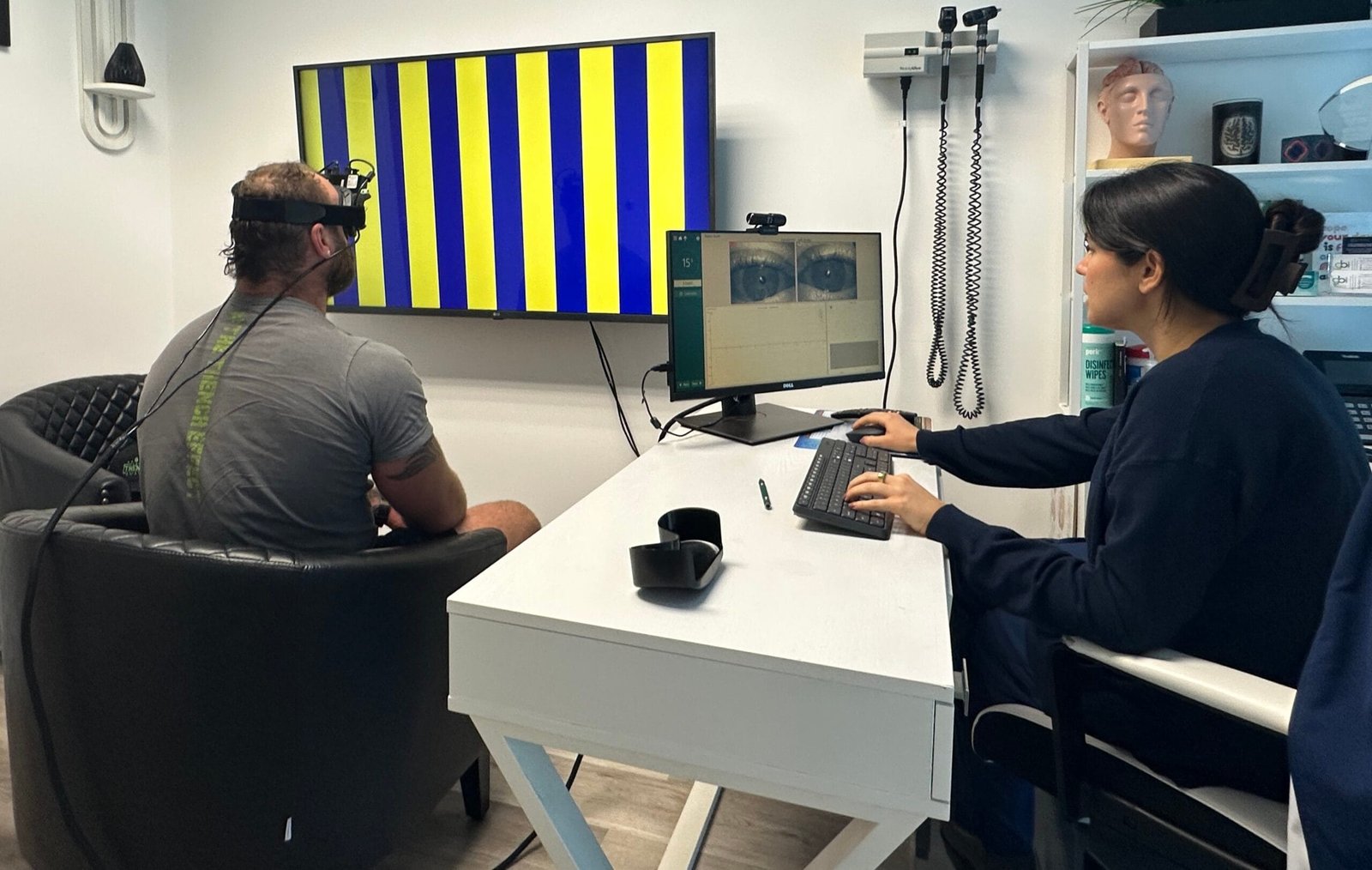
At Genesis Brain Institute in Tampa, a patient wears lightweight goggles containing infrared cameras. As the patient watches targets or moves their head, the technology records where the eyes travel, how quickly they respond, and whether both eyes perform as expected.
The results can be reviewed as video and detailed graphs. This gives the clinician measurable information rather than relying only on someone watching the patient follow a finger.
You may hear two similar terms:
- Videonystagmography, or VNG, is commonly used to evaluate involuntary eye movements called nystagmus and how the eyes respond during balance related tasks.
- Video oculography, or VOG, is a broader term for recording and measuring several types of eye movements, including nystagmus.
A 2024 review found that studying eye movements, especially nystagmus, can provide important clues about the vestibular system and may help trained clinicians distinguish between different patterns of dizziness and imbalance.
The eye movement tests may include:
Gaze Fixation
Can you keep your eyes steady on one target, or do they drift, jump, or shake?
Stable gaze matters when you look at a teacher, read a road sign, or focus on someone during a conversation.
Smooth Pursuit
Can your eyes smoothly follow an object as it moves left, right, up, or down?
You use smooth pursuit while watching a passing car, following a person walking across a room, or tracking a slow moving ball.
Saccades
Can your eyes quickly and accurately jump from one target to another?
Saccades are among the eye movements used when reading from word to word, scanning a room, checking mirrors while driving, or shifting attention between players on a field. Research continues to describe saccades and smooth pursuit as useful, noninvasive ways to study pathways that involve several areas of the brain.
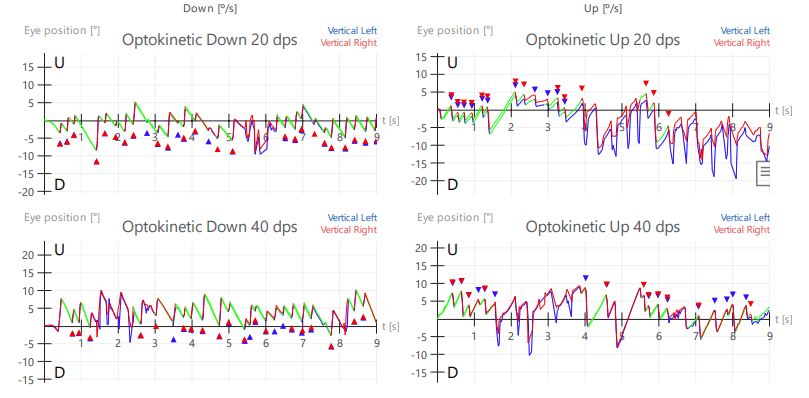
Optokinetic Response
How does your visual system respond when much of the world around you appears to be moving?
This response is active when you watch traffic pass, look out a moving car window, or walk through a crowded environment.
Vestibulo Ocular Reflex
Can your eyes remain fixed on a target while your head is moving?
This reflex helps keep the world visually stable when you walk, run, turn your head, or move across uneven ground.
Nystagmus
Do the eyes make repeated movements when you look in certain directions, change positions, or sit in darkness without a visible target?
VNG can record these movements and help a trained clinician evaluate how they relate to the vestibular and neurological systems.
Each test asks a different question. When viewed together, the results create a more detailed picture of how the brain controls the eyes and responds to movement.
The value is not simply seeing that an eye moved incorrectly. It is understanding when the error happened, how large it was, and which part of everyday life it could be affecting.
What Can Eye Movement Tests Reveal About Your Brain?
Your eyes do not decide where to look on their own. Each movement depends on a network involving the brain stem, cerebellum, and areas of the brain responsible for attention, planning, movement, and visual processing.
That is why eye movement tests can provide clues about more than eyesight.
The technology can measure small differences in:
How long it takes your eyes to respond
Whether they reach the correct target
How well they remain focused
Whether one direction is harder than another
How efficiently the brain adjusts to movement
A slow, inaccurate, or unstable response does not diagnose a neurological condition by itself. It gives the clinician objective information that can be compared with your symptoms, medical history, physical examination, balance results, and other neurological tests.
This matters because different parts of the brain help control different types of eye movements. A change in timing, accuracy, or stability may help the clinician identify which systems need a closer look.
Recent research shows why these measurements are gaining attention.
A 2024 study found that computerized eye tracking could identify differences between people with short and long term mild traumatic brain injuries and healthy participants.
Another 2024 study identified eye movement patterns connected with inattentive reading in adults with and without ADHD. The researchers studied where participants looked, how long they focused, and how their eyes moved across written information.
A separate 2024 review described how changes in eye movements in Parkinson’s disease may reflect changes within the brain pathways that control movement, thinking, and attention.
These findings do not mean an eye movement test can diagnose ADHD, a concussion, Parkinson’s disease, or another condition on its own. They show that the way your eyes move can provide useful, measurable information about how neurological systems are functioning.
That can be especially valuable when someone has been told that everything looks normal, yet they still feel dizzy, lose their place while reading, struggle in busy environments, or feel less steady than they once did.
Instead of relying only on what you feel, eye movement tests give you something you can see, measure, and discuss with your clinician.
When Should You Consider Eye Movement Tests?
You may want to consider eye movement tests when your symptoms appear during activities that require your eyes, brain, and balance system to work together.
This may include:
- Dizziness or unsteadiness that keeps returning
- Symptoms triggered by turning your head or changing positions
- Feeling disoriented around traffic, crowds, store aisles, or moving screens
- Trouble keeping words or objects clear while your body is moving
- Losing your place, rereading sentences, or becoming tired while reading
- Difficulty following a ball, player, vehicle, or other moving target
- New vision, balance, or reading problems after a concussion
- Feeling that something is wrong even though a routine eye exam was normal
Eye movement tests may also be valuable when symptoms continue after a head injury. A 2025 study involving children and adolescents with persistent post concussion symptoms found that objective infrared eye tracking could provide additional measurements for identifying concussion related vision disorders.
The important word is persistent.
Most people naturally adjust when something feels difficult. They slow down while reading, avoid busy stores, hold the railing, stop playing a sport, or turn their entire body instead of moving their head. Over time, those adjustments can begin to feel normal.
But avoiding the problem does not explain it.
Eye movement tests can help turn a vague complaint into information that can be measured. Instead of saying, “I just feel off,” you may be able to see whether your eyes are delayed, unstable, inaccurate, or having difficulty responding to certain types of movement.
That information does not provide every answer by itself. It helps determine what questions should be asked next and whether other visual, vestibular, neurological, or medical testing is needed.
Why Genesis Brain Institute Combines Eye Movement Tests With Other Brain and Balance Testing
One test can reveal an important clue. It should not be expected to explain the entire person.
Imagine that an eye movement test shows your eyes are having trouble staying fixed on a target while your head moves. That finding matters, but it creates more questions:
Is the problem mainly connected to the balance system?
Does your brain rely too heavily on vision to remain steady?
Are changes in attention or processing speed making it harder to respond?
Did the pattern begin after a concussion, illness, injury, or gradual change?
To answer those questions, the results must be compared with other information.
A 2024 study combined eye tracking with postural testing and found meaningful connections between eye movement patterns and balance in healthy adults. The researchers reported that faster, more consistent horizontal eye movements were associated with better postural stability. The study was small and did not include people with vestibular disorders, but it reinforces an important point: vision and balance do not operate as separate systems.
That is why Genesis Brain Institute includes eye movement tests as one part of the Quant360 Functional Analysis.
Depending on the person’s needs, we may also examine:
Balance: How much the body sways under different visual, surface, and head position conditions.
Pupil responses: How the autonomic nervous system responds when light enters the eyes.
Brain activity: How electrical patterns are distributed and communicating across the brain.
Cognitive performance: How someone performs in areas such as attention, memory, reaction time, and processing speed.
Medical history and neurological examination: When the symptoms began, what makes them worse, and how they affect daily life.
Together, these findings help us compare what you feel with what your brain and body are doing.
For example, someone may report feeling unsteady in crowded environments. Eye movement results may show difficulty processing surrounding motion, while balance testing may reveal greater sway when reliable visual information is removed. Those findings can then be reviewed alongside the person’s history and neurological examination.
Another person may struggle to read after a concussion. Their eyesight may remain clear, yet their eye movements, reaction speed, or cognitive results may reveal where tasks are requiring more effort.
This approach is sometimes called triangulation. Instead of making a decision from one measurement, the clinician looks for patterns that appear across several sources of information. The Genesis VNG page explains that eye movement data is paired with the broader Quant360 Functional Analysis to help create an individualized plan rather than simply identify an abnormal result.
The purpose is not to collect more tests for the sake of collecting data.
It is to reduce guessing.
When several measurements point toward the same system, there is greater confidence about what may need attention. When the findings do not agree, that is also valuable because it tells the clinician to keep asking questions rather than forcing the symptoms into an easy explanation.
Your eye movements may provide the first clue. The fuller picture helps determine what that clue means for you.
What Happens During Eye Movement Tests?
Eye movement tests are noninvasive and do not require needles, medication, or radiation.
During the test, you wear lightweight goggles while completing a series of visual and movement tasks. You may follow a moving target, quickly look between two points, move your head, or complete part of the test in darkness.
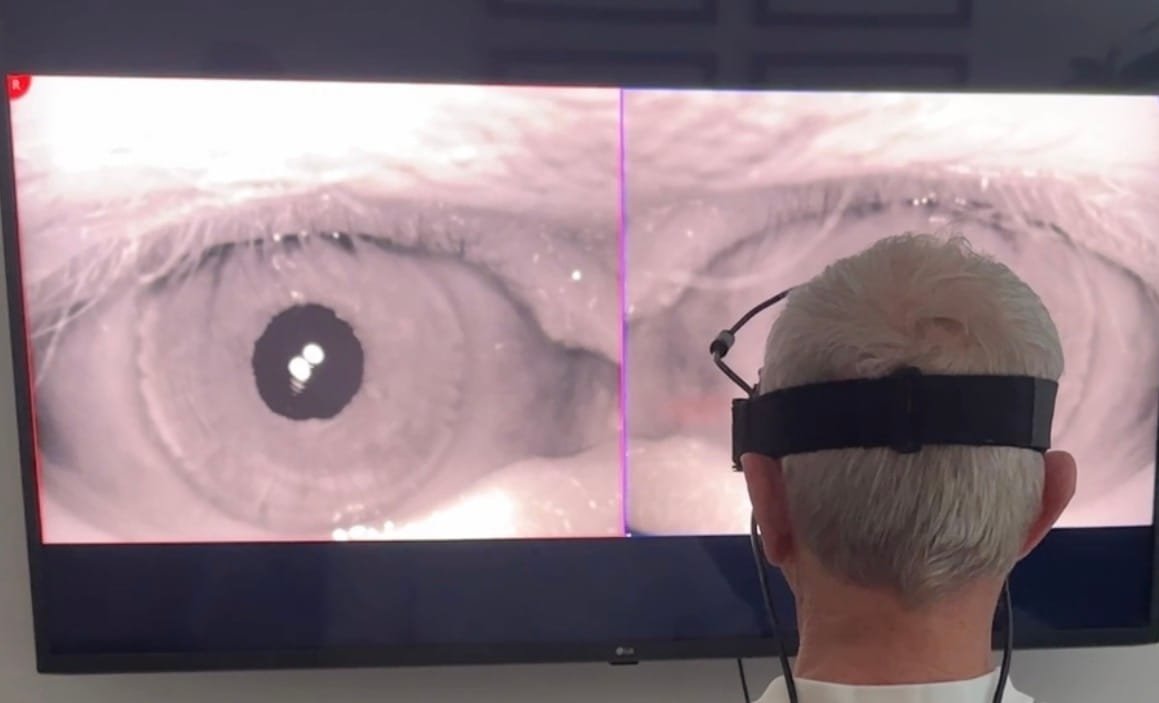
Testing in darkness removes visible reference points. This can reveal eye movements that may be harder to detect while you are focused on an object.
The test may examine:
- How steadily your eyes remain on one point
- How smoothly they follow a moving target
- How quickly they jump between targets
- Whether they reach the correct location
- How they respond when the visual world appears to move
- Whether your vision remains stable as your head moves
The cameras capture movements that may happen too quickly or subtly to measure by simply watching your eyes.
Afterward, the recordings can be reviewed as video and graphs. You may be able to see each jump, delay, drift, or correction your eyes made during the test. This makes the findings more tangible because you are not being asked to rely only on a clinician saying that something looked unusual.
The experience is different from a standard eye chart. You are not being asked only how clearly you can see. The goal is to measure how your visual and neurological systems respond while your eyes and head complete specific tasks.
The test itself provides data. The real value comes from how a trained clinician interprets that data alongside your symptoms, medical history, balance, cognitive performance, and other neurological findings.
That is how a short series of eye movements can become part of a much larger picture.
What Happens After Eye Movement Tests?
When someone asks, “Why do I feel dizzy?” the answer is rarely found in a simple pass or fail result.
After the eye movement tests are complete, the recordings are reviewed for patterns in timing, accuracy, speed, and stability.
The clinician is looking at which movements were efficient, which required more effort, and whether the findings match the problems you experience in daily life.
During your review, you may see the videos and graphs created during the test. This allows you to view how your eyes responded instead of relying only on a written report.
The results may help answer questions such as:
Why does reading require so much effort?
Why do busy places feel overwhelming?
Why does turning my head make me feel unsteady?
Why am I struggling after a concussion even though other tests appeared normal?
Why am I reacting more slowly during work, driving, or sports?
An unusual result does not automatically identify one condition or one treatment. It may show that another area needs closer evaluation, that a referral is appropriate, or that a specific function could become part of a neurological rehabilitation plan.
When rehabilitation is recommended, the findings can help make it more focused. Instead of choosing exercises from symptoms alone, the clinician can use the measurements to decide which visual, balance, or neurological skills may need attention.
The original results may also provide a baseline. If testing is repeated later, the clinician can compare the measurements to determine whether the eyes are responding more quickly, accurately, or steadily.
That is one of the greatest advantages of objective testing.
You are no longer depending only on whether something feels different. You have data that can help show where you began, what changed, and what may still need work.
Still Asking, “Why Do I Feel Dizzy?” Start With Better Information
If you are still asking, “Why do I feel dizzy?” the next step may not be another guess. It may be a closer look at how your eyes, brain, and balance system are working together.
You can have 20/20 vision and still struggle to keep your eyes steady, follow movement, shift accurately between targets, or keep the world clear while your head moves. Those problems may affect far more than dizziness. They can influence reading, driving, balance, attention, sports performance, and how comfortable you feel in busy environments.
Eye movement tests give us a way to measure those functions.
At Genesis Brain Institute in Tampa, eye movement tests are included as part of the Quant360 Functional Analysis, where the results are reviewed alongside other brain, balance, cognitive tests, and neurological findings. We combine eye movement data with balance testing, pupil responses, cognitive performance, brain activity, your medical history, and a neurological examination.
The goal is not to give you another label.
The goal is to help you understand what your brain and body are doing, where the system may be struggling, and what questions should be answered next.
You should not have to accept “everything looks normal” when you know something feels different.
Better information can lead to better questions. Better questions can lead to a clearer plan.
Message Genesis Brain Institute in Tampa with your questions about dizziness, eye movement tests, or the Quant360 Functional Analysis.
We will help you understand what the testing measures and whether it may be appropriate for what you are experiencing.
Disclaimer: This content is for informational purposes only and does not constitute medical advice. Please consult with a licensed healthcare provider. Genesis Brain Institute is a Brain Treatment Center in Tampa offering non-pharmaceutical solutions that bring clarity, restore function, and offer real hope for those who feel lost, stuck, or simply want more from life.